Toronto’s Pinnacle Sky Tower Tops Out at 106 Storeys, Marking Major Construction Milestone
Construction of Toronto’s Pinnacle Sky Tower reaches 106 storeys, marking a significant milestone in one of Canada’s tallest mixed-use developments.
 Pratyaksha Singh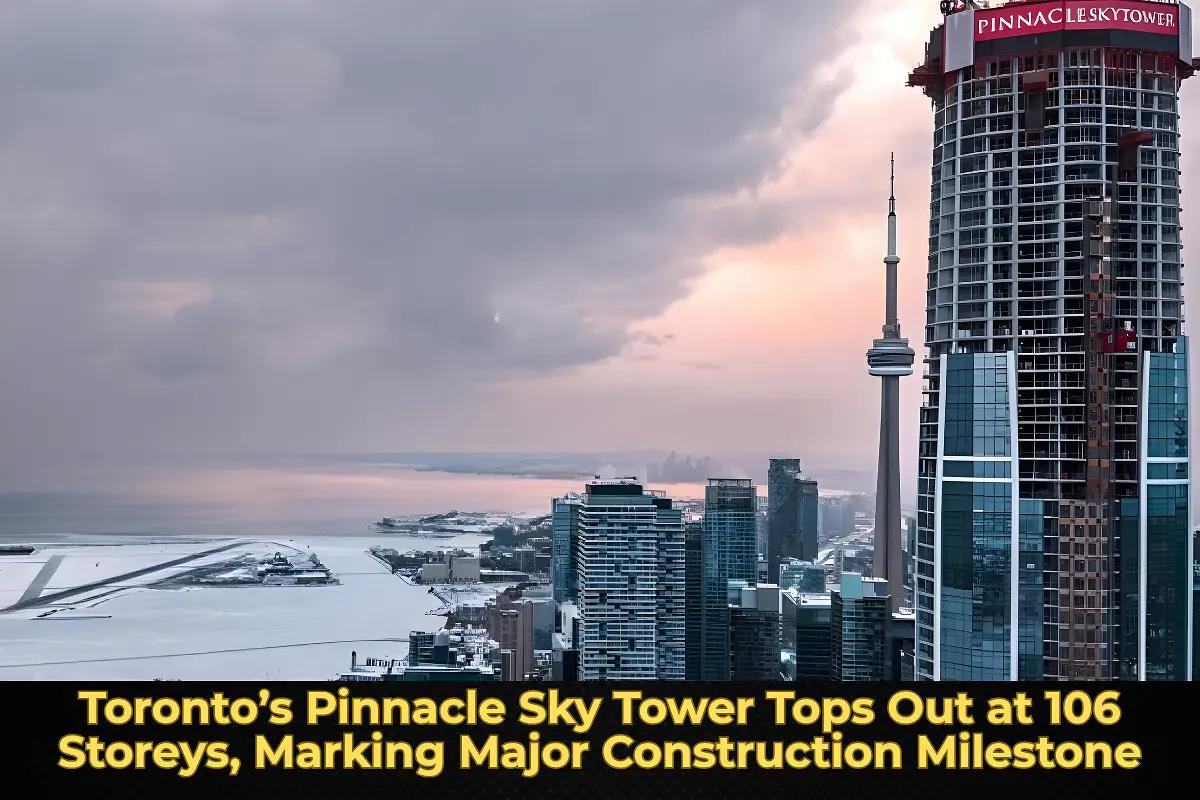
Toronto’s Pinnacle Sky Tower Tops Out at 106 Storeys, Marking Major Construction Milestone
Construction of the Pinnacle Sky Tower in Toronto has reached a major milestone in 2026 as the project officially topped out at 106 storeys, making it one of the tallest buildings in Canada and a significant addition to the city’s rapidly evolving skyline. The milestone marks the completion of the tower’s structural framework and signals progress toward its final phase of development.
The project, located in downtown Toronto, is part of a large-scale mixed-use development that aims to combine residential, hospitality, and commercial spaces within a single high-rise complex. Developers and construction teams marked the topping-out ceremony as a key step in delivering one of the most ambitious urban projects in the country.
A Landmark Development for Toronto
The Pinnacle Sky Tower is set to redefine Toronto’s skyline, rising prominently among the city’s growing cluster of supertall buildings. With its 106-storey height, the tower stands as a symbol of the city’s continued urban expansion and increasing demand for high-density, mixed-use developments.
The project reflects Toronto’s status as one of North America’s fastest-growing urban centers, driven by population growth, strong economic activity, and sustained real estate investment. High-rise developments such as this are becoming central to addressing housing demand while maximizing limited urban land.
The tower is expected to become a defining architectural feature once completed.
Mixed-Use Design and Functionality
The development is designed to integrate multiple functions, including residential units, hotel accommodations, retail spaces, and amenities. This mixed-use approach aligns with modern urban planning trends, where vertical developments serve as self-contained communities offering convenience and accessibility.
The inclusion of hospitality components highlights the growing intersection between real estate and the hotel industry, as developers seek to diversify revenue streams and attract a wide range of occupants and visitors. Such projects cater to both long-term residents and short-term guests, creating a dynamic urban environment.
This model is increasingly being adopted in major global cities.
Construction Milestone and Engineering Achievement
The topping-out of the tower represents a significant engineering achievement, requiring advanced construction techniques and coordination among multiple stakeholders. High-rise construction at this scale involves complex logistics, structural design, and safety considerations.
Reaching the 106-storey mark indicates that the primary structural work has been completed, allowing the project to transition into interior construction, façade installation, and finishing stages. Developers have emphasized the importance of maintaining timelines while ensuring quality and safety standards.
The milestone demonstrates progress in large-scale construction capabilities.
Impact on Toronto’s Real Estate Market
The Pinnacle Sky Tower is expected to have a notable impact on Toronto’s real estate market, contributing to the city’s housing supply and offering premium residential and hospitality options. Demand for high-rise living in central locations remains strong, driven by urbanization and changing lifestyle preferences.
The project also reflects continued investor confidence in Toronto’s property market, despite broader economic uncertainties. Large-scale developments such as this often serve as indicators of long-term growth potential and market stability.
The addition of new units and commercial spaces is expected to support economic activity in the surrounding area.
Hospitality and Tourism Integration
The inclusion of hotel and hospitality elements within the tower underscores the importance of tourism in urban development strategies. Toronto attracts millions of visitors each year, and integrated developments provide new accommodation options in prime locations.
By combining residential and hospitality functions, the project aims to create a vibrant environment that supports both tourism and local communities. This approach enhances the overall appeal of the development and contributes to the city’s tourism infrastructure.
Hospitality integration is becoming a key feature of modern high-rise projects.
Urban Density and Sustainability Considerations
As cities like Toronto continue to grow, high-density developments play a crucial role in managing urban expansion. The Pinnacle Sky Tower reflects efforts to accommodate population growth within existing urban areas, reducing the need for outward expansion.
Sustainability is also a key consideration, with developers increasingly incorporating energy-efficient systems, sustainable materials, and environmentally responsible design practices. High-rise buildings can support more efficient land use while minimizing environmental impact when designed appropriately.
Such developments align with long-term urban planning goals.
Economic and Employment Impact
The construction and eventual operation of the Pinnacle Sky Tower are expected to generate significant economic benefits, including job creation across construction, real estate, hospitality, and retail sectors. Large-scale projects contribute to local economies through investment, employment, and increased business activity.
Once completed, the tower is likely to attract residents, businesses, and tourists, further boosting economic activity in the area. The development’s scale ensures a wide-ranging impact on the city’s economic landscape.
It represents a major investment in Toronto’s future growth.
Challenges in High-Rise Development
Despite its progress, the project has faced challenges typical of large-scale construction, including rising material costs, supply chain disruptions, and the complexity of building at extreme heights. Managing these factors requires careful planning and adaptability.
Developers must also address regulatory requirements, safety standards, and market conditions to ensure the project’s success. The ability to overcome these challenges is critical in delivering such ambitious developments.
These factors highlight the complexity of modern urban construction.
Next Phases of Development
With the structural phase complete, the focus now shifts to interior construction, mechanical systems, and final design elements. The installation of glass façades and interior finishes will play a key role in defining the tower’s aesthetic and functionality.
The project is expected to move toward completion over the coming phases, with developers working to meet delivery timelines and market expectations. The final product will offer a mix of residential, hospitality, and commercial spaces designed to meet diverse needs.
Progress in these stages will determine the project’s readiness for occupancy.
Conclusion
The topping out of Toronto’s Pinnacle Sky Tower at 106 storeys marks a major milestone in one of Canada’s most ambitious urban developments, reflecting strong real estate investment, evolving city planning strategies, and continued growth in high-rise construction.