LPG Shortage Puts India’s Restaurant Industry Under Pressure
India’s restaurant industry is facing operational challenges as a shortage of commercial LPG disrupts kitchen operations, forcing many establishments to adjust menus and cooking processes.
 Prajakta Sanjay Warwadkar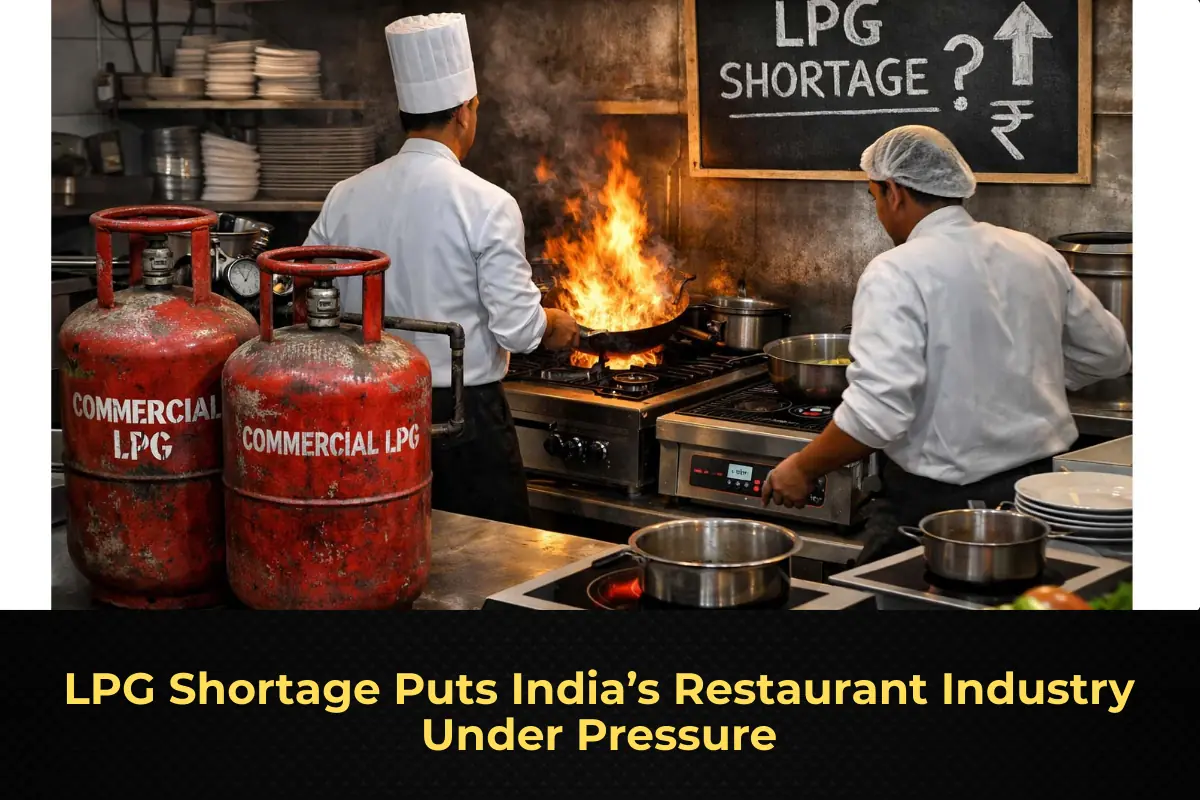
LPG Supply Crunch Affects Restaurant Operations
India’s restaurant industry is facing significant operational challenges as a shortage of commercial liquefied petroleum gas (LPG) continues to impact kitchen operations across several cities. Restaurants that rely heavily on LPG for cooking are being forced to adapt their processes, adjust menus, and manage rising operational uncertainty.
The shortage has created concerns among restaurant owners and hospitality professionals, as consistent fuel supply is critical for daily food preparation and service efficiency.
Industry associations have highlighted the urgency of restoring stable LPG supplies to prevent widespread disruption in restaurant operations.
Restaurants Adjust Menus and Cooking Practices
In response to the LPG crunch, many restaurants have begun modifying their menus to focus on dishes that require less cooking time or lower gas consumption. Kitchens are also adopting strategies such as batch cooking and optimizing equipment usage to manage limited fuel availability.
These adjustments aim to maintain service continuity while minimizing operational disruptions during the shortage.
However, such changes can affect menu diversity and customer experience, particularly for restaurants known for elaborate or time-intensive dishes.
Operational Challenges for the Hospitality Sector
The hospitality industry depends heavily on a reliable energy supply, and disruptions can have immediate effects on food production and service speed. Restaurants operating at high volumes are particularly vulnerable to fuel shortages.
Operators are also concerned about potential cost increases and logistical complications associated with securing alternative fuel sources.
For smaller restaurants and independent establishments, the situation may pose an even greater challenge due to limited operational flexibility.
Industry Bodies Raise Concerns
Industry representatives have raised the issue with authorities, emphasizing the need for priority access to commercial LPG for restaurants and hospitality businesses.
Restaurant associations warn that prolonged supply disruptions could impact business continuity, employment, and customer service standards across the sector.
They are urging policymakers and suppliers to address the supply imbalance and ensure consistent fuel distribution for commercial kitchens.
Impact on the Dining Ecosystem
Restaurants form an important part of India’s urban economy and food culture. Any disruption in their operations can have ripple effects on supply chains, employees, and consumers.
From independent eateries to large restaurant chains, the industry relies on efficient kitchen operations to meet customer demand.
Ensuring stable energy supply remains a key requirement for sustaining growth in India’s hospitality sector.
Looking Ahead
While restaurants continue to adapt to the current LPG shortage through operational adjustments and menu changes, the industry is hoping for a quick resolution to the supply issue.
Stable fuel availability will be essential for restaurants to maintain service quality, support staff employment, and meet the expectations of diners.
The situation highlights the importance of energy security and infrastructure planning for the long-term resilience of India’s hospitality industry.