Church Restaurant and Dessert Shop Teignmouth Unveiled
Church Restaurant and Dessert Shop Teignmouth plans would convert the Grade II listed United Reformed Church into a dining space while preserving its history.
 RUKAIYA KADIWAL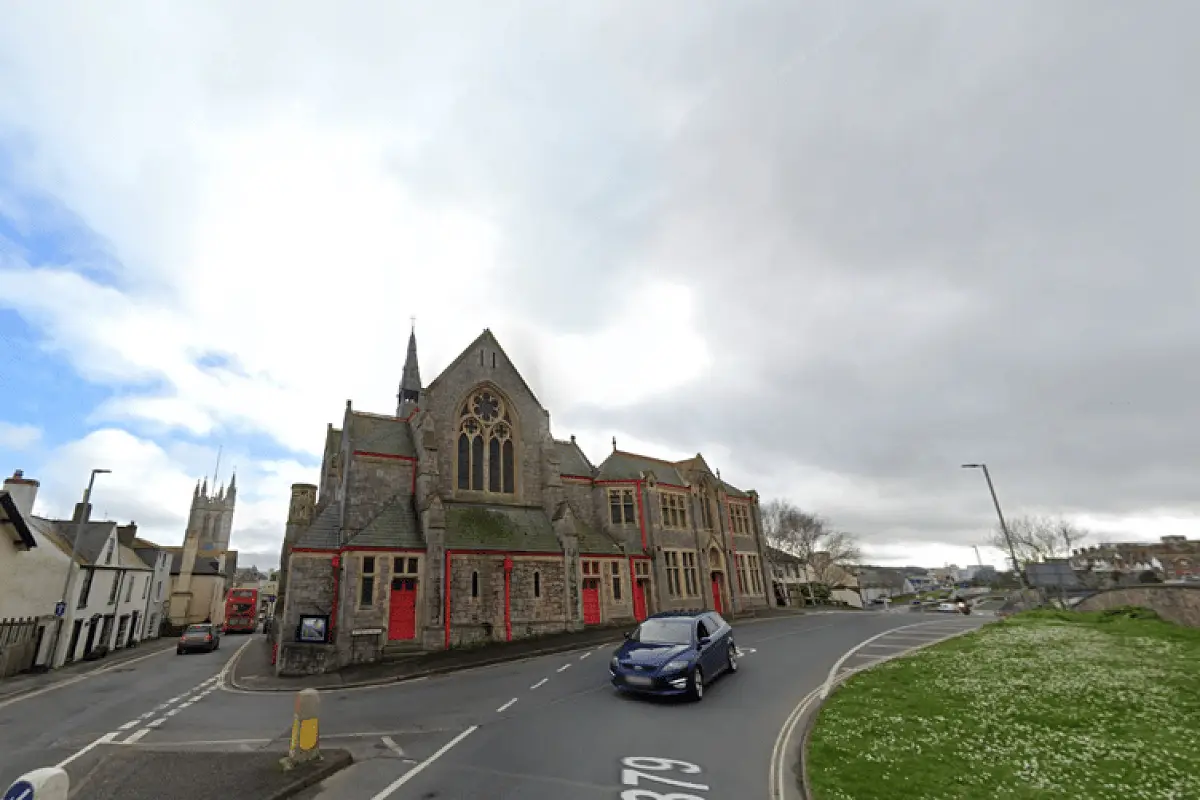
Stone arches rise against a pale Devon sky, the United Reformed Church's rose window catching what little light filters through the clouds above Dawlish Street. Cars pass beneath its red trimmed doors much as they always have, though soon those doors may open not to hymns and Sunday services, but to the smell of freshly baked desserts and the quiet clink of cutlery against plates. This is the vision now before Teignbridge Council, as Church Restaurant and Dessert Shop Teignmouth plans seek to give a long standing landmark an entirely new purpose.
A former church in Teignmouth could be given a new lease of life as a restaurant and dessert shop under plans submitted to the council. Submitted by Fan of Dessert Ltd, the proposal, reference 26/01355/FUL, would see the Grade II listed United Reformed Church on Dawlish Street brought back into regular, active use after standing largely vacant.
Building Around What Already Exists
Rather than pursuing an aggressive renovation, plans have been designed specifically around what already exists inside the building, with the applicants stating the aim is to create a sustainable new use while protecting the structure's architectural and historic character. That approach reflects a growing preference among developers working with listed buildings, favouring adaptation over transformation wherever genuinely possible.
The proposed restaurant would make use of the church's existing main kitchen, which would be brought back into active use for preparing and cooking food, a detail that speaks to the practical efficiency of reusing infrastructure already present within the building rather than starting entirely from scratch.
A Deliberately Light Touch
Crucially, no new kitchen would be installed as part of these plans. Instead, a lightweight, non structural service counter would be installed within the main customer area specifically for preparing and serving desserts and drinks, keeping the physical intervention within the historic space as minimal as possible.
That counter would include freestanding display equipment for items such as ice cream, cakes and other desserts, giving the dessert shop component of the business a genuinely functional presentation area without requiring permanent structural changes to accommodate it.
Reversibility as a Guiding Principle
The applicant has stated that these additions would be reversible and could be removed without materially changing the structure of the building, a commitment that carries particular weight given the church's protected status. That reversibility offers reassurance to heritage bodies and planning officers alike, since it means the building's essential historic fabric would remain intact regardless of how the commercial use eventually unfolds.
The remainder of the proposed work would largely involve fitting out the building with loose seating, serving and display equipment, and other fixtures needed to operate the business day to day, none of which would require permanent alteration to the church's original architecture.
Preserving an Open, Unsubdivided Space
The proposed layout is specifically intended to preserve the open character of the former church, with no structural alterations planned to the principal building itself. That commitment to openness matters considerably for a space originally designed around unobstructed sightlines and a sense of communal gathering, qualities that translate surprisingly well into a restaurant setting built around shared dining experiences.
The plans also seek to avoid unnecessary subdivision of the main church space, making use of existing rooms and facilities wherever possible rather than carving the interior into smaller, disconnected sections purely for commercial convenience. Full details on Teignmouth's local attractions and dining options are available on the official Explore Teignmouth website.
What This Approach Actually Offers the Community
According to the proposal, this overall approach would provide a low intervention and largely reversible form of adaptive reuse, allowing the currently vacant building to return to productive use while retaining its distinctive architectural features. That balance, between commercial viability and historic preservation, represents precisely the kind of pragmatic compromise increasingly necessary for keeping older, protected buildings genuinely in use rather than left to slowly deteriorate through disuse.
If approved, the new restaurant and dessert shop would employ eight people, four full time and four part time positions, offering a meaningful, if modest, boost to local employment within Teignmouth's town centre.
Security Through Active Use
The applicant has argued that having an active business operating from the building would help support its security, maintenance and long term conservation, a rationale commonly cited in adaptive reuse proposals for vacant heritage buildings. Empty structures, particularly those of architectural significance, often face heightened risk of vandalism, weather damage and general neglect precisely because no one remains present to notice problems as they emerge.
Given the church's protected status, Listed Building Consent is also being sought separately, submitted under reference 26/01356/LBC, a parallel application process required specifically because of the building's Grade II designation.
What Happens Next
Teignbridge Council is expected to make a decision on the proposal by November 2, giving residents and heritage advocates a defined window in which to review and comment on the plans before any final ruling. Those interested in reviewing the full proposal, or submitting comments of their own, can do so through Teignbridge Council's planning portal using the reference number 26/01355/FUL.
Adaptive reuse projects of this nature increasingly define how communities across Britain approach underused heritage buildings, balancing genuine architectural preservation against the practical need for spaces to serve some active purpose, a tension playing out across hospitality more broadly as operators weigh distinctive, character rich locations against the financial realities of running a sustainable business, a dynamic echoed even within large scale, publicly traded chains navigating their own cost pressures, as seen in recent coverage of Chipotle's ongoing margin pressure amid rising operating costs, a reminder that whether ancient or modern, every hospitality business ultimately answers to the same underlying arithmetic.
A Building Waiting for Its Next Chapter
Should the plans receive approval this autumn, the United Reformed Church's rose window will continue catching Devon's shifting light much as it always has, though the sounds drifting from beneath its arches will shift from hymn and sermon toward something considerably more everyday, the low hum of conversation, the scrape of chairs, the soft clatter of dessert spoons against ceramic. Whatever comes next for this particular corner of Dawlish Street, the building's essential character, its stone, its windows, its quiet sense of gathering, appears set to remain exactly as generations of Teignmouth residents have always known it, simply gathered now around plates rather than pews.