Container Restaurant Design Revolution: Petti Restaurant Gives Abandoned Shipping Containers New Life in Thoothukudi
Petti Restaurant in Thoothukudi transforms abandoned shipping containers into a sustainable container restaurant with climate-responsive architecture and modern dining design.
 Prajakta Sanjay Warwadkar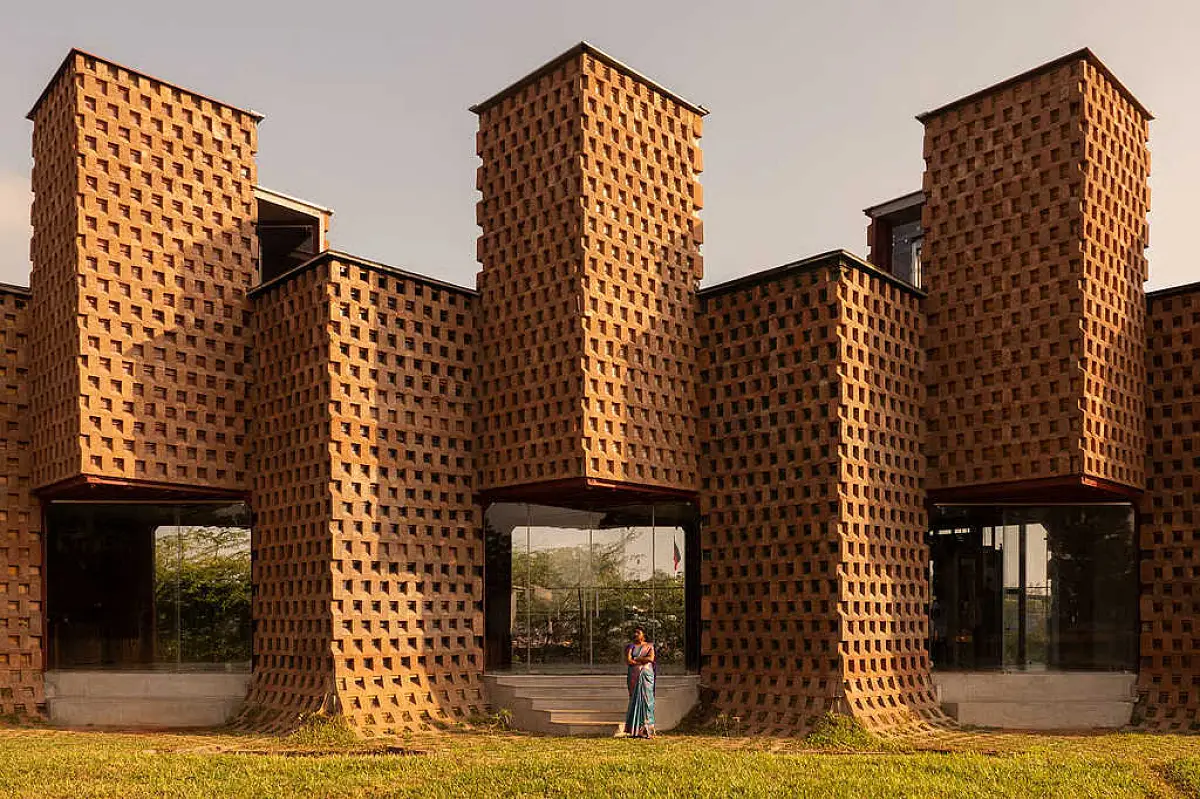
Container Restaurant Design Revolution: Petti Restaurant Gives Abandoned Shipping Containers New Life in Thoothukudi
Talk in the kitchens is getting louder... and this time it’s not about menus, it’s about the build itself. A container restaurant design is pulling serious attention, and Petti Restaurant is right in the middle of it.
The project, shaped by Wallmakers, flips discarded shipping containers into a working restaurant. Not a gimmick. A full-service space built to handle heat, traffic, and daily grind.
And it lands at the right time.
Operators are hunting for cheaper builds. Faster launches. Less waste. This checks all three.
Container Restaurant Design Brings Sustainability Into Modern Hospitality
Shipping Containers Reimagined as Functional Dining Spaces
The core move here is simple, reuse what’s already sitting idle.
No heavy concrete push. No oversized material bill. Just shipping containers stacked, cut, and turned into dining rooms.
That shift matters.
It cuts waste. Speeds up construction. And gives operators a structure they can scale or tweak without ripping everything down.
And guests notice it. The look is raw. Industrial. Different from the usual polished dining rooms.
Container Restaurant Design Focuses on Climate-Responsive Architecture
Natural Cooling and Environmental Adaptation Shape the Space
Thoothukudi isn’t forgiving. Heat and humidity hit hard.
So the build had to work with the climate, not fight it.
Wallmakers leaned into airflow, openings, shaded zones, cross ventilation. Less dependence on constant AC.
That’s not just design talk. It’s cost control.
Lower energy bills. More stable operations. And a dining room that doesn’t feel like a sealed box.
Container Restaurant Design Reflects the Rise of Adaptive Reuse Architecture
Hospitality Industry Embracing Sustainable Construction Models
This isn’t a one-off play.
Adaptive reuse is gaining ground across restaurants, cafés, and even hotels. Old structures. New purpose.
Why? Because new builds are expensive. And timelines are tight.
Operators want speed without burning cash.
Petti Restaurant shows that you can repurpose and still pull a strong crowd.
Container Restaurant Design Creates a Distinctive Dining Identity
Architecture Becoming Part of the Restaurant Experience
The room now sells the story, not just the plate.
Exposed steel. Reworked containers. Tight, clever layouts.
It stands out immediately.
And that matters in a scroll-heavy world where diners pick places off visuals before menus.
Design isn’t background anymore. It’s front-of-house marketing.
Container Restaurant Design Supports Hospitality Innovation in India
Sustainable Restaurant Concepts Expanding Across Urban Markets
India’s restaurant scene is shifting fast.
Operators are testing smaller formats. Smarter builds. Leaner costs.
Container restaurant design fits right into that play.
It’s flexible. It’s faster to launch. And it lines up with growing demand for eco-aware dining spaces.
Customers are paying attention to how a place is built, not just what’s served.
Container Restaurant Design Highlights the Vision of Wallmakers
Architecture Firm Known for Sustainable Design Approaches
Wallmakers isn’t chasing trends. They’ve been working this lane for a while, natural materials, climate-first builds, practical design.
With Petti Restaurant, they double down.
No excess. No over-design. Just structure doing its job.
And that’s where a lot of hospitality builds are heading, less show, more function.
Container Restaurant Design Signals a Broader Shift in Hospitality Trends
Experiential and Eco-Friendly Dining Concepts Continue Growing
This is bigger than one project.
Guests want something different. Operators want something efficient.
Container builds hit both sides.
They move fast. They cost less. And they give a strong identity out of the gate.
And that’s why this model is sticking.
Petti Restaurant in Thoothukudi isn’t just a design story, it’s a signal. The build itself is now part of the business model.
For more insights into hospitality business expansion and restaurant innovation, visit restaurant industry growth trends.
Learn more about shipping container architecture and its growing role in commercial design.