New York Korean Restaurants Face Ingredient Shortage as K-Food Demand Surges
Korean restaurants in New York are struggling to secure authentic ingredients amid rising K-food demand, leading chefs to import supplies and cultivate crops locally.
 Prajakta Sanjay Warwadkar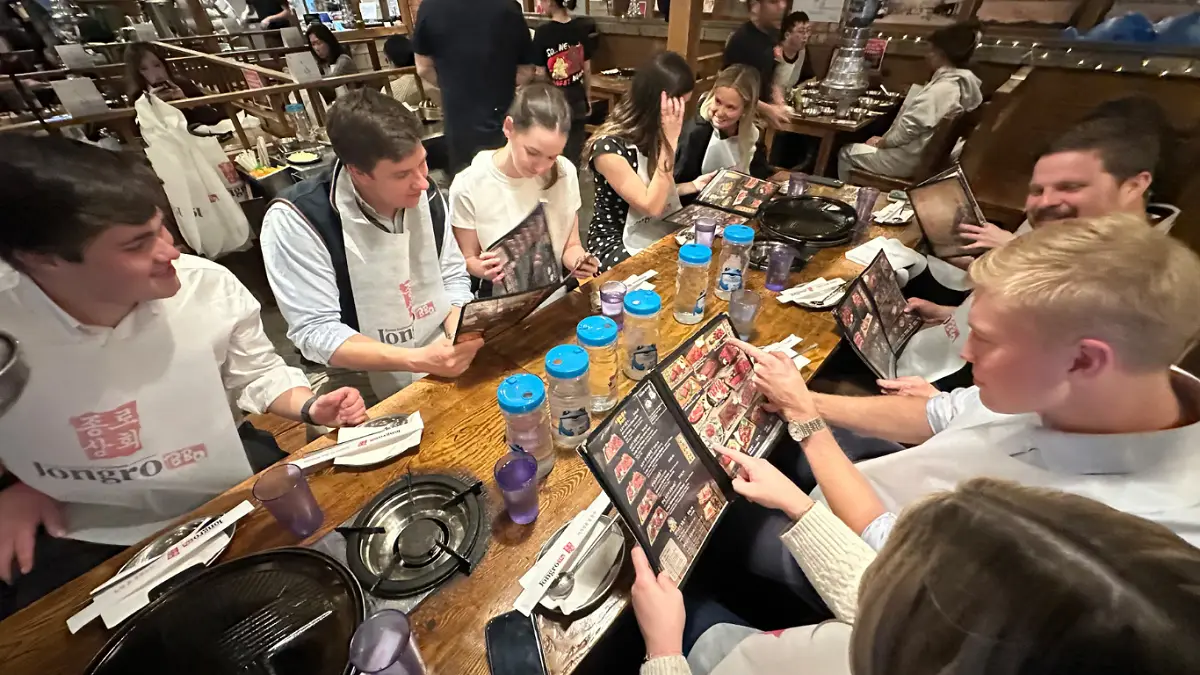
Korean restaurants in New York are facing mounting challenges in sourcing authentic ingredients as demand for Korean cuisine continues to surge across the United States. The shortage has led chefs to import supplies directly from Korea, cultivate crops locally, and rely on emerging specialty distribution networks to sustain operations.
The supply constraints come amid rapid growth in global interest in K-food, which has become the most widely recognized segment of Korean cultural exports. According to a survey by the Korea International Cultural Exchange Promotion Agency, 53.7% of respondents across 28 countries identified Korean food as popular in their local markets, surpassing music, beauty, and television content.
Rising Demand Strains Ingredient Supply Chains
Restaurants and supermarkets in New York are experiencing increased demand for Korean food products, with limited availability of key ingredients intensifying competition among operators. Korean chefs report that maintaining authenticity has become increasingly difficult due to the scarcity and high cost of traditional inputs.
At restaurants such as Jongro BBQ in Manhattan’s Koreatown, customer demographics have shifted significantly, with more than 90% of diners now consisting of non-Korean patrons. The growing interest has placed pressure on supply chains, as substituting local ingredients often affects taste and customer satisfaction.
Price disparities highlight the challenge. Dried pollock, priced at approximately 20,000 won per kilogram in Korea, costs around $24 in New York, while bracken fern stems rise from 5,000 won domestically to $26 in the U.S., reflecting a two- to threefold increase. Restaurant operators note that even basic produce such as lettuce is more expensive and often unsuitable for traditional recipes.
Chefs Turn to Local Farming for Authenticity
To address supply shortages, several Korean chefs in New York have begun cultivating their own ingredients. In the Hudson Valley region, four chefs jointly operate a one-acre farm where they grow crops such as perilla leaves, green chili peppers, garlic chives, eggplants, and bellflower roots.
The initiative, launched in March last year, reflects a broader effort to recreate authentic Korean flavors without relying on substitutes. The farm produced over ten types of crops in its first year, with plans to expand into additional seasonal vegetables that are difficult to source locally.
Chefs involved in the project dedicate time each week to farming activities, using the produce directly in their restaurant menus. The approach aims to ensure quality control while reinforcing authenticity in a competitive market increasingly driven by consumer expectations.
Specialty Supply Platforms Gain Traction
The supply gap has also led to the emergence of new distribution models. Kim’C Market, founded in 2019, has positioned itself as a specialized supplier of Korean ingredients in New York, importing agricultural products through official channels and distributing them to both restaurants and consumers.
The platform supplies high-end restaurants, including Michelin-starred establishments, while also expanding into direct-to-consumer sales. More than half of its revenue now comes from retail customers, reflecting broader adoption of Korean ingredients in American households.
Products such as Golden Queen rice, priced at $64.95 for 4.5 kilograms, along with traditional sauces like gochujang, are gaining popularity despite premium pricing. The growth is largely driven by demand for authenticity and the increasing integration of Korean flavors into everyday cooking.
K-Food Growth Extends Beyond Restaurants
The expansion of Korean cuisine is supported by strong export performance. K-food exports reached $11.46 billion last year, nearly doubling from $6.05 billion in 2016, according to data from the Korea Agro-Fisheries & Food Trade Corporation.
In the U.S., Korean sauces and packaged foods are now widely available across mainstream retail channels. Products that were once limited to specialty Asian aisles are increasingly found alongside standard grocery items, reflecting a shift in consumer behavior.
Major Korean food brands have also strengthened their presence. CJ CheilJedang’s Bibigo brand leads the U.S. dumpling market, while its frozen gimbap product has recorded more than 8 million units sold overseas since its launch in 2023, with annual growth exceeding 130%.
Industry Calls for Stronger Distribution Strategies
Industry experts emphasize the need for more structured overseas supply chains to support continued growth. Recommendations include investments in cold storage infrastructure and improved logistics networks to facilitate the export of perishable goods.
As demand for Korean cuisine continues to expand globally, restaurants in key markets such as New York are adapting through innovation in sourcing and production. The combination of local cultivation, direct imports, and specialized distribution platforms reflects a broader transformation in how international cuisines scale in response to rising demand.