Restaurant Industry Struggles in America: The Break That Changed Everything
Restaurant industry struggles in America are driving a quiet revolution, as some operators choose to close for summer breaks, pay their staff, and rebuild the human cost of hospitality.
 RUKAIYA KADIWAL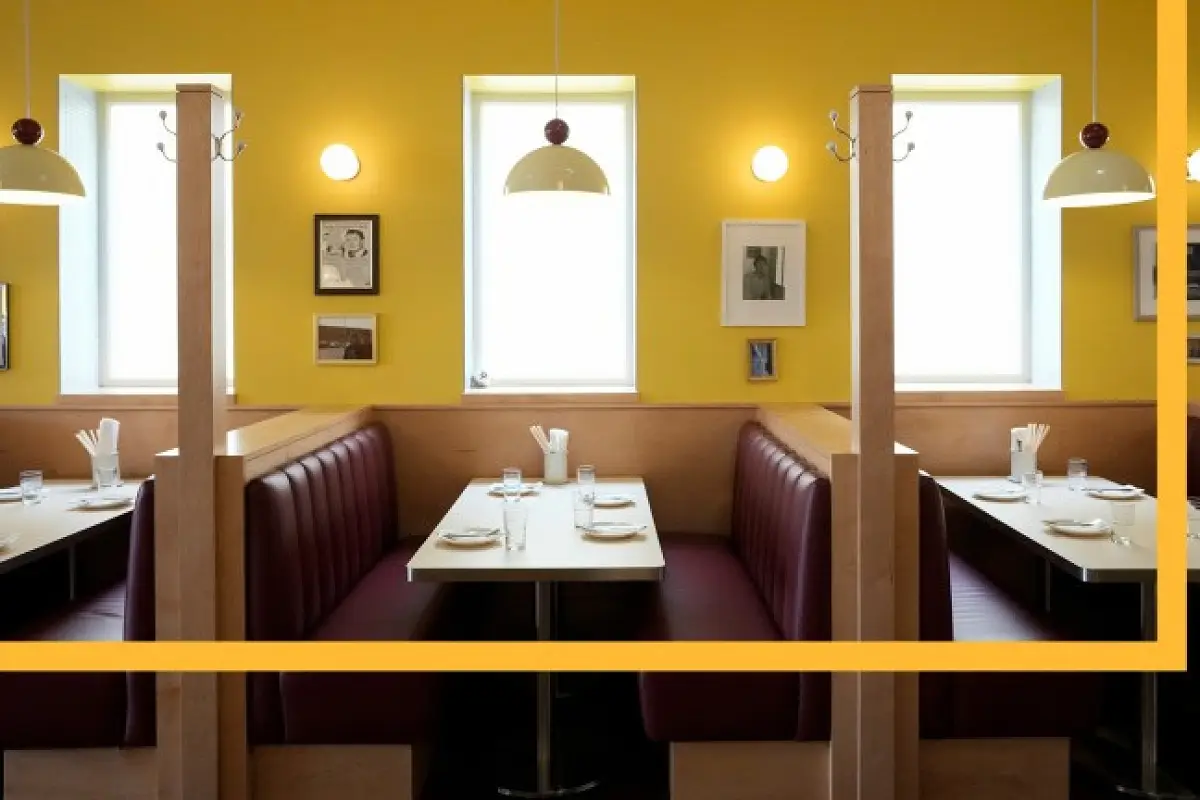
When her mother died in 2023, Nia Rayo went to work after the funeral. Her then-employer offered her the month off. She knew it was not a real offer. In the restaurant industry, time away from the floor means time without pay, and the arithmetic of that reality is simple enough that it does not require much consideration. She asked herself what she would do with a month off. She answered her own question. She went to her shift.
Restaurant Industry Struggles in America Are Driving a Quiet Rethinking of How Restaurants Work
The restaurant industry struggles in America are not new. The hours, the margins, the turnover, the mental health toll, the physical exhaustion of shift work conducted under conditions that would not be acceptable in most other professional environments, these have been the industry's defining characteristics for long enough that many of its workers have stopped expecting anything different. What is new, in small and scattered examples across the country, is a handful of operators who have decided to test whether running a restaurant differently produces different results.
Agnes and Sherman, an Asian American diner in Houston that has earned James Beard Foundation nominations, recognition from the Michelin Guide, and a place on Bon Appétit's Best New Restaurants list within its first year of operation, is one of those examples. When the restaurant closed for a one-week summer break and paid its employees for six of those days, Rayo, who had been working in restaurants for fifteen years without ever taking a real vacation, was shocked. "I felt a lot of gratitude. I felt lucky," she said.
The Co-Owners Who Built the Break Into the Budget
Agnes and Sherman is run by Nick Wong and Lisa Lee, college friends who became business partners and then fiancés, a biographical arc that mirrors the restaurant's own convergence of practical necessity and genuine affection. When they designed the business model for the diner, they built in a set of incentives that the restaurant industry rarely offers its workers: paid time off, health insurance, and partially paid winter and summer breaks scheduled during January and August, the restaurant's slowest months for foot traffic and revenue.
The decision required a calculation that most restaurant operators do not perform, or perform and conclude is impossible. Wong described the question he and Lee asked themselves during the planning period. "Do we have to optimize all 52 weeks of the year?" he asked then. "Can we just optimize 50 weeks of the year?" That framing, modest in its ambition and radical in its implications for an industry built on the assumption that a restaurant must be open as many hours as the market will support, is what made the break possible. "We built it into our financial projections," Lee told Straight Arrow News.
What the Staff Actually Did With a Week Off
When the closure arrived, its effects were immediate and personal in ways that aggregate data about worker wellbeing cannot fully capture. David Perez, the restaurant's assistant general manager and beverage director, had not encountered a paid break in any previous restaurant job. "Every other place that I've worked at, this did not exist," he said. Beth Sharpe, a line cook who came to the restaurant from a retail background, described her reaction to the announcement with a simplicity that the industry's customary stoicism rarely permits. "Honestly, I could've cried," she said.
Rayo used her week to spend time with family and to take her first international solo trip, travelling to Mexico City. Perez attended to his family while his father recovered from surgery. Sharpe spent the week with her husband and two children, watching films and doing the ordinary things that shift schedules had previously made difficult to schedule around. Wong and Lee went to Tennessee and pursued horseback riding and culinary exploration. When the staff returned, Lee noticed a change in the room. "Everybody's really excited to see each other," she told Straight Arrow News. "Everybody feels a little bit more refreshed."
Wong's Kitchen History and the Promise He Made to Himself
Wong is a graduate of the French Culinary Institute who spent years working in the kitchens of the Momofuku Restaurant Group in New York, and who staged on occasion at Noma in Copenhagen, the Michelin-starred restaurant long regarded as among the world's most influential. Those kitchens shaped him. So did the conditions within them. The restaurant industry has operated for decades under the brigade de cuisine system, a French military-inspired hierarchy whose structure has historically made the transmission of abusive behavior from senior to junior kitchen staff both possible and, in some establishments, routine.
Wong has spoken directly about the environment he came up in and the resolution he made within it. "That's how I came up and I really made it a point that this is not how I want to be," he said. During the early years of his career, he made himself a promise: "When I grow up, I want to be better than these people that have terrorized me." Agnes and Sherman is, in part, the fulfillment of that promise, a restaurant whose working conditions are an explicit argument against the ones that produced the chef who runs it.
The Numbers Behind the Industry's Strain
The structural pressures that make decisions like Agnes and Sherman's possible for some operators but not most are documented rather than anecdotal. The average profit margin for restaurants hovers between three and five percent, with businesses considered healthy exceeding nine percent. Jonathan Horowitz, CEO of Convive Hospitality Consulting in Houston, described the operating environment plainly. "We are still seeing economic pressures from increased costs, and that's across the board: rent, labor, food costs, insurance," he told Straight Arrow News. Customers have become more selective with their spending, adding demand-side pressure to the cost-side squeeze that already characterises the sector.
The human consequences of those pressures accumulate quietly and visibly at the same time. A 2021 study cited by US Foods found that sixty percent of restaurant servers have at least one mental health problem. The average turnover rate for restaurant staff hovers at seventy-five percent. The Centers for Disease Control and Prevention found that in 2021, suicide rates for male chefs in the service industry reached 66.5 per 100,000, more than double the rate for men across all industries. These are not numbers that describe a workforce under manageable stress. They describe an industry whose conditions routinely exceed the capacity of its workers to cope with them.
Southern Smoke and the Infrastructure of Support
Catarina Bill, chief mission officer at Southern Smoke Foundation, a Texas-based nonprofit that provides mental health resources and emergency financial assistance to service industry workers, described the compounding nature of the sector's stressors with a directness that reflects years of working with workers at their most depleted. "Industry workers are having to face a lot in their communities, in the environment, and then go to work and be expected to leave it at the door," she said.
Southern Smoke runs two programmes in multiple states: an emergency fund for unexpected expenses ranging from car repairs to rent assistance, and Behind You, a free counselling service for service workers named after a standard kitchen call-out. To date, the foundation has distributed more than sixteen million dollars and provided over twelve thousand counselling sessions. These numbers describe a gap between what the industry demands of its workers and what the industry provides them, a gap that no single restaurant policy can close but that operators like Agnes and Sherman are, in their own way, working to narrow.
A Model That Cannot Scale Everywhere and What It Signals Regardless
Horowitz is realistic about the limits of what Agnes and Sherman's approach can achieve across an industry as structurally pressured as the American restaurant sector. Not every establishment can adopt vacation models. The margins that make a paid summer break possible at one Houston diner are not available to every operator, and the financial planning that Wong and Lee undertook before opening is a precondition that most existing restaurants cannot retroactively apply to a business model that has already calcified around different assumptions.
But Bill sees the example as the beginning of a conversation rather than a complete solution. "It's going to open up conversation," she said. And Horowitz acknowledged that the decision to rest carries a return on investment that the standard financial metrics do not capture. "The restaurant owner and operator recognises the importance of taking a break for other reasons, whether that's just a reset, taking some well-deserved vacation time with family, or mental health," he said. John Vincent, a licensed psychologist and University of Houston professor who studies stress in service industries, put the underlying principle simply. "Taking a break is a good thing."
A Week, a Return, and a Kitchen That Remembered Why It Opened
For Nia Rayo, who went to work after her mother's funeral in 2023 because the alternative was going without pay, a week in Mexico City with her passport for the first time represents something that the restaurant industry has rarely offered its workers: evidence that the people responsible for a kitchen know that the kitchen is not the only thing that matters. When she came back, the diner's dining room was the same yellow-walled, booth-lined space it had been before. The food was the same food. The service was the same service. What was different was the person delivering it, rested, for the first time, in fifteen years of work. That difference is small and immeasurable and entirely the point. Wong and Lee have figured out their priorities. "We have figured out our priorities," Lee said. Not every restaurant will follow. But every restaurant might, eventually, have to decide whether it was watching when Agnes and Sherman closed its doors and paid its staff to rest.
Related reading: Rosina London restaurant review: Italian soul in SW17