Restaurants in the Algarve Face a Coming Shake Out
Restaurants in the Algarve are facing a defining moment as rising costs, smarter tourists, and digital competition threaten up to 45 percent of the region's 5,000 operators.
 RUKAIYA KADIWAL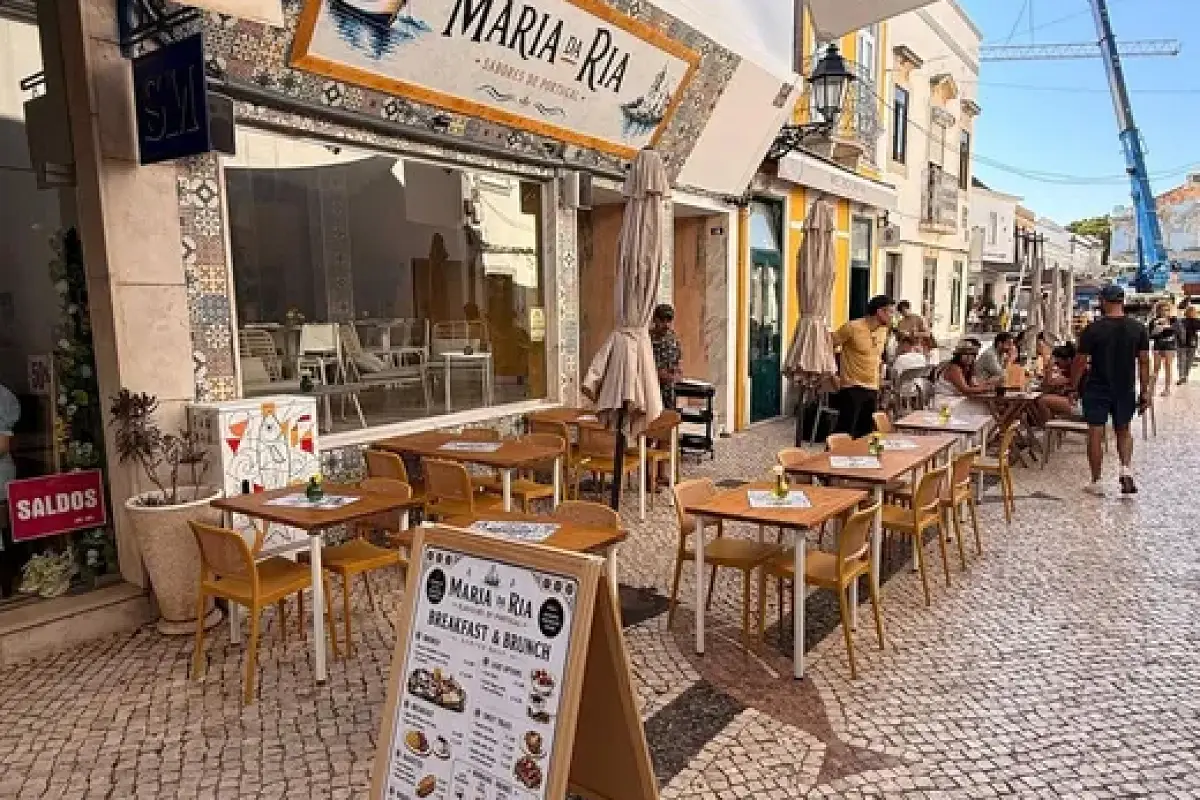
The terrace fills at noon the way it has for years. Chairs scrape across cobblestone, menus are handed out in four languages, and somewhere close by another restaurant is doing exactly the same thing. In the Algarve in summer, the tourist volume has always absorbed the competition. A bad location could survive on foot traffic. A weak kitchen could hide behind a busy August. A restaurant without a clear identity could exist for years in the shadow of the ones around it, sustained by the sheer number of visitors arriving from across Europe with an appetite for sunshine and a long dinner outside. That era is not over. But something about it is ending.
Restaurants in the Algarve Are Entering a Period of Structural Change
Peter Cruiming, journalist and founder of HotspotsAlgarve.com, an independent restaurant and lifestyle guide that has spent years visiting, filtering and curating the region's dining options, has published a direct assessment of what is coming. Restaurants in the Algarve, he argues, are about to feel a transformation that the broader restaurant industry is already experiencing, driven by rising costs, technology, and consumers who arrive better informed than any previous generation of tourists. The Algarve has not yet felt the full weight of that shift, but the early signs are visible to anyone paying attention.
There are approximately 5,000 restaurants in the Algarve. The region recorded 20.8 million overnight stays in 2025, around 16 million from international visitors, generating approximately 1.8 billion euros in tourism accommodation revenue, according to Turismo de Portugal. Those numbers represent a strong and active market. They do not, Cruiming suggests, represent protection from the pressures now reshaping hospitality economics across Europe.
The Problem of Being Forgettable
The Algarve has many excellent restaurants. It also has an enormous number of remarkably similar ones. Burrata, tuna tataki, Wagyu burgers, sushi, truffle fries, and cheesecake served in a beige interior with plants. There is nothing wrong with any of it individually. The problem is the accumulation, the way it erases distinction across the market and leaves the visitor unable to remember, three months later, which specific restaurant they sat in or what made the meal worth choosing over the twenty others on the same street.
Being good, Cruiming argues, may no longer be enough. The real danger facing the Algarve's restaurant sector is not failure but forgettability, the quiet disappearance of a business that never did anything badly enough to be noticed or well enough to be remembered. In a market where the tourist has always arrived in sufficient numbers to fill the tables regardless of distinction, that danger was always present but never fatal. The conditions that made it survivable are shifting.
How Competition Moved From the Street to the Smartphone
Tourism has protected mediocre restaurants for a surprisingly long time in coastal destinations like the Algarve. A good location could hide average food. A busy August could sustain a weak business model through the quieter months that followed. The visitor who chose a restaurant because it was in front of them was not evaluating it against the full range of options available in the same neighborhood, because accessing that information required effort that most tourists on holiday were not prepared to make.
That visitor no longer exists in the same form. Today's tourist to the Algarve checks Google, Hotspots Algarve, photographs, reviews, and menus before leaving the hotel. The restaurant that exists only on a terrace, that has not translated its menu online or made its dietary options clearly visible, is invisible to a growing share of the people who might otherwise choose it. Remarkably, there are still restaurants in 2026 operating without an online menu or one clearly displayed at the entrance, a gap between the restaurant's self-understanding and the customer's information environment that will close on the customer's terms rather than the restaurant's.
The dietary requirement dimension of this shift deserves particular attention. A single vegan or gluten-free guest can determine where an entire family or group of six chooses to eat. If that guest cannot see anything suitable, the entire table may go somewhere else. A restaurant that fails to communicate its options to the guest with dietary requirements is not merely losing one cover. It is potentially losing the group that guest belongs to, repeatedly, invisibly, without ever understanding why those tables went elsewhere.
The Shake-Out Has Already Begun
The transformation Cruiming describes is not a prediction about a future that has not arrived. It is a description of a process already underway. During the past year, five restaurants from the Hotspots Algarve Top 100 closed or went out of business. That is five percent in one year, among restaurants that had been identified as some of the best in the region. If highly rated restaurants with strong reputations are disappearing from a curated list of the area's strongest operators, the pressure on the thousands of average restaurants surrounding them is proportionally more severe.
Cruiming's personal forecast is explicit. He expects that during the next year, perhaps ten to fifteen percent of today's Algarve restaurants will disappear or materially change. Within two years, perhaps twenty to thirty percent. Over five years, turnover of thirty-five to forty-five percent among today's restaurants would not surprise him. That could mean between 1,750 and 2,250 of the restaurants currently operating in the Algarve no longer existing in their current form. He is careful to note that this is a forecast rather than an official statistic, but the direction of the analysis is grounded in observable data rather than speculation.
Which Restaurants Will Survive and Why
Cruiming identifies two broad categories of restaurant he believes will emerge strongest from the coming consolidation. The first is the extremely efficient, affordable local restaurants and good casual concepts that offer excellent food and genuine value without unnecessary complexity. The second is the extremely distinctive, restaurants with soul, memorable locations, owners who are actually present, chefs cooking food that cannot easily be found elsewhere, and teams offering genuine hospitality rather than the performance of it.
The distinction between these two categories is not primarily about price point or cuisine. It is about whether the experience of eating there produces something that stays with the guest after they have left, something that generates a recommendation rather than a vague positive memory that fades before the next meal. People rarely remember the perfect burger, Cruiming notes. They remember how you made them feel. The Algarve does not need another five hundred average restaurants. It needs restaurants that people would genuinely miss if they disappeared.
What the Hotspots Algarve Top 500 Represents
Cruiming's operation at HotspotsAlgarve.com is itself a reflection of the market dynamics he describes. From approximately 5,000 restaurants, the forthcoming Hotspots Algarve Top 500 Recommended Restaurants effectively recommends only around ten percent. The self-stated purpose of the guide is not to tell people where restaurants are, a function Google performs adequately, but to visit, filter, compare and curate, and ultimately answer one question: is this restaurant worth leaving your house for. That question, deceptively simple in its phrasing, contains the entire commercial challenge facing the Algarve's restaurant sector. Five thousand restaurants are competing to be one of the places a visitor chooses when they could choose any of the others.
A Region That Tourism Protected and Must Now Reinvent
The Algarve's restaurant sector arrived at this moment through decades in which its fundamental advantages, the climate, the coastline, the consistent tourist volume, the long dining culture of the region, provided enough structural support that individual operators did not need to be exceptional to survive. That support has not disappeared. The 20.8 million overnight stays recorded in 2025 represent a market that remains genuinely strong. What has changed is the relationship between that market's scale and the expectations of the visitors it brings, expectations shaped by digital information access, dietary awareness, and a generation of travelers who have eaten in enough places to know the difference between a restaurant that happens to be open and a restaurant that is worth finding.
The restaurants that will define the Algarve's dining culture in five years are operating today, some of them already among the best, others still finding their way toward the clarity of identity that distinguishes a memorable meal from a forgettable one. The shake-out that is coming will not empty the Algarve of restaurants. It will empty it of the ones that never gave anyone a reason to come back, and it will leave behind the ones that understood, before the consolidation arrived, that the question every restaurant must eventually answer is not whether the terrace is full in August but whether, in December, someone somewhere is still telling a friend that they need to go.
Related reading: Micro dining restaurants in India: inside the exclusive trend reshaping fine dining