Voice Ordering & AI Assistants in Restaurants: Why Talking to a Machine Doesn’t Feel So Strange Anymore
Voice ordering and AI assistants help restaurants streamline service and improve ordering speed in 2026. Learn what's driving adoption, read more.
 Prajakta Sanjay Warwadkar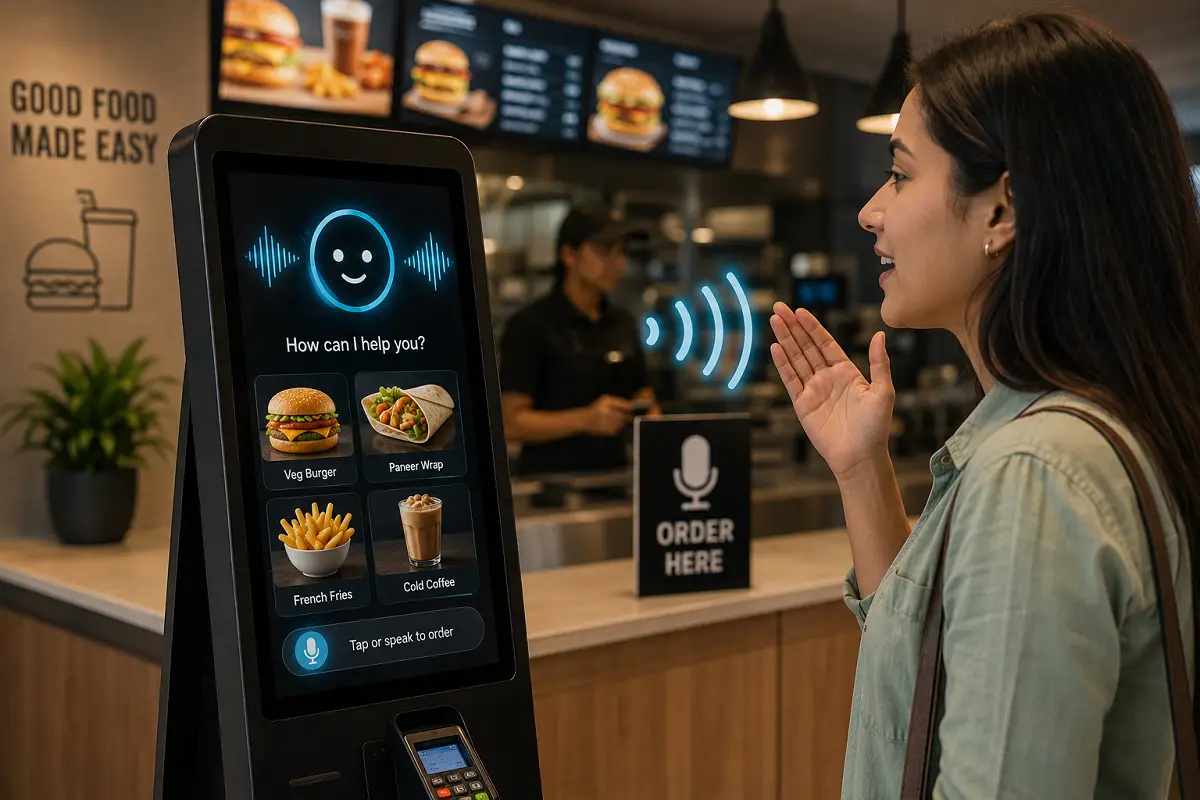
Voice Ordering & AI Assistants in Restaurants: Why Talking to a Machine Doesn’t Feel So Strange Anymore
Restaurants are turning toward voice ordering and AI assistants because customers now expect speed almost by default. Nobody wants long queues, repeated questions, or delayed orders anymore. What felt futuristic a few years ago is becoming normal inside cafes, drive-thrus, and quick-service restaurants, mostly because people care more about convenience than whether a human or machine takes the order. And honestly, once the order arrives correctly, most diners stop thinking about it altogether.
Why Are Restaurants Suddenly Using AI Voice Ordering Systems?
A lot of it comes down to pressure inside restaurant operations.
Peak-hour rushes still overwhelm staff in many outlets. One delay at the billing counter slows the kitchen, then deliveries start piling up, then customers get irritated. It happens fast. AI ordering systems help restaurants absorb some of that pressure quietly in the background.
And unlike staff, the system doesn’t get tired during a Friday night rush.
The interesting thing is customers adjusted to voice ordering much quicker than restaurants expected. Maybe because people already talk to phones constantly now. Asking Siri for directions, talking to Alexa at home, sending voice notes all day, so speaking into a restaurant kiosk doesn’t feel completely unnatural anymore.
Still a little awkward sometimes though. Especially the first time.
How Does AI Voice Ordering Actually Work Inside Restaurants?
Most systems use speech recognition software combined with machine learning to understand what customers are saying. The AI processes the order, confirms it, then sends everything directly to the kitchen system within seconds.
The newer systems can also:
-
Suggest meal combos automatically
-
Handle regional accents more accurately
-
Recommend add-ons during ordering
-
Remember repeat customer preferences
-
Answer simple menu questions instantly
Some restaurants are experimenting with surprisingly detailed AI suggestions too. If it’s raining heavily outside, the assistant might push hot beverages or fried snacks more aggressively. During late-night ordering hours, it may recommend comfort meals or combo boxes people usually buy after 10 PM.
Small operational tweaks like that actually increase sales more than people realise.
How Does Voice Ordering Compare to Traditional Restaurant Ordering?
The difference isn’t really about technology versus humans. It’s more about what customers expect from that particular restaurant experience.
|
Traditional Ordering |
AI Voice Ordering |
|
Feels more personal and conversational |
Feels quicker and more task-focused |
|
Depends heavily on staff speed |
Works consistently during rush hours |
|
Easier for emotional hospitality |
Better for repetitive high-volume orders |
|
Can handle unusual requests better |
Works best with standard menu formats |
|
Human interaction feels warmer |
Faster turnaround in many cases |
And honestly, both systems probably continue together. Restaurants aren’t fully replacing staff everywhere like people once predicted.
At least not yet.
What Are Diners Actually Feeling About AI Assistants in Restaurants?
Most diners don’t hate the idea anymore. That’s the biggest shift.
People mostly care about whether the system understands them properly. If customers have to repeat “one cold coffee without sugar” four times, frustration appears immediately. But when the interaction is smooth, diners accept it surprisingly fast.
Younger customers barely think twice about it now.
Older diners still prefer human interaction in many situations though, especially in full-service restaurants where hospitality matters beyond just food delivery. A machine can process an order efficiently, sure, but it can’t fully recreate warmth or instinctive service yet. Like noticing someone looks confused while reading the menu or recommending something based on mood. Those little human things still matter more than tech companies sometimes admit.
Late-night ordering is where AI systems are becoming especially popular. Customers often prefer quick, silent interactions during busy or exhausted hours instead of waiting for overloaded staff.
Is Voice Ordering Actually Helping Restaurants Make More Money?
In many cases, yes, quite a bit actually.
Restaurants using AI ordering systems often process orders faster, reduce front-counter bottlenecks, and increase average order sizes through automated upselling. Even adding one extra side dish or beverage recommendation across hundreds of orders daily creates noticeable revenue over time.
But the setup costs still scare smaller restaurants a little.
Large chains adapt faster because they can spread technology costs across multiple outlets. Independent cafes and local restaurants are moving slower, especially outside metro cities where margins are tighter and customers still expect more direct interaction.
Pro-Tip
In our experience, restaurants get the best response when AI ordering supports the staff instead of replacing them completely. Customers feel more relaxed when there’s still a real person nearby to step in if the system misunderstands an order or freezes midway. Fully automated service still feels slightly impersonal for families, older guests, and even some younger diners during longer dining experiences.
What’s Next for Voice Ordering & AI Assistants Heading Into 2026?
Voice ordering is expected to expand rapidly across quick-service chains, food courts, cloud kitchens, and drive-thru formats heading into 2026. The technology is becoming more natural sounding too. Less robotic. Less stiff.
Regional language support will probably decide which systems succeed most in India. Restaurants able to smoothly process Hindi, Marathi, Tamil, or Bengali voice orders will have a huge advantage in mass-market dining spaces.
And honestly, within a few years, customers may stop calling it “AI ordering” entirely. It’ll just become another normal part of visiting a restaurant.
Keep exploring: How smart kitchens are changing restaurant operations in 2026, Why self-order kiosks are growing across Indian food chains, and The future of automated dining experiences in modern restaurants.