Beginner Food Cost Control: Complete Training Guide with SOP & Professional Standards
Learn beginner food cost control training with SOP, portion control, inventory management, and cost monitoring techniques for hotel and restaurant operations.
 Jyoti Kushwaha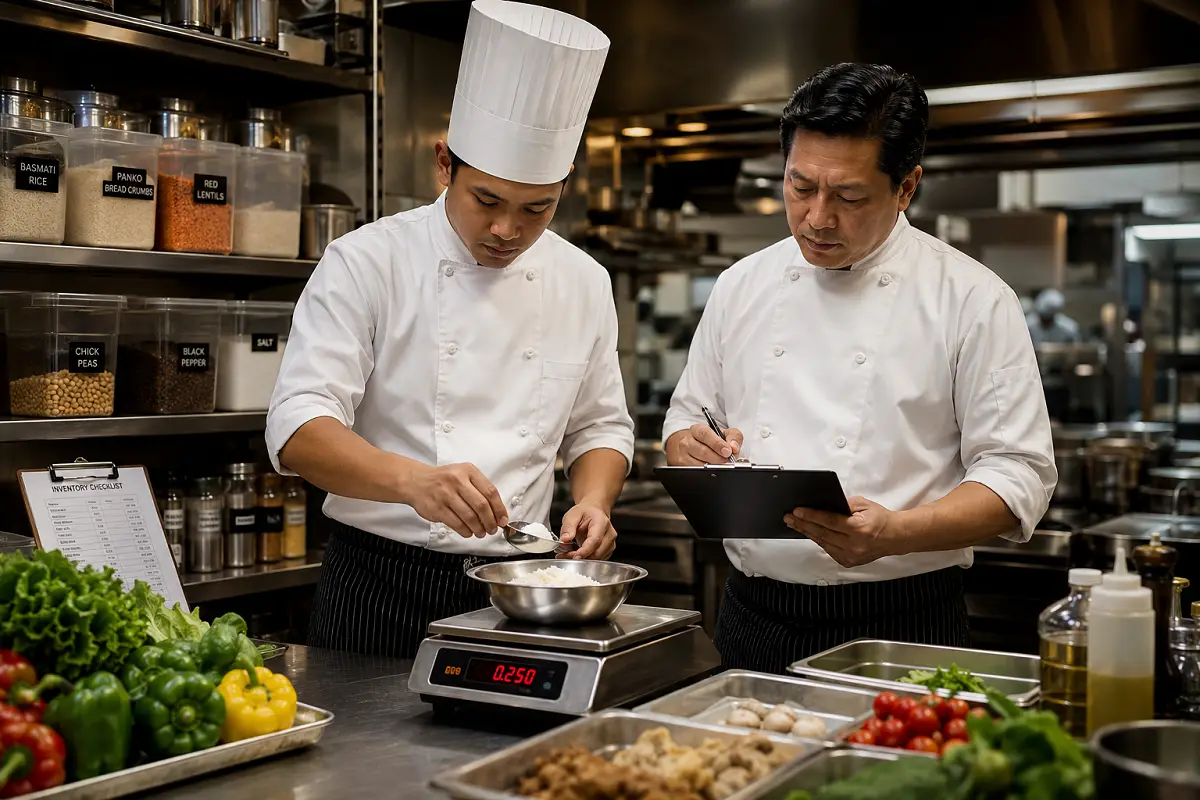
Talk in the pantry is focused on one thing. Food cost slips don’t show on the plate, but they hit your profit hard.
Overview of Beginner Food Cost Control Training
Food cost is where most kitchens lose money quietly. Not in one big mistake, but in small misses all day. It starts with raw material, then storage, then prep, then portioning. If you are not watching each step, money leaks. Over-portioning, wastage, poor stock control, even small theft. It all adds up fast. And this is not just the kitchen’s job. Purchasing, stores, kitchen, and service all play a role. This training builds control. Standard recipes. Tight portions. Clean stock movement. Daily tracking.
SOP Procedure for Food Cost Control
This is your discipline system. Follow it every day.
1. Standard Recipe Implementation
Every dish follows a fixed recipe. No guessing. No extra.
Pro tip: If chefs start “adjusting,” your cost is already off.
2. Portion Control
Use weighing tools. Stick to portion size. No over-serving.
3. Purchase Control
Order based on forecast. Approved suppliers only. Overstocking kills freshness and cash flow.
4. Receiving Check
Check quantity and quality at delivery. Match with purchase order. Reject anything below standard.
5. Storage Management
Store at correct temperature. Follow FIFO. First in, first out.
6. Production Control
Cook based on demand. Not assumptions. Overproduction becomes waste.
7. Waste Monitoring
Track every waste. Spoilage, prep errors, overproduction. Write it down.
8. Daily Cost Tracking
Compare daily consumption with sales. Know your food cost percentage every day.
Operational Steps and Cost Control Workflow
This is how you control cost through the shift. Step-by-Step Cost Control Workflow:
• Forecast covers and demand
• Plan menu and ingredient needs
• Purchase based on demand
• Check all deliveries for quality and quantity
• Store using FIFO method
• Issue stock through requisition system
• Cook using standard recipes
• Control portions during service
• Record wastage and leftovers
• Calculate daily food cost and check variance
Operational Benchmarks:
• Food cost percentage around 25 to 35% depending on concept
• Wastage kept minimal
• Portion accuracy at 100%
• Inventory variance very low
Operational Controls:
• Do not overproduce during rush
• Keep kitchen and service aligned
• Watch high-cost items closely
• Record every stock movement properly Small control steps prevent big losses.
Guest Interaction and Service Impact on Food Cost
Service team affects cost more than they think.
Service Impact Areas:
• Correct order taking avoids waste
• Clear communication with kitchen prevents mistakes
• Suggestive selling moves slow items
• Managing portion expectations reduces returns
Handling Order Errors:
• Confirm order clearly
• Repeat before sending to kitchen
• Fix mistakes immediately
Managing Leftovers:
• Track returned food
• Understand why it came back
• Share feedback with kitchen
• Adjust portion size if needed Front and back must work together. Or cost goes out of control.
Tools and Equipment for Food Cost Control
You cannot control what you do not track.
Primary Tools:
- POS system for sales tracking
- Inventory software
- Recipe costing sheets
- Purchase and receiving records
Support Equipment:
• Weighing scales and measuring tools
• Storage containers and labeling systems
• Temperature monitoring devices
• Waste tracking logs
Usage Guidelines:
• Enter data correctly every time
• Keep inventory updated
• Use measuring tools for every portion
• Check equipment regularly Good data gives you control. Bad data hides problems.
Service Standards and Performance Metrics
This is where discipline shows.
Key Performance Metrics:
• Food cost percentage within target
• Portion control at 100%
• Wastage minimal
• Inventory accuracy high
• Cost variance controlled
• Profit margin maintained If these slip, you fix it immediately.
Evaluation and Continuous Improvement
You monitor. You correct. You repeat.
Evaluation Methods:
• Daily food cost reports
• Inventory audits
• Waste tracking
• Sales versus consumption checks
• Staff performance reviews
Common problems are always the same. Over-portioning. Poor stock control. No monitoring. Fix them with training, strict SOP follow-through, and supervision. Food cost control is not theory. It is daily discipline. When you control it, the kitchen makes money. When you don’t, it disappears.
Read more about Advanced restraunt management.