Crisis Management Training for Food and Beverage Operations
Learn crisis management training for food and beverage operations with SOP, emergency response workflow, and service recovery techniques in restaurants.
 Jyoti Kushwaha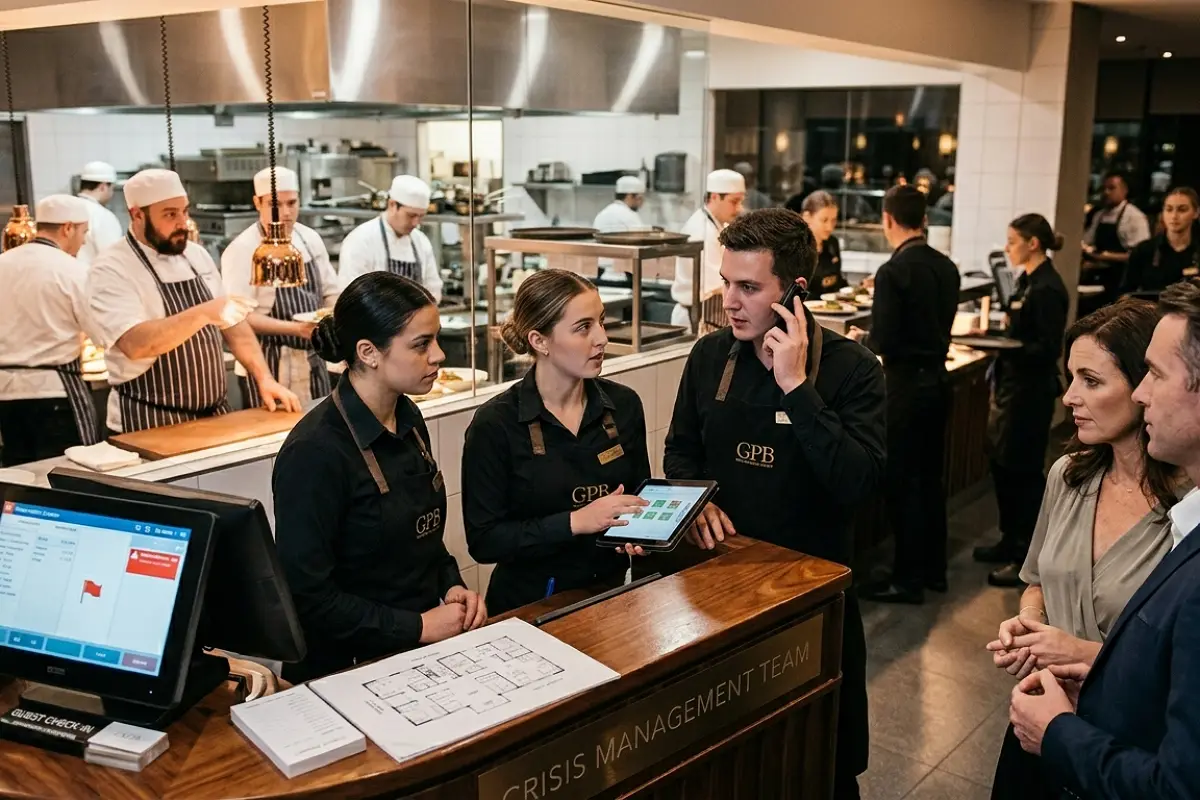
The reality on the floor is simple crisis don’t announce themselves. They hit mid-service, when the board is full and the team is stretched. And the difference between a smooth recovery and a full breakdown? How fast your team reacts.
Overview of Crisis Management in F&B Operations
Crisis handling is part of the job. Not optional.
Complaints, food issues, equipment failure, delays they all show up when you least want them.
And if the team hesitates, the problem grows. Fast.
FOH, BOH, and management must move together. No gaps. No confusion.
Handled right, a crisis stays small. Handled poorly, it kills the table’s vibe and hits your reputation.
This is about control under pressure. Clean actions. Clear thinking.
SOP Procedure for Crisis Management
This is your playbook. Stick to it every time.
1. Identification of Crisis
Spot the issue immediately. Complaint, delay, safety risk, anything off call it early.
2. Immediate Response
Acknowledge it on the spot. Inform the supervisor or manager no delay.
3. Risk Assessment
Judge the impact. Guest safety? Service delay? One table or whole section?
4. Action Implementation
Fix it fast. Replace food, control the hazard, adjust the service flow.
5. Guest Communication
Speak clearly. Reassure. Give solutions, not excuses.
6. Team Coordination
Pull in kitchen, service, and management. Everyone works the same problem.
7. Service Recovery
Recover the table. Replacement, discount, or complimentary use it smartly.
8. Documentation and Reporting
Log everything. What happened, what you did. This is how you improve.
Pro-tip: The first 60 seconds decide if you control the situation or chase it.
Operational Steps and Emergency Workflow
When something breaks, this is your flow. No improvisation.
Step-by-Step Crisis Workflow:
• Spot the issue during service or guest interaction
• Inform supervisor or duty manager immediately
• Assess severity and impact
• Pause the affected area if needed
• Take corrective action (replace, repair, adjust)
• Communicate clearly with affected guests
• Restart service without dragging delays
• Monitor until fully stable
• Log the incident properly
Service Timing Benchmarks:
• Acknowledge issue: within 30 seconds
• Inform supervisor: within 1 minute
• Start corrective action: within 3–5 minutes
• Update guest: continuously
• Full resolution: depends on severity but keep it moving
Operational Controls:
• No panic. Ever.
• FOH and BOH stay aligned
• Guest safety comes first, always
• Shut down escalation early
Pro-tip: Silence during a crisis confuses the team. Call things out clearly.
Guest Interaction and Service Recovery Techniques
This is where most teams win, or lose the guest.
Professional Communication Standards:
• Stay calm, even if the guest isn’t
• Speak clearly and respectfully
• Acknowledge immediately
• Never blame the kitchen, system, or staff in front of guests
Service Recovery Techniques:
• Apologize properly, no shortcuts
• Fix the issue fast (replacement or alternative)
• Offer compensation where needed
• Check back after recovery
Handling Different Crisis Situations:
• Food Quality Issue: Replace immediately. Inform kitchen, no repeat mistakes
• Service Delay: Update the guest. If it crosses standard time, offer something on the house
• Safety Issue: Lock the area down. Safety before service
• Billing Error: Fix fast. Explain clearly. No confusion at the end
Common Mistakes to Avoid:
- Ignoring the issue
- Arguing with guests
- Giving wrong information
- Walking away without follow-up
Pro-tip: Guests forgive mistakes. They don’t forgive poor handling.
Tools and Equipment for Crisis Management
Your tools should support speed, not slow you down.
Primary Tools:
• POS system, track and fix orders fast
• Incident logbook/system, record everything
• Communication devices, keep teams connected
• CCTV, review and monitor incidents
Support Equipment:
• First aid kits, ready and stocked
• Fire safety tools, extinguishers, alarms
• Cleaning kits, handle spills or hazards fast
• Backup equipment, keep service running
Usage Guidelines:
• Tools must be accessible, no searching mid-crisis
• Staff must know how to use emergency equipment
• Keep incident records updated
• Run regular safety checks
Pro-tip: If your team doesn’t know where the tools are, you’re already behind.
Service Standards and Performance Metrics
This tells you if your team can handle pressure, or not.
Key Performance Metrics:
• Response time: within SOP
• Resolution: fast and clean
• Guest satisfaction after recovery: strong
• Repeat incidents: low
• Team coordination: smooth under pressure
• Safety compliance: 100%
If recovery is slow, your system is weak. Fix the system.
Evaluation and Continuous Improvement
Every crisis is a lesson. Use it.
Evaluation Methods:
• Review incident reports properly
• Watch staff during real situations
• Listen to guest feedback
• Run safety audits
• Practice drills and simulations
Main issues? Slow reaction, poor coordination, weak communication.
Fix them with training, tighter SOP control, and strong supervision.
Bottom line, crises will happen.
But a sharp team handles it fast, protects the guest, and keeps service moving.
Read more about hotel reservation management.