Restaurant Table Service SOP Training: Order Taking & Guest Handling
Learn restaurant table service SOP training covering order taking, service sequence and guest handling to improve efficiency, accuracy and guest satisfaction.
 Munni Khatun
This training module on restaurant table service SOP is designed for food and beverage service teams to standardize order taking, service sequence, and guest handling. It ensures operational efficiency, minimizes service errors, and enhances guest satisfaction by aligning staff actions with structured service protocols in restaurant environments.
Overview of Restaurant Table Service SOP
Restaurant table service SOP defines the structured approach to handling guests from seating to billing. It ensures consistency in guest experience across shifts and service staff. The SOP focuses on three core areas: order taking accuracy, service sequence flow, and guest interaction standards.
In a professional restaurant setup, table service is not only about delivering food but managing timing, communication, and presentation. Proper SOP adherence reduces kitchen delays, improves table turnover, and enhances guest perception.
SOP Procedure for Table Service
The SOP begins the moment the guest arrives and ends with a courteous farewell. Each stage must follow defined steps:
1. Greeting and Seating
Guests must be greeted within 30 seconds of arrival. Use eye contact, a smile, and a standard greeting such as “Good evening, welcome to the restaurant.” Escort guests to the table and present menus from the right-hand side.
2. Water Service
Water must be served within 2 minutes of seating. Offer still or sparkling water and pour from the right side without reaching across guests.
3. Menu Presentation
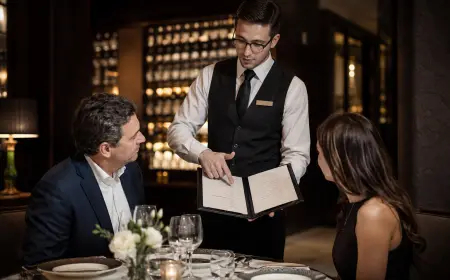
Provide menu highlights and mention specials of the day. Ensure guests understand key offerings without overwhelming them.
4. Order Taking
Approach the table within 5 minutes. Confirm readiness before taking the order. Follow structured order-taking sequence.
5. Order Entry
Orders must be entered immediately into POS to avoid delays. Ensure modifiers and special requests are clearly recorded.
6. Service Delivery
Food must be served within standard kitchen timing (e.g., appetizers within 10–12 minutes, mains within 20 minutes).
7. Check Back
Within 2 minutes of food delivery, check guest satisfaction.
8. Billing and Farewell
Present bill promptly upon request and thank the guest by name if known.
Service Sequence in Restaurant Operations
The service sequence must follow a logical flow to maintain efficiency and guest comfort:
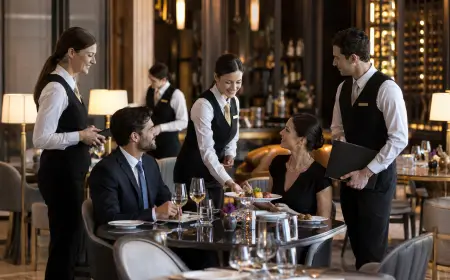
- Ladies first, then gentlemen, host last
- Serve from the right, clear from the right
- Place food from the left when applicable (fine dining standards)
- Serve beverages before food
- Maintain synchronization for table service
Standard timing benchmarks:
- Greeting: within 30 seconds
- Water service: within 2 minutes
- Order taking: within 5–7 minutes
- Food delivery: as per course timing
- Bill delivery: within 3 minutes of request
Following sequence ensures no service gaps and smooth coordination between service staff and kitchen.
Order Taking Procedure and Accuracy
Order taking is a critical control point in restaurant operations. Errors here impact guest satisfaction and kitchen efficiency.
Steps for effective order taking:
1. Stand upright with order pad or handheld device
2. Listen actively without interrupting
3. Repeat order clearly to confirm accuracy
4. Suggest add-ons or pairings (upselling within SOP limits)
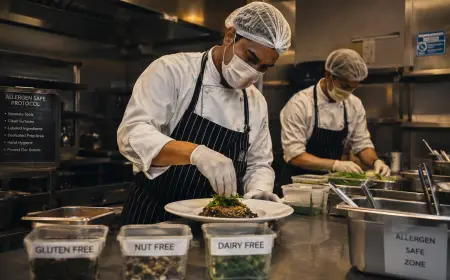
5. Note allergies, dietary restrictions, or special requests
6. Confirm cooking preferences (e.g., doneness levels)
7. Enter order immediately into POS
Example interaction:
“Sir, one grilled chicken with no spice and one vegetarian pasta, correct?”
Accuracy rate target: 100% order accuracy
Error tolerance: Zero for dietary restrictions
Guest Interaction and Handling Standards
Guest interaction is guided by professionalism, attentiveness, and responsiveness.
Key standards:
• Maintain eye contact and a polite tone
• Address guests respectfully (Sir/Ma’am or by name)
• Avoid unnecessary interruptions
• Anticipate needs (refilling water, clearing plates)
• Handle complaints calmly and escalate if needed
Complaint handling SOP:
1. Listen without interrupting
2. Acknowledge issue
3. Apologize sincerely
4. Take corrective action
5. Inform supervisor if required
6. Follow up with guest
Example: “I apologize for the delay, I will check with the kitchen and update you immediately.”
Tools and Equipment Used in Table Service
Efficient table service relies on proper use of tools:
• POS system or handheld order device
• Order pad and pen (backup)
• Service trays
• Cutlery and glassware
• Napkins and service cloths
• Tray stands (for fine dining)
Equipment must be clean, well-maintained, and positioned for easy access to avoid service delays.
Service Standards and Performance Metrics
Service standards define measurable performance benchmarks:
• Order accuracy: 100%
• Service timing adherence: 95% compliance
• Guest satisfaction score: above 90%
• Table turnover time: as per outlet category
• Complaint resolution time: within 5 minutes
Staff must follow grooming standards, uniform compliance, and hygiene protocols at all times.
Evaluation and Training Assessment
Performance evaluation is conducted through:
• Mystery audits
• Supervisor observation checklists
• Guest feedback analysis
• Order accuracy tracking
• Timing audits
Training assessment includes role-play scenarios, SOP quizzes, and live service observation.
Continuous improvement is achieved through daily briefings, feedback sessions, and refresher training modules.