Sustainable Restaurant Practices Training for Green Hotel Operations
Learn sustainable restaurant practices training with SOP, green operations, waste control, and eco-friendly service techniques for restaurant operations.
 Jyoti Kushwaha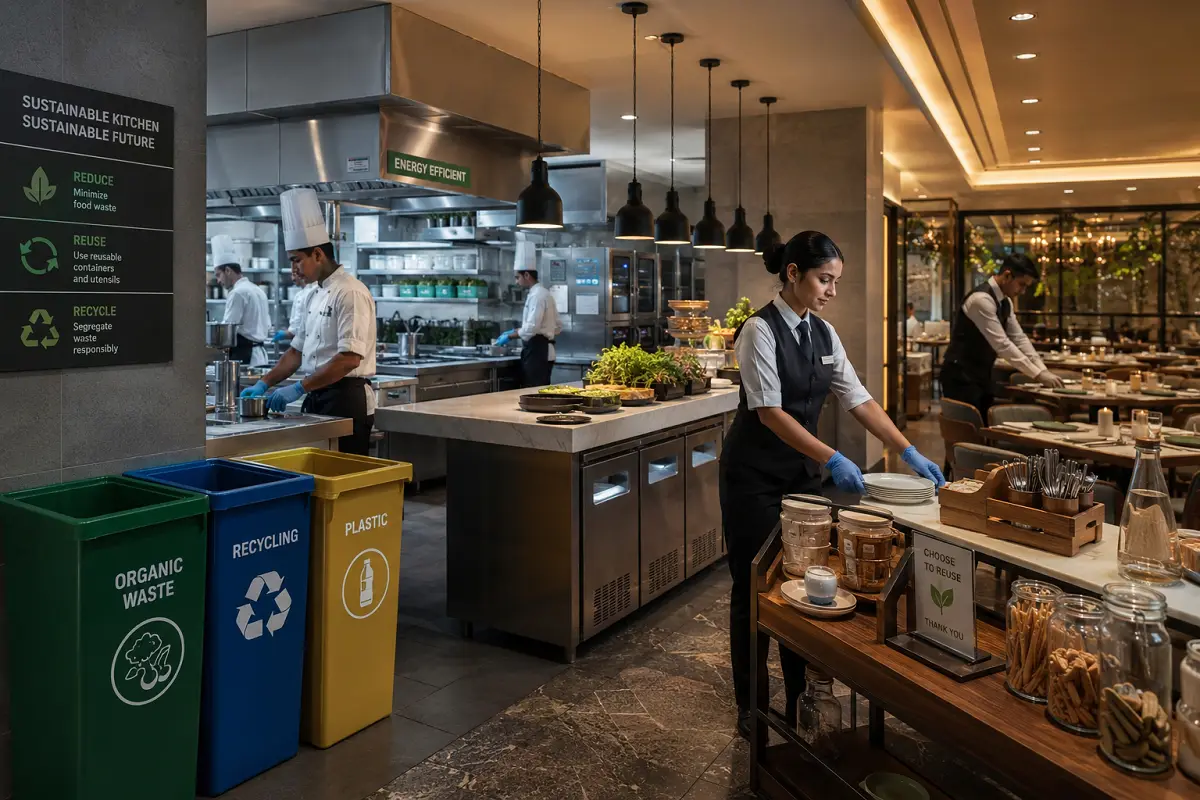
Talk in the back area right now is simple bins are filling faster than tables. Waste is money walking out the door. And if the team doesn’t control it, margins bleed quietly every shift. This article explains sustainable restaurant practices in detail.
Overview of Sustainable Restaurant Practices Training
Sustainability on the floor isn’t a trend. It’s discipline.
Kitchens burn through water, power, and stock every hour. If you don’t control it, costs climb without warning.
And it’s not just about waste bins. It’s sourcing, storage, prep, and how the plate leaves the pass. Everything counts.
Good teams run clean operations without slowing service. That’s the balance.
This training keeps sustainability practical built into the shift, not added on top of it.
SOP Procedure for Sustainable Restaurant Operations
Run this like a checklist. Every shift. No excuses.
1. Resource Planning
Forecast properly. Cook what you’ll sell. Overproduction is silent loss.
2. Sustainable Procurement
Buy local where possible. Use seasonal products. Better turnover, less spoilage.
3. Controlled Storage
Follow temperature control and FIFO. Old stock first no shortcuts.
4. Waste Segregation
Separate waste at source. Biodegradable, recyclable, general keep it clean and clear.
5. Energy Management
Switch off idle equipment. Maintain machines. Wasted power = wasted money.
6. Water Conservation
Control water use during prep and cleaning. Don’t let taps run without purpose.
7. Service Efficiency
Serve right portions. Over-serving comes back as waste.
8. Monitoring and Reporting
Track waste, energy, and usage daily. If you don’t track it, you can’t fix it.
Pro-tip: The bin tells you more truth than the sales report.
Operational Steps and Green Workflow
This is how you run a tight, low-waste shift.
Step-by-Step Green Workflow:
• Plan production based on real covers not guesswork
• Check stock before ordering anything new
• Inspect deliveries bad quality becomes waste fast
• Store with FIFO and clear labels
• Issue stock through requisition only
• Watch prep cut waste, not corners
• Control portions at plating
• Segregate waste during prep and service
• Monitor power and water during shift
• Record daily waste and usage numbers
Operational Benchmarks:
• Food wastage: below 5%
• Energy use: controlled per shift
• Water use: within limits
• Waste segregation: 100% compliance
Operational Controls:
• Don’t overproduce in slow hours
• Watch perishables closely they spoil first
• Supervise tightly during rush
• Follow proper waste disposal no mixing
Clean workflow. Lower cost. Simple.
Service Interaction and Sustainable Practices
Sustainability doesn’t stop in the kitchen. It shows on the table.
Service Interaction Standards:
• Offer portion choices when possible
• Don’t overload tables with unnecessary setups
• Serve water smartly no wasteful refills
• Mention sustainability only when it fits the table’s vibe
Reducing Plate Waste:
- Guide guests on portion sizes
- Suggest sharing for large dishes
- Watch leftovers and report patterns
Eco-Friendly Service Techniques:
• Use reusable or biodegradable items
• Cut down single-use plastics
• Clear efficiently and reuse service ware properly
Handling Guest Requests:
• Respect low-waste preferences
• Offer takeaway for leftovers
• Keep hygiene tight while doing it
Pro-tip: Guests notice waste. Even if they don’t say it.
Tools and Equipment for Green Operations
Tools don’t fix habits. But they support good ones.
Primary Tools:
• Inventory systems for stock control
• Waste tracking logs
• Energy monitoring systems
• Water tracking devices
Support Equipment:
• Energy-efficient kitchen equipment
• LED lighting
• Low-flow water fixtures
• Segregation bins and recycling units
Usage Guidelines:
• Maintain equipment regularly
• Store correctly to avoid spoilage
• Check energy and water use daily
• Label everything clearly and segregate waste properly
Bad equipment habits = hidden losses.
Service Standards and Performance Metrics
Measure it daily. Not monthly.
Key Performance Metrics:
• Food waste: minimal and controlled
• Energy use: optimized
• Water use: controlled
• Waste segregation: 100% accurate
• Cost savings: visible
• Guest satisfaction: steady or better
If costs drop and service stays sharp you’re doing it right.
Evaluation and Continuous Improvement
This is ongoing. Every shift teaches something.
Evaluation Methods:
• Daily waste reports
• Energy and water tracking
• Kitchen and floor audits
• Staff compliance checks
• Guest feedback on practices
Biggest problems? Staff ignoring it, inconsistency, and pushback. Fix it with training, supervision, and accountability.
Final word from the floor: Sustainability isn’t extra work. It’s smart work. Run it right, and the kitchen stays lean, clean, and profitable.
Read more about Customer retention training.