Zero-Waste Kitchen Management Training for Hotel Operations
Learn zero-waste kitchen management training with SOP, waste control, kitchen workflow, and sustainable operations for hotel and restaurant kitchens.
 Jyoti Kushwaha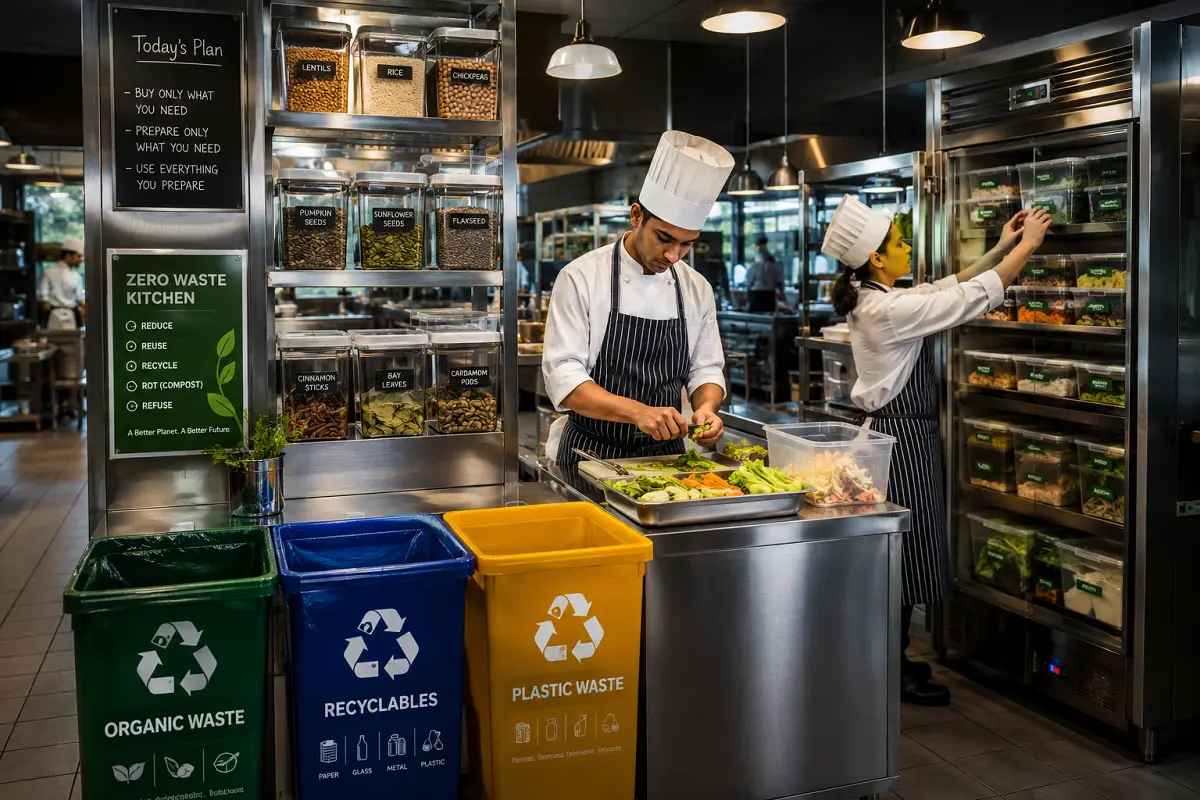
The latest word from the pass is blunt bins are filling faster than covers. And when waste goes up, profit drops. No drama, just numbers. This article explains Zero-waste kitchen management in detail.
Overview of Zero-Waste Kitchen Management Training
Zero-waste isn’t a trend. It’s sustainable kitchen discipline.
Big kitchens lose money quietly overproduction, bad prep, poor storage. It all ends up in the bin.
This system cuts waste at every step buying, storing, prepping, cooking, and service. Nothing gets a free pass.
And here’s the rule: reduce waste without slowing the fire-order or compromising quality.
This training keeps the kitchen tight, controlled, and efficient every shift.
SOP Procedure for Zero-Waste Kitchen Management
This is your backbone. Follow it daily.
1. Demand Forecasting
Plan production based on covers, history, and reservations. Guessing leads to waste.
2. Controlled Purchasing
Buy what you need. Not what feels safe. Perishables don’t wait.
3. Standardized Storage
FIFO always. Label everything. Old stock moves first no exceptions.
4. Pre-Preparation Control
Cut smart. Reduce trimming loss. Use peels and trims where possible.
5. Portion Standardization
Stick to recipe portions. Extra grams become daily losses.
6. Waste Segregation
Separate organic, recyclable, and reusable waste at source. Keep it clean.
7. Leftover Management
Reuse safe leftovers in secondary prep. Follow hygiene strictly. No shortcuts.
8. Waste Monitoring
Track waste daily. Patterns tell you where you’re losing money.
Pro-tip: If you’re not measuring waste, you’re ignoring it.
Operational Steps and Kitchen Workflow
This is how a controlled kitchen runs.
Step-by-Step Kitchen Workflow:
• Check reservations and plan production properly
• Review inventory before ordering anything new
• Inspect all incoming goods bad quality = future waste
• Store with FIFO and clear labels
• Issue stock only through requisition
• Prep with control cut waste, not corners
• Cook using standard recipes only
• Plate with strict portion control
• Track reusable leftovers immediately
• Record shift-wise waste without fail
Operational Benchmarks:
• Food waste: below 3–5%
• Portion control: 100% accurate
• Inventory turnover: fast and fresh
• Reuse efficiency: maximum possible
Operational Controls:
• Don’t overproduce in slow hours
• Watch high-waste items leafy veg, dairy
• Supervise closely during peak service
• Follow recipes exactly no guesswork
Control the flow, and waste drops automatically.
Service Interaction and Waste Reduction Techniques
Kitchen can’t do this alone. Service plays a big role.
Service Interaction Standards:
- Guide guests on portion sizes
- Communicate special requests clearly
- Avoid duplicate or wrong orders
Plate Waste Reduction Techniques:
• Watch what comes back on plates
• Adjust portions based on patterns
• Offer half portions or sharing where possible
Order Accuracy:
• Take orders right the first time
• Confirm modifications before sending
• Avoid re-fires they cost time and food
Leftover Handling:
• Offer takeaway for unfinished food
• Pack hygienically
• Don’t let prepared food go to waste
Pro-tip: Every wrong order is double waste food and time.
Tools and Equipment for Zero-Waste Kitchens
Tools support discipline. They don’t replace it.
Primary Tools:
• Inventory systems for stock tracking
• Standard recipe sheets
• Waste logs and reports
• Production planning charts
Support Equipment:
• Precision weighing scales
• Energy-efficient equipment
• Labeled storage containers
• Segregation bins
Usage Guidelines:
• Keep inventory records accurate
• Update recipes and portions regularly
• Check waste logs daily
• Label and store everything properly
Messy systems create hidden losses.
Service Standards and Performance Metrics
Track performance every shift. Not once a week.
Key Performance Metrics:
• Food waste: within target
• Portion accuracy: 100%
• Order accuracy: no errors
• Inventory loss: minimal
• Kitchen flow: smooth and efficient
• Cost savings: visible in numbers
If waste is down and service is smooth you’re on track.
Evaluation and Continuous Improvement
This is daily discipline. Not a one-time fix.
Evaluation Methods:
• Daily waste reports
• Inventory variance checks
• Kitchen audits
• Staff compliance checks
• Cost tracking
Common issues? Overproduction, bad storage, careless habits. Fix them with training, supervision, and accountability.
Final word from the pass: A clean kitchen isn’t just about hygiene. It’s about control. And control is where profit lives.
Read more about Sustainable restaurant practices.