Guest Satisfaction Strategies: Front Office SOP Training Guide
Learn guest satisfaction strategies with front office SOP, service standards, guest experience management, and operational techniques for hotels.
 Shah Vaibhavi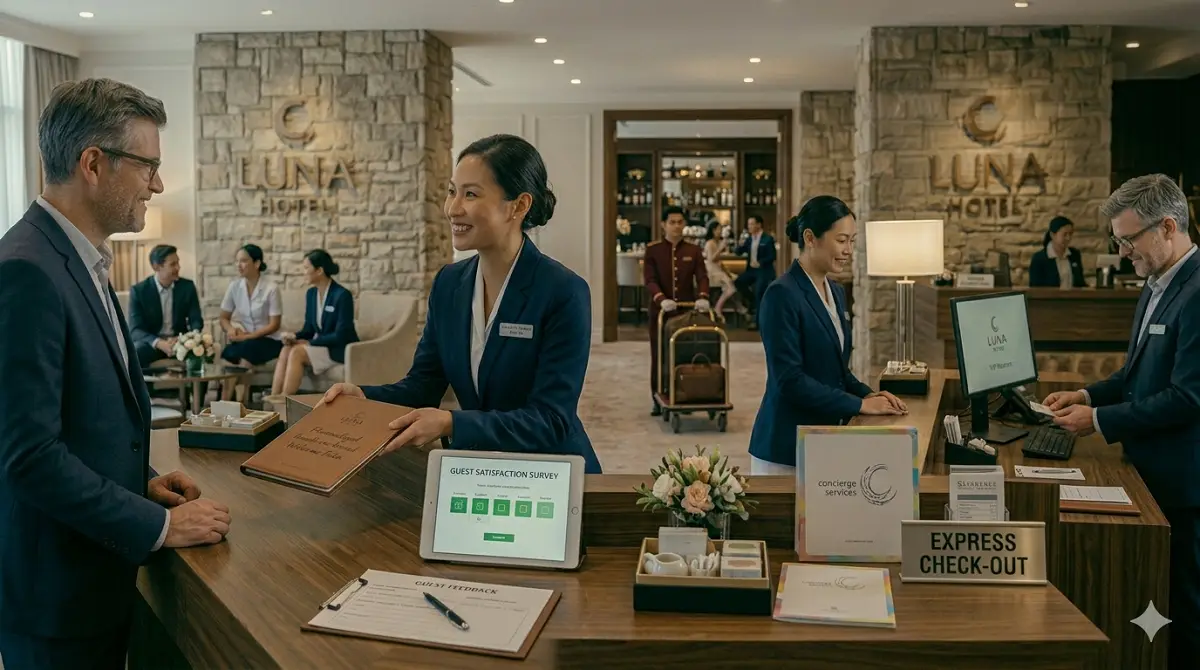
Guest satisfaction strategies training module focuses on guest satisfaction strategies within the front office department, designed to improve service quality, enhance guest experience, and ensure operational consistency. Guest satisfaction is a key performance indicator in hotel operations, directly influencing guest retention, online reviews, and overall brand reputation.
Guest Satisfaction Strategies: Overview of Guest Satisfaction in Front Office Operations
Guest satisfaction strategies involve structured processes and service standards implemented to meet and exceed guest expectations throughout their stay. The front office plays a central role as the primary point of contact, handling guest interactions from arrival to departure.
From an operational perspective, guest satisfaction depends on response time, service accuracy, personalization, and problem resolution efficiency. Every interaction—greeting, check-in, service requests, and complaint handling—contributes to the overall guest experience.
Effective guest satisfaction strategies require consistency, coordination between departments, and adherence to SOPs. Poor service delivery can result in negative feedback, reduced occupancy, and loss of repeat business.
SOP Procedure for Guest Satisfaction Management
The guest satisfaction strategies SOP follows a structured sequence to ensure consistent service delivery:
- Step 1: Pre-Arrival Preparation
Review arrival reports, guest history, and preferences in PMS/CRM. Identify VIPs, repeat guests, and special requests. - Step 2: Professional Guest Greeting
Acknowledge guests within 5 seconds of arrival with a warm and professional greeting. - Step 3: Efficient Check-in Process
Complete check-in within 5 minutes, ensuring accuracy in room allocation and documentation. - Step 4: Personalized Service Delivery
Provide services based on guest preferences, including room type, amenities, and special arrangements. - Step 5: Continuous Engagement
Maintain communication with guests during their stay through follow-ups and service checks. - Step 6: Complaint Handling and Service Recovery
Address issues immediately using structured complaint handling SOPs. - Step 7: Smooth Check-out Experience
Ensure quick and accurate billing, minimizing waiting time. - Step 8: Post-Stay Feedback
Collect guest feedback and update records for future personalization.
Front Desk Workflow and Department Coordination
Guest satisfaction strategies require coordination between multiple hotel departments to ensure seamless service delivery:
Front Office: Handles guest interaction, check-in, and service coordination.
Housekeeping: Ensures room cleanliness and readiness.
Food & Beverage: Delivers quality dining and room service.
Maintenance: Resolves technical issues promptly.
Concierge: Assists with guest requests and local information.
Accounts: Manages billing accuracy and transactions.
Real-time communication through internal systems ensures quick response to guest requests and minimizes service delays.
Guest Interaction Process
Guest satisfaction strategies rely heavily on structured and professional communication:
Personalization: Address guests by name and recognize preferences.
Active Listening: Understand guest needs without interruption.
Clear Communication: Provide accurate information about services and facilities.
Empathy: Show understanding and care in all interactions.
Proactive Service: Anticipate guest needs before they request.
Special operational scenarios include:
VIP Guests: Provide priority handling and personalized services.
Complaints: Resolve within 15–30 minutes using service recovery techniques.
Special Requests: Fulfill within defined timelines.
Long-Stay Guests: Maintain continuous engagement and service consistency.
Effective interaction ensures guests feel valued, leading to higher satisfaction levels.
Tools and Systems Used
Guest satisfaction strategies are supported by various operational tools:
Property Management System (PMS): Manages reservations, guest profiles, and room allocation.
Customer Relationship Management (CRM): Stores guest preferences and history.
Guest Feedback Systems: Collect and analyze guest reviews.
Service Tracking Systems: Monitor request completion and response time.
Communication Tools: Enable coordination between departments.
Proper use of these systems ensures accurate service delivery and enhances personalization.
Service Standards and Performance Metrics
Guest satisfaction strategies are measured through defined operational benchmarks:
Guest Greeting Time: Within 5 seconds of arrival.
Check-in Time: Completed within 5 minutes.
Service Response Time: Requests handled within 5–10 minutes.
Complaint Resolution Time: Standard issues resolved within 15–30 minutes.
Guest Satisfaction Score: Positive feedback and high ratings.
Repeat Guest Ratio: Increase in returning guests.
Maintaining these standards ensures consistent service quality and operational efficiency.
Evaluation and Training Assessment
Regular evaluation ensures effective implementation of guest satisfaction strategies:
Role Play Exercises: Simulate guest interaction scenarios.
Supervisor Audits: Monitor service delivery and SOP compliance.
Guest Feedback Analysis: Identify service gaps and improvement areas.
Performance Tracking: Measure response time and service quality.
Training Programs: Enhance communication and operational skills.
Training should focus on improving service consistency, communication clarity, and decision-making skills under operational pressure.
In conclusion, guest satisfaction strategies are essential for front office operations, ensuring consistent service delivery, efficient guest handling, and positive guest experiences. A structured SOP, combined with strong communication and interdepartmental coordination, enables front office teams to maintain high service standards and achieve long-term guest loyalty.
Also read: Professional VIP Guest Handling: Complete Front Office Training Guide with SOP & Professional Standards