Bibimbap Balls Recipe That Packs Every Colour and Flavour of Korea Into One Perfect Bite
Make colourful, flavour-packed bibimbap balls at home with this Korean recipe guide. Seasoned rice, namul fillings, gochujang drizzle. Get the full recipe now.
 Tripti Srivastava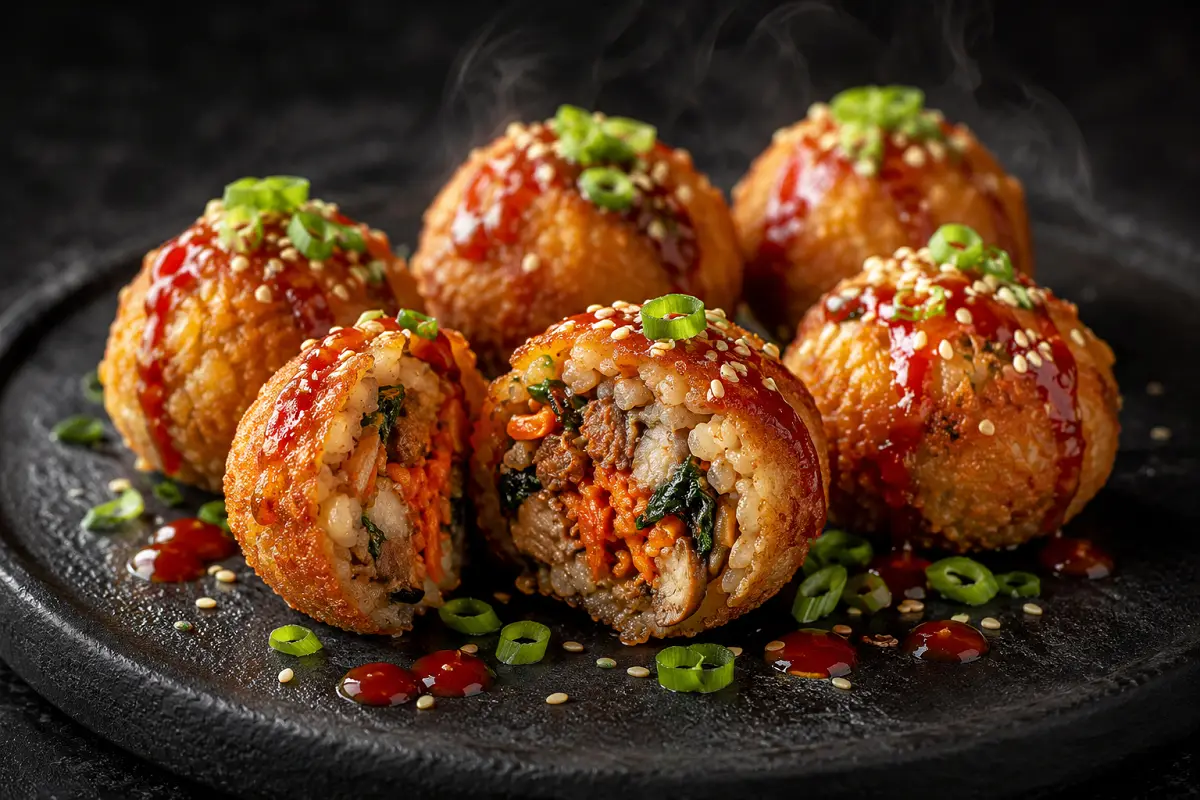
Bibimbap which translates from Korean as "mixed rice" is one of the most celebrated dishes in Korean cuisine. A bowl of warm rice topped with an array of seasoned vegetables (namul), a protein, a fried egg, and a generous spoonful of gochujang sauce, all mixed together at the table into a vibrant, deeply satisfying meal. It is beautiful, nutritious, and endlessly customisable. It is also, by its very nature, a bowl dish.
These bibimbap balls take every element of that iconic bowl the seasoned sesame rice, the colourful namul vegetables, the gochujang heat and compress them into a perfect, handheld, party-ready bite. Each ball contains a core of seasoned namul filling (spinach, carrot, and mushroom prepared in the classic Korean style) wrapped in fragrant sesame-soy rice, sealed tightly, and finished with a gochujang drizzle and a scatter of toasted sesame seeds. They are portable, make-ahead friendly, visually striking, and genuinely delicious.
If you have ever wanted to serve Korean food at a party without committing to a full tableside spread or if you are looking for the most interesting, flavour-packed lunchbox item you have ever made this is the recipe. These bibimbap balls are also one of the most naturally beautiful foods you can make at home: the cross-section of a halved ball reveals a mosaic of green, orange, and brown namul against the white sesame rice, topped with a dot of vivid red gochujang. It looks like it required a culinary arts degree. It requires about an hour and a willing pair of hands.
What Makes These Bibimbap Balls Special
Rice balls exist across Asian cuisines Japanese onigiri being the most globally familiar format. But bibimbap balls have their own distinct identity, built on the specific flavour language of Korean namul cooking:
- Three-namul filling system: Each ball contains all three classic bibimbap namul vegetables spinach (sigeumchi namul), carrot (danggeun namul), and shiitake mushroom (beoseot namul) prepared individually with their own seasoning before being combined as a filling. This separate preparation is the authentic namul method and is what gives each vegetable its distinct colour, texture, and flavour within the ball.
- Seasoned sesame rice: The rice is not plain it is seasoned while hot with toasted sesame oil, a small amount of soy sauce, and toasted sesame seeds. This seasoning step is essential. Unseasoned rice makes a bland ball regardless of how well the filling is prepared. The sesame oil also acts as a natural binding agent, giving the rice the right stickiness for rolling without becoming gummy.
- The gochujang core option: For guests who want the classic bibimbap heat, a small amount of gochujang can be tucked into the centre of each ball before sealing a hidden core of spicy sauce that reveals itself at the first bite. For a milder version, the gochujang is served as a drizzle sauce on the side.
- Three finishing formats: Plain round (the cleanest presentation), nori-wrapped (the most practical for eating on the go), and pan-toasted (griddled in sesame oil until the outside is crispy and golden, similar to yaki onigiri). All three use the same base recipe and are covered in the SOP.
- Naturally vegan and gluten-free adaptable: The base recipe is already vegetarian. Swap soy sauce for tamari for gluten-free. Skip the egg garnish for fully vegan. This makes bibimbap balls one of the most inclusive party foods in this entire collection.
Ingredients Overview
The most important ingredient in this recipe is the rice. Use short-grain Japanese or Korean rice the higher starch content of short-grain rice gives it the natural stickiness required for rolling balls that hold their shape. Long-grain rice (basmati, jasmine) does not have enough surface starch and the balls will crumble. Do not use sushi rice vinegar seasoning for this recipe the rice is seasoned in the Korean style with sesame oil and soy, not the Japanese sweet vinegar mix.
For the namul fillings, fresh spinach is blanched and squeezed very dry before seasoning excess moisture in the spinach will make the rice sticky in the wrong way and cause the ball to fall apart when held. Carrots are julienned fine and briefly stir-fried. Shiitake mushrooms (fresh or rehydrated from dried) are cooked in a small amount of soy sauce and sesame oil until their moisture has completely evaporated wet mushrooms are the most common cause of bibimbap balls that fall apart during rolling.
Gochujang is the essential Korean condiment here used both as an optional filling core and as the finishing drizzle sauce. For the drizzle, it is thinned with a little water, sesame oil, and honey to a pourable consistency. If gochujang is unavailable, a mixture of sriracha and a small amount of miso paste produces a reasonable substitute, though the fermented depth of the original is difficult to replicate. Bibimbap is one of Korea's most recognised national dishes and has been listed as a UNESCO Intangible Cultural Heritage food tradition.
How to Make It
Cook and season the rice. Prepare each namul vegetable separately. Assemble the balls by portioning seasoned rice onto a wet hand, adding a small amount of the combined namul filling to the centre, closing the rice around the filling, and compressing firmly into a ball. Finish with gochujang drizzle, sesame seeds, and garnish. The whole process takes about one hour once the rice is cooked.
The trick to balls that hold their shape is consistent rice temperature the rice must be warm (not hot, not cold) when you roll. Hot rice sticks to your hands and scalds; cold rice loses its stickiness and the balls crumble. Work with rice that is comfortable to hold approximately 10–15 minutes after cooking is usually right.
Tips for Best Results
- Keep your hands wet while rolling. Dampen both palms with cold water before shaping each ball. This prevents the rice from sticking to your hands and allows you to apply firm, even pressure without tearing the surface of the ball. Re-wet between every ball.
- Squeeze every namul vegetable completely dry before using as filling. Especially the spinach press it firmly between your palms and squeeze out every drop of water after blanching and seasoning. Wet filling makes wet rice and the balls lose their structural integrity.
- Use exactly 60–70g of rice per ball. Weigh it if you can. Too much rice and the ball is too large and the filling-to-rice ratio is off. Too little and the ball is too fragile and the filling falls out when bitten into.
- Compress firmly and evenly. Roll the ball between both cupped palms with consistent pressure for 10–15 full rotations. This compresses the rice grains together and creates a cohesive surface. Half-hearted rolling produces a rough, crumbly surface that falls apart when picked up.
- Refrigerate for 15 minutes after rolling if making ahead. The chilling sets the ball's shape and firms the surface balls rolled and served immediately are slightly more fragile than chilled ones.
Also Read: Korean Beef Bulgogi Bites
Serving Suggestions
Serve bibimbap balls at room temperature not cold from the fridge and not steaming hot. Room temperature is when the sesame oil fragrance is most pronounced and the rice texture is at its most pleasant. Remove from the fridge 15–20 minutes before serving if you have made them ahead.
For a party spread, arrange the balls on a dark slate board in rows or clusters, drizzle the gochujang sauce in thin lines across the entire surface (not just over the balls the sauce on the board creates a dramatic presentation), and scatter toasted sesame seeds generously. Place a small bowl of extra gochujang sauce and a bowl of soy dipping sauce alongside. The vivid red gochujang drizzle against the white-and-sesame rice balls and the dark board is one of the most visually striking party presentations in this collection.
For a full Korean-inspired meal, serve alongside Korean beef bulgogi bites and quick-pickled cucumber for a spread that covers grain, vegetable, and protein with a coherent Korean flavour thread running through everything. As a lunchbox item, wrap individual balls in small squares of nori (dried seaweed) the nori grips the ball and prevents it from unravelling, makes it easy to hold, and adds the savoury, oceanic flavour note that is deeply satisfying with the sesame rice.
Storage and Reheating
Store bibimbap balls in an airtight container in the fridge for up to 2 days. Place a sheet of damp kitchen paper inside the container to prevent the rice surface from drying out. The balls will firm up in the fridge this is normal and desirable for the nori-wrapped and pan-toasted formats. Bring to room temperature for 15–20 minutes before serving.
For the pan-toasted version, reheat in a pan with a small amount of sesame oil over medium heat for 2–3 minutes per side until the surface is crispy and heated through. This actually produces a better toasted surface on day-two balls than freshly made ones the slightly dried surface of a refrigerated ball crisps up faster and more evenly in the pan.
Bibimbap balls do not freeze well the rice texture changes significantly on thawing and the balls become crumbly. Make them fresh or refrigerate for up to 2 days for the best result.
Variations and Substitutions
- Beef or chicken bibimbap balls: Add 100g of cooked, seasoned bulgogi beef (minced or finely chopped) or Korean BBQ chicken to the namul filling mixture for a non-vegetarian version. The meat adds richness and protein without changing the rolling technique.
- Tuna mayo bibimbap balls: Mix 1 small can of tuna with 2 tablespoons of Japanese mayonnaise and a teaspoon of sesame oil. Use as the centre filling instead of or alongside the namul. This is the most popular variation for children and an excellent lunchbox option.
- Pan-toasted yaki style: Heat a non-stick or cast iron pan over medium heat with a thin film of sesame oil. Place the rolled balls in the pan and press gently to flatten one side slightly. Toast for 2–3 minutes until golden and crispy on the base. Flip and repeat for all surfaces. Brush with a mixture of soy sauce and sesame oil during the last minute for a deeply savoury, crispy-surfaced ball with a warm, sticky interior.
- Nori-wrapped format: Cut nori sheets into 3cm-wide strips. Wrap one strip around the equator of each ball and press to adhere. The nori softens slightly against the warm rice within minutes and grips the ball firmly this is the most practical format for party serving and lunchboxes as guests can hold the ball cleanly by the nori band.
- Coloured rice variation: Cook the rice with a small piece of turmeric for yellow rice, or stir a teaspoon of black sesame paste into the sesame-soy seasoning for dark grey-black rice. The colour contrast against the namul filling is even more dramatic in these variations and makes for an exceptional visual party platter.
Preparation Method
Cook the short-grain rice according to package instructions the absorption method works best for rice that will be shaped. While the rice cooks, prepare each namul vegetable: blanch spinach, squeeze dry, and season; julienne and stir-fry carrots; dice and stir-fry shiitake mushrooms until completely dry. Season all three namul individually with the same base (sesame oil, soy, garlic, sesame seeds) then combine into a single filling mixture.
Season the cooked, slightly cooled rice with toasted sesame oil, soy sauce, and sesame seeds mix gently with a rice paddle to avoid breaking the grains. Cool to a comfortable handling temperature (approximately 15 minutes). Set up the rolling station: a bowl of cold water, the seasoned rice, the combined namul filling, the gochujang (if using as a core), and a lined tray for the finished balls.
Standard Operating Procedure (SOP)
Step 1 Cook rice: Rinse short-grain rice until water runs clear. Cook by absorption method. Fluff with a rice paddle and cool slightly 10–15 minutes until warm but handleable.
Step 2 Season rice: In a wide bowl, combine warm rice with toasted sesame oil, light soy sauce, and toasted sesame seeds. Fold gently with a rice paddle do not stir aggressively or the rice becomes gluey. Taste and adjust sesame oil and soy. Cover with a damp cloth to prevent surface drying.
Step 3 Spinach namul: Blanch fresh spinach in boiling salted water for 45 seconds. Drain and immediately transfer to ice water. Squeeze bone-dry with both hands. Chop roughly. Season with sesame oil, soy sauce, garlic, and sesame seeds.
Step 4 Carrot namul: Julienne carrot fine. Heat sesame oil in a pan over high heat. Stir-fry carrot for 2 minutes. Season with salt and a pinch of sugar. Cool completely.
Step 5 Mushroom namul: Dice fresh or rehydrated shiitake mushrooms finely. Heat sesame oil and soy sauce in a pan over medium-high heat. Cook mushrooms, stirring, for 4–5 minutes until all moisture has evaporated and the mushrooms are completely dry. This is critical wet mushrooms break the ball.
Step 6 Combine namul filling: Gently mix all three cooked, cooled namul vegetables together. Taste and adjust seasoning.
Step 7 Make gochujang drizzle: Mix gochujang with sesame oil, honey, soy sauce, and water until smooth and pourable. Set aside.
Step 8 Roll the balls: Wet both palms with cold water. Scoop 60–70g of seasoned rice into your dominant palm. Flatten slightly with the other hand to create a shallow cup. Place 1 teaspoon of the combined namul filling in the centre. If using gochujang core, add a small dot of plain gochujang on top of the namul. Fold the rice over the filling by closing your palm. Transfer to the other palm. Roll firmly between both cupped palms for 10–15 full rotations until a smooth, compact ball forms. Place on lined tray. Re-wet hands before every ball.
Step 9 Apply finishing format: PLAIN: proceed to garnish immediately. NORI-WRAPPED: cut nori into 3cm-wide strips. Wrap one strip around the equator of each ball. Press firmly to adhere. PAN-TOASTED: heat sesame oil in a pan over medium heat. Place balls in pan and press gently. Toast 2–3 minutes per face until golden and crispy. Brush with soy-sesame glaze during last 30 seconds.
Step 10 Garnish and plate: Arrange balls on serving surface. Drizzle gochujang sauce in thin lines over the balls and board. Scatter toasted sesame seeds and spring onion greens. Add thin carrot strips and microgreens for colour. Serve at room temperature.
Garnish and Presentation
The visual identity of bibimbap balls is built on two contrasts: the pristine white of the sesame rice surface against the vivid red of the gochujang drizzle. Everything else on the plate should support and not compete with these two elements.
The gochujang drizzle is the primary garnish apply it with a spoon or a squeeze bottle in thin, confident lines across both the balls and the serving surface. Do not blob it on top of individual balls; drizzle it across the entire presentation in a movement that suggests spontaneity even when it is entirely deliberate. A scatter of toasted white sesame seeds over the entire platter echoes the sesame in the rice and adds texture. A few strands of thinly sliced spring onion greens and a light scatter of finely julienned carrot (raw, for crunch and colour) complete the presentation.
For the pan-toasted version, the golden-brown toasted surface of the balls is the visual hero do not cover it entirely with garnish. A single dot of gochujang on top of each toasted ball, a few sesame seeds pressed lightly into the surface, and a single micro herb or spring onion strand draped across the top is all the garnish this format needs.
Plating and Serving Tips
For a party platter, arrange the bibimbap balls on a large dark slate board or a black ceramic platter in a grid pattern three rows of five or six balls, evenly spaced. The regularity of the grid creates a visual composition that looks clean and professional. Apply the gochujang drizzle in diagonal lines across the entire grid, crossing multiple balls at once for a dynamic, loose effect. Scatter sesame seeds over the entire board. Place two small ramekins one gochujang sauce, one soy dipping sauce at opposite corners.
For a cross-section display which is the most dramatic plating technique for bibimbap balls use a sharp, thin-bladed knife to halve every third ball cleanly through the centre. Arrange the halved balls cut-face-up in a row at the front of the platter so the colourful namul mosaic is visible. This cut-face display is what will stop guests in their tracks and drive the most social media engagement from a party platter photograph the vivid green spinach, orange carrot, and brown mushroom filling against the white rice, all in perfect cross-section, is genuinely one of the most beautiful interiors of any party food in this collection.
For individual plating at a sit-down dinner, arrange three bibimbap balls in a triangle on a flat white plate one plain, one nori-wrapped, one pan-toasted to showcase all three formats simultaneously. This "tasting trio" presentation communicates the versatility of the recipe and makes for an elegant, thoughtfully composed starter course. Add a small pool of gochujang sauce at the base of the triangle, a scatter of sesame seeds and microgreens, and serve with a pair of chopsticks rested across the top of the plate.
Made these bibimbap balls? Cut one in half and take a photo of that cross-section I promise you will be proud of what you see inside. Leave a star rating and a comment below; it genuinely helps other readers find this recipe. Tag us on Instagram with your platter I will share every single one.
Ingredients
- 300g short-grain Japanese or Korean rice
- 360ml cold water (for absorption cooking)
- 1½ tablespoons toasted sesame oil
- 1 tablespoon light soy sauce (or tamari for gluten-free)
- 1½ tablespoons toasted white sesame seeds
- ½ teaspoon salt (taste after soy is added adjust)
- 1 teaspoon toasted sesame seeds
- 1 small clove garlic, finely grated
- 1 teaspoon light soy sauce
- 1 teaspoon toasted sesame oil
- 200g fresh baby spinach or regular spinach, washed
- Pinch of salt and sugar
Nutritional Information
- Calories: 312 kcal
- Protein: 7g
- Carbohydrates: 52g
- Fat: 9g
- Fiber: 3.5g
- Sodium: 520mg
- Sugar: 5g
Directions
1. COOK THE SHORT-GRAIN RICE
1. Rinse the short-grain rice in cold water, swirling with your hand, until the water runs completely clear — approximately 4–5 rinses. This removes excess surface starch that would make the rice too gummy for rolling.
2. Combine the rinsed rice and cold water in a medium saucepan. Bring to a boil over high heat. Reduce to the lowest possible heat, cover with a tight-fitting lid, and cook for 12 minutes without lifting the lid.
3. Remove from heat. Keep the lid on and rest for 10 minutes. The residual steam finishes cooking the rice perfectly.
4. Fluff gently with a rice paddle or fork. Transfer to a wide mixing bowl to cool.
2. SEASON THE RICE
5. While the rice is still warm (not hot — warm enough to handle comfortably), add toasted sesame oil, light soy sauce, sesame seeds, and salt.
6. Fold gently with a rice paddle using a cutting-and-turning motion — not stirring or mashing. You want to coat every grain in seasoning without breaking the grain structure or making the rice gluey.
7. Taste. The rice should be fragrant with sesame, mildly salty, and slightly glossy. Adjust sesame oil or soy to taste.
8. Cover the bowl with a damp cloth to prevent the surface drying while you prepare the namul.
3. PREPARE SPINACH NAMUL
9. Bring a pot of salted water to a full boil. Add the fresh spinach and blanch for exactly 45 seconds.
10. Drain immediately and transfer to a bowl of ice water. Leave for 1 minute, then drain.
11. Gather the blanched spinach and squeeze firmly with both hands — repeatedly and with full force — until absolutely no water remains. The spinach should feel completely dry.
12. Roughly chop the squeezed spinach into approximately 1cm pieces.
13. Transfer to a bowl. Add sesame oil, soy sauce, grated garlic, sesame seeds, salt, and sugar. Mix well. Taste and adjust. Set aside.
4. PREPARE CARROT NAMUL
14. Julienne the carrots into very fine matchsticks — approximately 3–4cm long and 2mm thick.
15. Heat sesame oil in a small pan over high heat. Add the julienned carrot. Stir-fry for 2 minutes until slightly softened but still with a bite.
16. Season with salt and a pinch of sugar. Toss once and remove from heat. Cool completely before using as filling — warm carrot will steam the rice from inside the ball.
5. PREPARE SHIITAKE MUSHROOM NAMUL
17. If using dried shiitake, soak in hot water for 30 minutes until fully rehydrated. Squeeze out all excess water and dice finely. If using fresh shiitake, remove stems and dice finely.
18. Heat sesame oil in a pan over medium-high heat. Add the diced mushrooms, soy sauce, grated garlic, and sugar.
19. Cook, stirring regularly, for 4–5 minutes until all moisture from the mushrooms has completely evaporated and they look dry and slightly glossy. This step is critical — the mushrooms must be completely dry before use or they will make the rice wet and the balls will fall apart.
20. Stir in sesame seeds and remove from heat. Cool completely.
6. COMBINE NAMUL FILLING
21. Gently combine all three cooled namul vegetables in a single bowl. Mix lightly — you want to see all three colours distinctly, not a uniform green-orange-brown mush. Taste the combined filling and adjust seasoning.
7. MAKE THE GOCHUJANG DRIZZLE AND DIPPING SAUCES
22. Combine all gochujang drizzle sauce ingredients in a small bowl. Whisk until completely smooth and pourable. If too thick, add warm water one teaspoon at a time. Transfer to a squeeze bottle if available.
23. Mix all soy dipping sauce ingredients. Set aside.
8. SET UP THE ROLLING STATION
24. Arrange your rolling station: bowl of cold water, bowl of seasoned rice (covered with damp cloth), bowl of namul filling, small amount of plain gochujang if using as a core, lined tray for finished balls.
9. ROLL THE BIBIMBAP BALLS
25. Wet both palms generously with cold water. Shake off excess — hands should be damp, not dripping.
26. Scoop 60–70g of seasoned rice onto your dominant palm. If you do not have a scale, this is approximately 2 heaped tablespoons of rice.
27. Using the other hand, flatten the rice into a shallow disc in your palm, creating a slight indent in the centre.
28. Place 1 heaped teaspoon of the combined namul filling into the centre indent.
29. If using a gochujang core, add a small dot of plain gochujang (approximately ¼ teaspoon) directly on top of the namul filling.
30. Using the fingers of both hands, fold the rice up and over the filling from all sides, enclosing it completely. Pinch and press to seal.
31. Transfer the rough ball to both cupped palms. Apply firm, even pressure and roll continuously for 10–15 full rotations until a smooth, compact sphere forms with no visible cracks or gaps in the surface.
32. Place on the lined tray. Re-wet your hands before every single ball.
33. Repeat until all rice and filling is used — you should get 16–18 balls from this recipe.
10. REFRIGERATE (OPTIONAL BUT RECOMMENDED)
34. If making ahead or for parties, refrigerate the rolled balls for 15–20 minutes on the lined tray before finishing and garnishing. Chilling sets the shape and firms the surface.
11. NORI-WRAPPED FORMAT
35. Cut nori sheets into strips approximately 3cm wide. The length of the strip should be enough to wrap around the equator of the ball once with a small overlap.
36. Working quickly (nori absorbs moisture from the rice and softens fast), wrap one strip firmly around the middle of each ball. Press the overlap firmly to adhere. The nori will grip and soften within 2–3 minutes.
12. GARNISH AND PLATE
37. Arrange the finished balls on the serving board or plate.
38. Apply the gochujang drizzle sauce in thin, confident lines across both the balls and the board surface using a squeeze bottle or spoon.
39. Scatter toasted white and black sesame seeds generously over the entire surface.
40. Add thinly sliced spring onion greens, raw julienned carrot, and microgreens if using.
41. For the cross-section display, halve every third ball with a sharp thin-bladed knife and arrange cut-face-up at the front of the platter.
42. Place the soy dipping sauce ramekin alongside. Serve at room temperature.
Rate this Recipe
User Reviews
No reviews yet. Be the first to share your thoughts!