Rava Dosa Recipe (Quick & Crispy)
Rava Dosa is a quick South Indian dosa made with rava, rice flour, herbs and spices. No grinding or fermentation required.
 RUKAIYA KADIWAL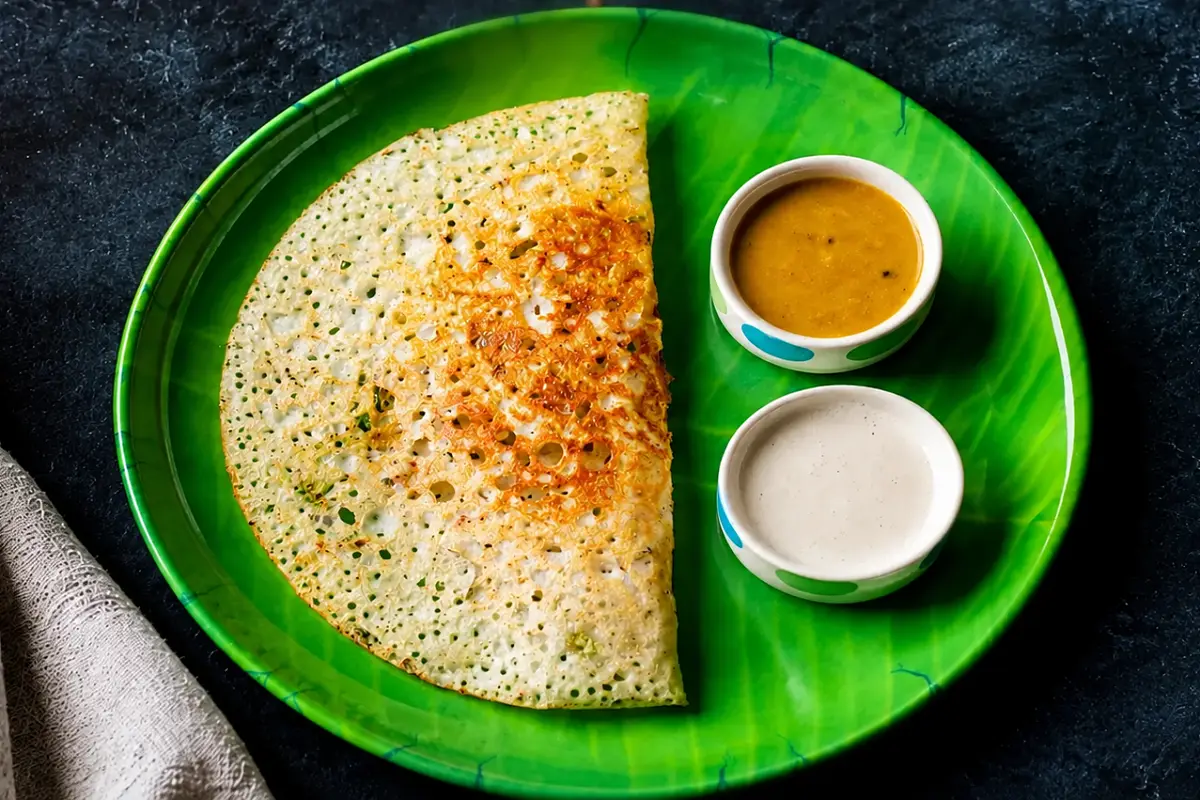
Rava Dosa recipe is a quick and popular South Indian dosa made with rava (suji), rice flour, all-purpose flour, herbs, and spices. These thin and crispy crepes have a characteristic netted texture. Unlike traditional dosa, this Suji Dosa recipe does not require grinding or fermentation. Make this easy rava dosa for a quick breakfast or snack.
Rava dosa is one of the quick breakfasts I make on occasion. At home, we prefer to add onions and some spices to them.
So I usually add onions, ginger, green chilli and some spices to the batter. At times I even add some chopped cashews. The addition of these ingredients makes the dosa more flavorful and tasty.
You can choose to make the suji ka dosa plain or you can spice it up by adding chopped onions, curry leaves, herbs and spices etc like I have done here.
Here I am sharing my mom's recipe which is made without curd (yogurt) or buttermilk. Plain water is used to make the batter.
You can even use curd or buttermilk instead of water to make the batter. This recipe can also be halved or doubled or tripled according to your needs.
If you do double the recipe, then use two tawa or skillets and cook the dosa side by side on two stovetop burners.
A thin batter is made of rava, rice flour, maida and water or buttermilk. The batter is spiced with onions, green chilies and some more herbs & spices.
The batter is then poured on a hot tawa (griddle) to get netted effect on the dosa. The dosa is cooked till golden crisp and then served hot.
To make perfect crispy instant rava dosa which has a netted texture, the batter has to be thin. So always remember that the batter should be thin, runny and easy to flow.
Also allow some soaking time for rava or suji, so that they soften. I usually mix everything and set the batter aside for 20 to 30 minutes. For the complete original step-by-step method with photos, you can also refer to the original Rava Dosa Recipe on Veg Recipes of India.
Serving Suggestions
Rava Dosa or Suji ka Dosa can be served with sambar, Coconut Chutney or Idli Dosa Podi or any chutney of your choice. To make it more filling, you can serve it with Potato Masala and make a delicious Masala Rava Dosa.
Rava dosa also pairs well with Peanut Chutney, Onion Chutney, Tomato Chutney and Ginger Chutney.
Variations
With the basic instant rava dosa recipe, many variations can be made.
Increase or decrease any of the herbs and spices and make a variation. Example: you can make pepper rava dosa by increasing black pepper or Onion Dosa by increasing amount of onions.
Add ghee or butter and make ghee rava dosa or butter rava dosa. Serve rava dosa with potato masala and you get masala rava dosa.
Which Type of Rava to Use
To make Rava Dosa, use the fine variety of rava (suji or semolina). This type of rava blends well into the batter and helps make thin and crispy dosas.
The same fine rava is also used to make dishes like Rava Idli, Upma, Rava Dhokla, and Suji Halwa.
If you do not have fine rava, you can also use Bombay rava, which is another commonly available variety. If you enjoy exploring more crispy South Indian breakfast options, you may also like this Medu Vada Recipe.
Dassana's Recipe Tips
Soaking rava: Before making them, always allow a soaking time of 20 to 30 minutes for the batter.
Batter consistency: The batter has to be thin and of pouring consistency. Even if the batter is of medium consistency, the Suji ka dosa will be soft and not crisp. When you make the first dosa then you will come to know whether you are getting the crisp and netted effect or not. If not then you will need to add some more water. Instead of water, you can also add buttermilk to the batter.
Temperature of skillet or tawa: When pouring the batter, the skillet or tawa has to be hot. When you pour the batter, it will sizzle when it comes in contact with the hot tawa. So keep the heat to medium or medium-high. When cooking instant rava dosa, you can reduce the flame if the tawa becomes too hot.
Pouring batter: The batter also has to be poured from a slightly more height than what is the norm. This will give you the netted effect on the Suji ka Dosa. When pouring the batter, pour from the edges first and then move towards the center.
Cooking time: Rava dosa takes more time to cook than the regular dosa.
Mixing batter: Every time before pouring the batter on tawa, you have to mix it very well as the flours and rava settle down at the bottom of the batter. After making some rava dosa, if the batter looks slightly thick, then you can add some more water.
Pan type: Always use a heavy or a thick bottomed tawa or pan, so that the rava dosa does not stick to the pan. You can even use cast iron pan.
Dassana's Notes
Resting batter: Rest the batter for 20 to 30 minutes.
Batter consistency: The batter has to be thin and of pouring consistency. A medium consistency, will yield soft rava dosa.
Temperature of the pan: When pouring the batter, the tawa has to be hot. When you pour the batter, it will sizzle when it comes in contact with the hot tawa. So keep the flame to medium or medium-high.
Pouring batter: The batter has to be poured from a slightly more height and this gives a netted effect on the rava dosa. Pour from the edges first and then move towards the center. When you make the first dosa then you will come to know whether you are getting the crisp and netted effect or not. If not then you will need to add some more water. Instead of water, you can also add buttermilk to the batter.
Cooking time: Rava dosa takes more time to cook than the regular dosa. You can reduce the heat if the tawa becomes too hot.
Mixing: Every time before pouring the batter on tawa, you have to mix it very well as the flours and rava settle down at the bottom of the batter. After making some rava dosa, if the batter looks slightly thick, then you can add some more water.
Pan type: Always use a heavy or a thick bottomed tawa or pan, so that the rava dosa does not stick to the pan. Cast iron pan is also a good choice.
Rava Dosa recipe from the archives was first published on May 2013
Ingredients
- ½ cup rava – un-roasted and fine textured (suji or fine semolina)
- ½ cup Rice Flour
- ¼ cup all-purpose flour
- ½ to 1 teaspoon green chillies – finely chopped or serrano peppers or 1 to 2 green chillies
- ⅓ cup onions – finely chopped
- ½ teaspoon ginger – finely chopped
- 1 tablespoon or 8 to 10 curry leaves – chopped
- 1 to 2 tablespoons coriander leaves – chopped (cilantro), optional
- ½ teaspoon black pepper – crushed
- ½ teaspoon cumin seeds
- 2.25 to 2.5 cups water or add as required
- salt as required
- oil or ghee or butter for cooking, as required
Nutritional Information
- Calories: 102kcal
- Carbohydrates: 16g
- Protein: 2g
- Fat: 3g
- Saturated fat: 1g
- Sodium: 134mg
- Potassium: 38mg
- Fiber: 1g
- Sugar: 1g
- Vitamin A: 30IU
- Vitamin B1 (Thiamine ): 1mg
- Vitamin B2 (Riboflavin): 1mg
- Vitamin B4 ( Niacin): 10mg
- Vitamin B6: 1mg
- Vitamin C: 17mg
- Vitamin E: 1mg
- Vitamin K: 1µg
- Calcium: 9mg
- Vitamin B9 ( Folate): 117µg
- Iron: 1mg
- Magnesium: 9mg
- Phosphorus: 26mg
- Zinc: 1mg
Directions
How To Make Rava Dosa (Step-By-Step)
Step 1: Make Thin Batter
Take ½ cup unroasted fine rava, ½ cup rice flour and ¼ cup all-purpose flour in a bowl.
Then add ⅓ cup chopped onions, 1 or 2 green chillies (about ½ to 1 teaspoon finely chopped), and ½ teaspoon finely chopped ginger.
Also add ½ teaspoon crushed black pepper, ½ teaspoon cumin seeds, 8 to 10 curry leaves (about 1 tablespoon chopped) and salt as required.
At this point you can also include 1 to 2 tablespoons of chopped coriander leaves, 2 tablespoons of fresh grated coconut or 1 to 2 tablespoons of chopped cashews.
Add 2.25 to 2.5 cups water. Depending on the quality of rava or suji and rice flour, you can add less or more water – from 2 to 2.5 cups water.
I added 2.25 cups of water. You can also use buttermilk instead of water.
Whisk till smooth without any lumps. The batter has to be flowing and thin.
Tip 1: If the batter looks thick or has a medium consistency, then add more water.
Tip 2: If the batter looks very thin and runny, then add some rice flour.
Cover and let the batter rest for 20 to 30 minutes.
Once the batter rests, you will see that the rava and the flours have settled down and the water will be floating on top.
Before preparing dosa, mix the batter very well so that the flours and semolina that are at the bottom of the bowl are mixed evenly again.
Step 2: Make Rava Dosa
Spread some oil on the tawa or skillet. Do make sure that the tawa is hot. Keep the flame to medium or medium-high before pouring the dosa batter.
You can also use butter or ghee or coconut oil. Sometimes I use coconut oil and it gives a really good flavor.
If using a cast iron skillet, I recommend to use one that is well seasoned. So that the batter does not stick to it. You can check below my tips on seasoning the cast iron skillet.
With a ladle pour the dosa batter. Start from the edges move towards the center.
If there are big or small gaps, then fill them lightly with the batter.
On a medium-low to medium heat, cook the dosa. If the tawa or pan becomes too hot, then you can reduce the heat.
When the top side firm up and looks cooked, then sprinkle ½ to 1 teaspoon oil on the top and sides.
Spread oil all over the dosa with a spoon.
Instant rava dosa takes a little longer time to cook than the regular plain dosa.
Cook till the base is golden and crisp. The edges will also separate from the pan.
The longer you cook these, the more golden and crispy they become. Flip and cook the second side for ½ to 1 minute or as needed.
Fold and then serve instant rava dosa hot with Coconut Chutney and Sambar.
The flours settle down at the bottom of the batter. So you have to stir and mix the batter very well every time you make dosa.
In case the batter becomes thick after making a few dosa, then add some water and stir again. Make all dosa this way.
Serve rava dosa hot. For the best taste serve these as soon as they are made.
Rate this Recipe
User Reviews
No reviews yet. Be the first to share your thoughts!