Flyinggroup first Global 5500 begins a five-aircraft expansion
FlyingGroup has added its first Bombardier Global 5500 as it targets up to five new aircraft by the end of 2026, expanding its managed and charter fleet.
 Jishan Khan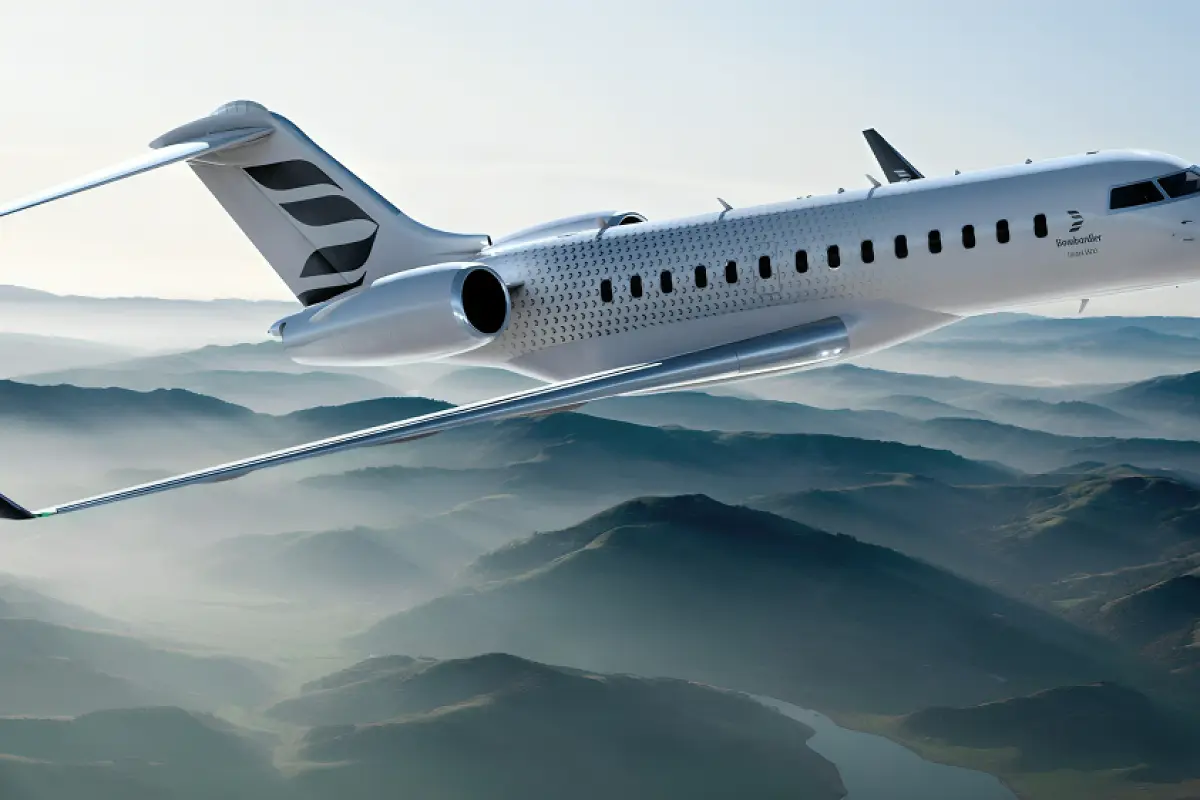
FLYINGGROUP's First Global 5500 Isn't the Story, Its Public Five-Aircraft Countdown Is
Belgium's FLYINGGROUP has added its first Bombardier Global 5500 to its managed and charter fleet, according to ch-aviation, giving the Antwerp-based operator its first foothold in Bombardier's long-range Global family beyond the smaller Challenger series it has historically operated. What makes this addition worth more than a passing mention is that FLYINGGROUP is running its expansion with unusual transparency, its own website currently displays a standing banner stating plainly: "FLYINGGROUP IS PLANNING TO ADD UP TO 5 AIRCRAFT BY THE END OF 2026." The Flyinggroup Global 5500 is not a one-off. It is a publicly telegraphed instalment in a fleet target the company is actively counting down toward, in real time, on its own homepage.
Why the Global 5500 Specifically Signals a Genuine Category Shift, Not Just Another Tail Number
FLYINGGROUP's existing fleet, per its own site, has centred on Cessna Citations, Dassault Falcon 900s, 2000s and 7Xs, Embraer Legacy and Praetor jets, and Pilatus PC-24s, a fleet mix weighted toward light, super-midsize and large-cabin categories, but without a genuine ultra-long-range Global-family aircraft until now. Bombardier's own 2018 launch materials for the type describe the Global 5500 as featuring "a newly optimized wing, a fully reimagined cabin and new, purpose-built engines" specifically the Rolls-Royce Pearl powerplants, which extended range by up to 1,300 nautical miles over its Global 5000 predecessor, reaching a certified 5,700 nautical mile range, later increased to 5,900 nm from October 2019. That range class puts genuine transatlantic and Europe-to-Middle-East nonstop capability within reach in a way none of FLYINGGROUP's previous fleet types could offer as standard.
The cabin specification matters commercially as much as the range figure. Bombardier's current marketing for the type leads specifically with the Nuage seat, the same seat design this feed covered when Bombardier delivered its 200th Challenger 3500 to Ferrari's Piero Ferrari, originally developed for the flagship Global 7500 and now cascading down through Bombardier's broader Global family as a differentiating comfort feature. A charter or managed-fleet operator adding a Global 5500 is not simply adding range, it is adding a cabin product capable of competing directly against Gulfstream's G500/G600 family and Dassault's Falcon 6X in exactly the segment where corporate and ultra-high-net-worth clients increasingly expect long-range performance paired with large-cabin comfort, rather than treating the two as a trade-off.
Why a Charter and Management Hybrid Model Makes This Addition Pull Double Duty
FLYINGGROUP's own site description of its business is explicit about running two parallel operations from the same fleet base: "In addition to our charter aircraft, we also manage and maintain a wide range of business jets for private owners, from light jets to long-range aircraft." That dual structure, familiar from this feed's earlier coverage of Priester Aviation's regional consolidation model and Solairus's acquisition of Clay Lacy's management and charter divisions, means a single new Global 5500 delivery is not committed to only one revenue stream. It can serve a private owner under a management agreement generating revenue when the owner is not flying, while simultaneously being available for direct charter sale to FLYINGGROUP's own client base when management-contract flying hours leave capacity spare.
That flexibility is precisely why long-range types like the Global 5500 are attractive fleet additions for operators running this hybrid model specifically, a light jet under management has narrower charter appeal because its range limits which routes it can fly commercially, whereas a genuine long-range aircraft can be marketed to a much broader charter customer base spanning short domestic hops and genuine intercontinental missions alike, maximizing the utilisation Bombardier's own literature emphasises when marketing the type to fleet operators rather than single private owners.
The AOC Consolidation Effort That Explains Why FLYINGGROUP Can Absorb a New Aircraft Type Efficiently
Separate reporting on FLYINGGROUP's broader strategy notes the company has been considering consolidating its operations under a unified European Union Aviation Safety Agency Air Operator Certificate, specifically to streamline its regulatory framework and enhance operational efficiency as its fleet grows across multiple aircraft categories. That detail is directly relevant to how smoothly a genuinely new aircraft family, the Global series sits outside FLYINGGROUP's previous Challenger-only Bombardier experience, can be integrated into an existing operation. A single, unified AOC structure reduces the duplicated compliance, crew-scheduling and maintenance-oversight burden that operating multiple aircraft types under fragmented certificates would otherwise create, making it commercially and operationally more efficient for a growing operator to add a new long-range category like the Global 5500 without a proportional increase in regulatory overhead.
Why Belgium, Specifically, Is Positioned to Absorb This Kind of Upmarket Shift
FLYINGGROUP's move toward larger, longer-range jets reflects a broader pattern this feed has tracked repeatedly across the European business aviation sector throughout 2026, DAS Private Jets adding a Pilatus PC-12 in Germany, Best Jets International's mixed E170 fleet in the US Midwest, and the industry-wide consolidation wave exemplified by Priester Aviation's roll-up strategy, all pointing toward operators either broadening their aircraft category range or scaling their existing fleet significantly. Belgium's central European location, with Antwerp and Brussels both offering strong access to major European financial centres alongside comparatively favourable operating costs relative to larger Western European aviation hubs, gives an operator like FLYINGGROUP a credible base from which to market genuine transatlantic and Middle East-range charter and management services without needing to relocate its operational centre closer to a larger single national market.
What "Up to Five Aircraft by End of 2026" Actually Signals
The genuinely interesting element of this story is not the Global 5500 in isolation, it is that FLYINGGROUP has chosen to publicise a specific numeric fleet growth target on its own homepage rather than simply announcing individual aircraft deliveries as isolated news items, the more conventional approach most business aviation operators covered in this feed's recent reporting have taken. That public countdown framing suggests a company using its own fleet growth as an active marketing and confidence-signalling tool aimed at both prospective managed-fleet owners deciding where to place their aircraft, and prospective private jet charter clients evaluating which operator has the scale and momentum to reliably serve their needs going forward.
Whether the remaining aircraft in that five-jet target skew toward further Global-family long-range additions, or diversify back into FLYINGGROUP's more established Falcon, Legacy and Citation categories, will determine whether this Global 5500 delivery marks a genuine strategic pivot toward the ultra-long-range segment specifically, or simply one category among several in a broader, more evenly distributed FLYINGGROUP fleet expansion running through the remainder of 2026.