Jet Airways $92 Million Boeing Dispute Dismissed
Jet Airways' $92 million Boeing payment dispute was dismissed by India's NCLT, leaving the liquidator to pursue the claim through another legal route.
 Jishan Khan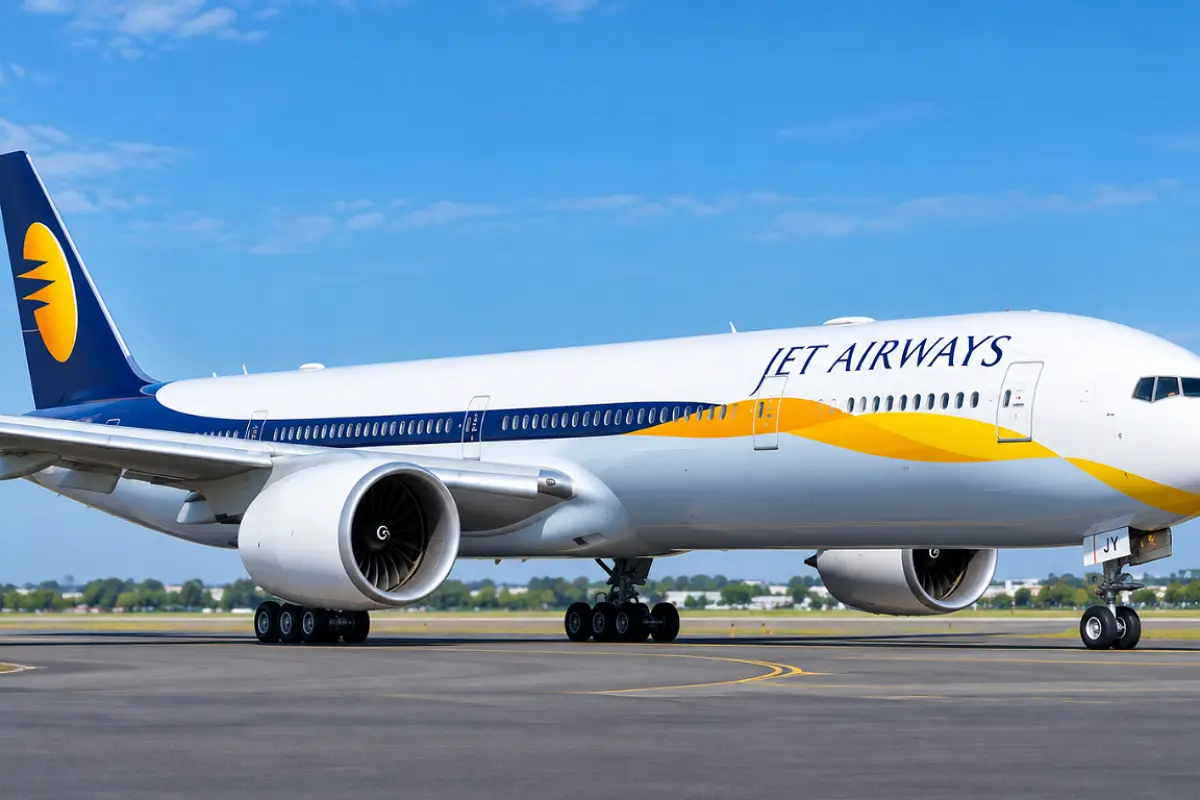
Jet Airways Has Now Failed Twice, Once as an Airline in 2019, Once as a Revival Attempt in 2024, and Its $92 Million Boeing Fight Just Became Failure Number Three's Problem
The Mumbai bench of India's National Company Law Tribunal dismissed liquidator Satish Kumar Gupta's application seeking $92.129 million (roughly ₹500 crore) in refunded advance and pre-delivery payments from Boeing on September 11, 2026, but the ruling itself is a study in what the NCLT specifically declined to decide, rather than a verdict on who is actually entitled to the money. The bench, comprising Judicial Member Sushil Mahadeorao Kochey and Technical Member Prabhat Kumar, held that determining whether Boeing could lawfully retain, forfeit or set off the advance payments would require examining the underlying aircraft purchase agreements in full, agreements that were never placed before the tribunal at all, because Boeing raised confidentiality concerns over its own proprietary contract terms.
That is the single most consequential detail in this entire ruling: a $92 million dispute was dismissed partly because nobody actually showed the court the contracts governing it.
A Dispute With Roots Going Back to 2013, Long Before Jet Airways Even Began Collapsing
The underlying aircraft purchase agreements between Jet Airways and Boeing date to 2013, covering Boeing 737-8 and 787-9 aircraft, meaning the commercial relationship at the heart of this case predates Jet's actual 2019 collapse by six years. Jet paid Boeing $92,129,387 in advance and pre-delivery payments across that period, the standard industry practice of instalment payments an airline makes toward future aircraft deliveries, covered extensively in this feed's earlier reporting on how airlines like Avianca and Vietravel finance exactly this kind of forward aircraft commitment.
The relationship deteriorated in stages that map precisely onto Jet Airways' own broader financial unravelling. Jet failed to make certain payments due under the agreements, prompting Boeing to issue formal notice on May 22, 2019 suspending its obligations, a date that sits just weeks before Jet Airways formally entered India's Corporate Insolvency Resolution Process in June 2019, after the airline ran out of cash entirely and ceased flying. Boeing did not immediately terminate the contracts; it waited until December 2020, well over a year into Jet's insolvency proceedings, before formally ending the agreements. The aircraft, unsurprisingly, were never delivered.
Why Boeing's Defence Rests Entirely on a Word: "Set-Off"
Boeing's position throughout this dispute has been straightforward and specific, it contends the $92.13 million advance was already adjusted against its own larger admitted claim in Jet Airways' insolvency proceedings, and therefore effectively extinguished through set-off rather than something still owed back to the estate. That is a meaningfully different argument than simply saying "we kept the money and won't give it back." Set-off is a recognised legal mechanism where two parties who owe each other money net those obligations against one another, rather than each side separately paying the other in full. Boeing's claim implies it was itself owed money by Jet Airways under the broader commercial relationship — likely covering unpaid instalments, cancellation costs, or other contractual obligations beyond just the aircraft purchase agreements, and that the advance payments Jet had made were already absorbed into settling that larger, separate claim before liquidation proceedings ever reached this specific NCLT application.
Whether that set-off was contractually valid, correctly calculated, and properly documented is precisely the "disputed question of fact and law" the NCLT said it could not resolve through its own summary jurisdiction, because verifying a set-off claim of this kind requires examining exactly the kind of detailed contractual terms, payment schedules and claim calculations that neither party fully placed before the tribunal.
Why India's Insolvency Tribunal Structurally Cannot Decide This Kind of Fight
The NCLT's dismissal rests on Section 60(5) of India's Insolvency and Bankruptcy Code, the provision granting the tribunal authority to decide questions "arising out of or in relation to" insolvency proceedings. That jurisdiction is deliberately narrow by design: the NCLT exists to move insolvency and liquidation proceedings forward efficiently, not to conduct full civil trials examining disputed commercial contracts in the way a regular civil court or arbitration panel would. The liquidator's attempt to use Section 60(5), alongside Regulation 29 of the IBBI Liquidation Process Regulations covering how a liquidator handles ongoing contracts, to force a $92 million contractual determination through the insolvency tribunal's summary process was always going to face exactly this kind of jurisdictional ceiling, a tribunal built for efficient insolvency administration is structurally the wrong forum for adjudicating a genuinely contested, evidence-heavy contract dispute stretching back over a decade.
That distinction matters enormously for how this ruling should actually be read. The NCLT did not rule that Jet Airways' liquidation estate has no valid claim to the money. It ruled that its own court is the wrong venue to determine whether that claim is valid, a procedural dismissal, not a substantive one, leaving Jet Airways' liquidator with the underlying claim fully intact, just without a forum currently willing to hear it.
Where the $92 Million Actually Goes From Here
Retail Intel's own analysis of the ruling frames the practical consequence starkly: "Jet Airways' liquidator faces a longer, trial-based route to pursue Boeing over aircraft advance payments, delaying any potential recovery for the estate." The liquidator's realistic options now are a civil suit, an arbitration proceeding (assuming the original 2013 purchase agreements contain an arbitration clause, which most major aircraft manufacturer purchase contracts typically do), or an appeal of this specific NCLT dismissal to a higher tribunal. Each of those paths requires disclosure of exactly the material this NCLT proceeding lacked, the aircraft purchase contract's governing law, its designated arbitration venue if any, and its specific forfeiture and set-off provisions, meaning the next stage of this dispute, wherever it lands, will finally require both parties to actually produce the contractual documents this ruling notes were kept out of evidence.
Why This Adds Another Chapter to a Liquidation That Was Never Supposed to Reach This Point
The deeper context worth understanding is that Jet Airways was not originally headed toward liquidation at all. This feed's research surfaces the airline's actual, more complicated post-collapse history: after ceasing operations in April 2019, Jet went through a full Corporate Insolvency Resolution Process, and in June 2021 the NCLT approved a resolution plan under a consortium led by UAE businessman Murari Lal Jalan and London-based Kalrock Capital, a plan that was meant to see the airline resume flying by early 2022, with ownership formally transferred to the Jalan-Kalrock consortium effective November 16, 2022. That revival attempt never actually got Jet Airways back into the sky. Disagreements between the new owners and Jet's lenders over the resolution plan's implementation eventually collapsed the entire arrangement, with bankers directly telling Reuters they were pursuing liquidation specifically because "there are concerns the resolution plan may fall apart" and creditors wanted to salvage what they could through liquidation instead.
That means the current $92 million Boeing dispute is not simply Jet Airways' original 2019 collapse still generating legal fallout seven years later, it is fallout from a failed revival attempt that itself consumed years of legal process, creditor negotiation and public expectation before ultimately reverting to the liquidation process this Boeing dispute now sits inside. Jet Airways' aircraft were literally being seized by Mumbai district officials over unpaid gratuity dues as recently as the ownership transition period, according to this feed's research, a detail that illustrates just how financially exhausted the estate already was even before this specific $92 million question became the latest unresolved claim in a liquidation process that has now run for the better part of a decade without fully closing out every outstanding dispute.
What This Means for Everyone Still Owed Money by a Company That No Longer Exists
For Jet Airways' broader creditor base, the airline was originally taken to bankruptcy court by lenders owed approximately ₹180 billion (roughly $2 billion) the practical effect of this dismissal is a further, indefinite delay to however much of the estate's remaining assets might eventually be distributed. Every dollar tied up in unresolved disputes like this Boeing claim is a dollar that cannot yet be allocated to the creditors still waiting on Jet Airways' liquidation to actually conclude. Aditi Dhara's own reporting captures the honest, unresolved state of play precisely: the September 11 order "did not decide that Boeing owns the money," it simply established that the insolvency tribunal is not where that ownership question gets answered.
Seven years after Jet Airways stopped flying, five years after a resolution plan that never got the airline back in the air, and now with a $92 million contract dispute bounced back to square one procedurally, the liquidation of what was once India's largest private airline remains, in the most literal sense, still very much unfinished business.