Aegean Airlines Drops Airbus A321XLR Plans After Delivery Delays
Greece’s Aegean Airlines has abandoned plans to acquire Airbus A321XLR aircraft due to delivery delays, prompting the carrier to reassess its fleet strategy and future network expansion plans.
 Jishan Khan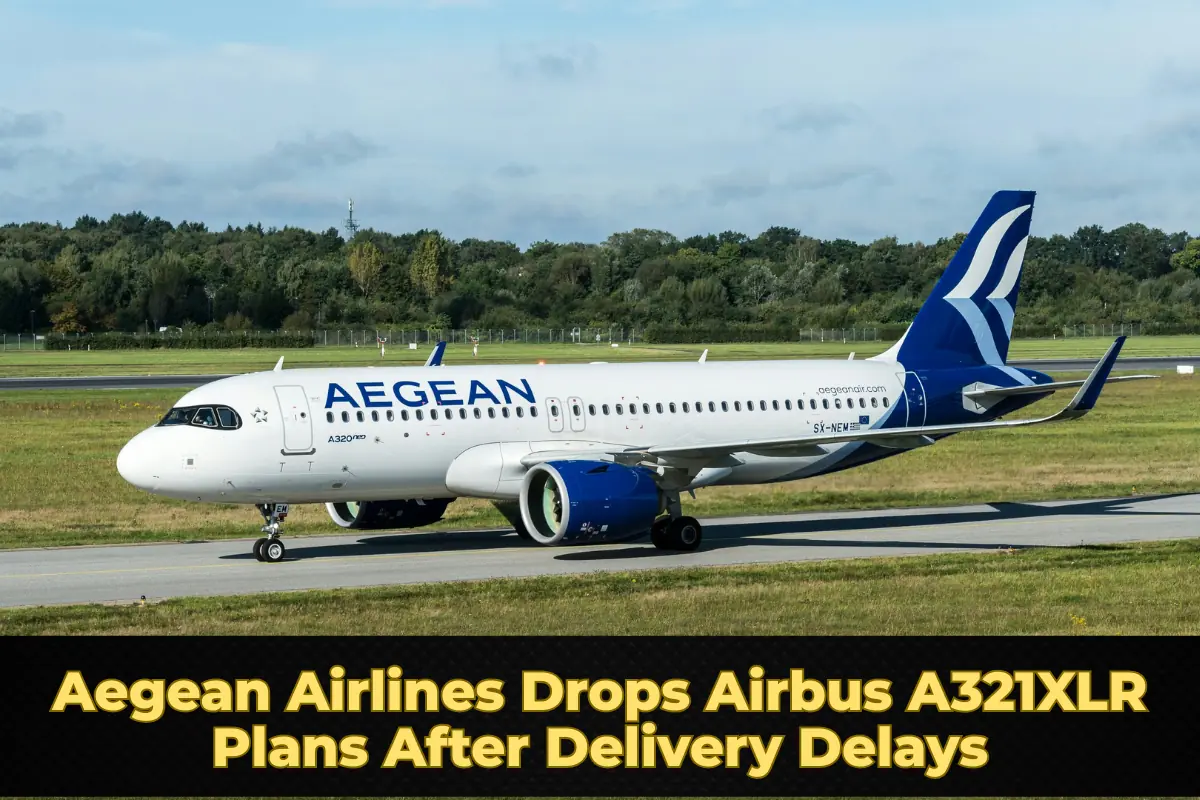
Aegean Airlines Drops Airbus A321XLR Plans After Delivery Delays
Greece’s Aegean Airlines has decided to abandon its plans to acquire the Airbus A321XLR aircraft following prolonged delivery delays, prompting the carrier to reconsider its fleet development strategy and long-haul expansion plans. The decision comes as the airline adjusts its operational outlook amid uncertainty surrounding the availability of the long-range narrowbody jet, which had been expected to support new routes and network growth.
The Athens-based airline had previously expressed interest in the Airbus A321XLR as part of its broader fleet modernization program aimed at expanding connectivity beyond its traditional European markets. However, continued delays in the aircraft’s certification and delivery timeline have led the carrier to revise its plans and explore alternative fleet options.
Airline executives indicated that the delays created uncertainty regarding the timing of aircraft availability, making it difficult for the company to align its route development strategy with the anticipated arrival of the new aircraft.
Aircraft Delays Impact Fleet Planning
The Airbus A321XLR is a long-range variant of the widely used A321 narrowbody aircraft and has been designed to enable airlines to operate longer routes with lower operating costs compared with widebody jets. The aircraft has attracted strong interest from airlines worldwide because it allows carriers to connect destinations that may not generate enough demand to justify larger aircraft.
For Aegean Airlines, the aircraft was expected to play a key role in enabling the airline to extend its network to destinations beyond the reach of its current narrowbody fleet. The jet’s extended range capability would have allowed the carrier to operate routes linking Greece with markets in the Middle East, Asia, and parts of Africa while maintaining the efficiency of a single-aisle aircraft.
However, delays in the aircraft’s development and certification process have created uncertainty for airlines planning to incorporate the model into their fleets. The timeline for the A321XLR’s entry into service has shifted several times, affecting airline fleet planning across multiple regions.
Aegean Airlines ultimately concluded that continuing to wait for the aircraft could disrupt its long-term network planning and fleet investment strategy.
Aegean’s Fleet Modernization Strategy
Aegean Airlines has spent the past several years pursuing an ambitious fleet renewal program designed to modernize its aircraft and improve operational efficiency. The airline has been introducing new-generation aircraft from the Airbus A320neo family, which offer lower fuel consumption and reduced operating costs compared with older models.
The fleet modernization effort has been part of the airline’s broader strategy to strengthen its competitive position within the European aviation market while maintaining its role as Greece’s largest airline.
By operating newer aircraft, the airline aims to reduce fuel costs, enhance passenger comfort, and maintain flexibility in its route network. Fuel efficiency and environmental performance have also become increasingly important considerations for airlines as global aviation regulations and sustainability goals continue to evolve.
The decision to abandon the A321XLR plans does not necessarily signal a halt to the airline’s long-term expansion ambitions but rather reflects a shift in how those goals may be achieved.
Implications for Route Expansion
The A321XLR had been widely viewed as a transformative aircraft for many airlines because of its ability to operate long-haul routes with relatively smaller passenger capacity. For carriers like Aegean Airlines, this capability could have opened opportunities to launch direct flights to markets that currently require connections through major hubs.
Without the A321XLR, Aegean may need to rely on other aircraft types or adjust its route planning strategy to support international expansion. The airline could potentially focus on strengthening its existing network within Europe and nearby regions while evaluating alternative aircraft solutions for longer routes.
Airlines frequently adjust fleet strategies based on changes in aircraft availability, market demand, and economic conditions. Delays in aircraft production or certification can have significant ripple effects across airline planning processes.
Industry analysts note that the A321XLR remains a highly anticipated aircraft model despite its delayed introduction, with many airlines continuing to place orders for the type due to its unique range capabilities.
Airbus A321XLR Development Challenges
The Airbus A321XLR program has faced technical and regulatory challenges during its development phase, contributing to delays in its certification timeline. Aircraft manufacturers must undergo rigorous testing and regulatory review before new aircraft models can enter commercial service.
These procedures are designed to ensure the safety, reliability, and operational performance of new aircraft before they are deployed by airlines worldwide. However, the complexity of the certification process can sometimes lead to delays that affect airline delivery schedules.
The A321XLR includes several design modifications compared with earlier versions of the A321, including an additional fuel tank and structural adjustments that enable extended range capabilities. These modifications have required additional scrutiny during the certification process.
Airbus has continued working with aviation regulators to complete the certification program, and the manufacturer has stated that it remains committed to delivering the aircraft to customers once regulatory approval is secured.
European Aviation Market Dynamics
Aegean Airlines operates in a competitive European aviation market where carriers continuously adapt their fleets and route networks in response to shifting passenger demand. The airline plays a major role in connecting Greece with destinations across Europe while supporting the country’s tourism-driven economy.
Tourism represents one of the most important sectors of the Greek economy, and reliable air connectivity is essential for bringing international visitors to the country’s islands and mainland destinations.
Aegean Airlines has built its network around connecting major European cities with Greece’s key tourism markets, particularly during peak summer travel seasons when passenger demand rises sharply.
Maintaining operational flexibility is therefore critical for the airline as it balances seasonal travel demand, fleet capacity, and route profitability.
Future Fleet Options
Although the airline has stepped back from plans to introduce the A321XLR, it is likely to continue evaluating fleet options that support its long-term operational goals. Airlines often maintain flexibility in fleet planning in order to adapt to evolving market conditions and technological developments.
Alternative aircraft models within the Airbus A320neo family could still support much of the airline’s regional and medium-haul network growth, while partnerships or codeshare agreements with other airlines may also provide connectivity to longer-distance markets.
Industry experts say airlines increasingly prioritize fleet flexibility as part of their strategic planning, ensuring they can respond quickly to changes in aircraft availability, fuel costs, and passenger demand patterns.
For Aegean Airlines, the decision to drop the A321XLR plan represents an adjustment rather than a retreat from growth ambitions.
Current Status
While the airline continues to expand its fleet with other Airbus aircraft and strengthen its European network, its long-range narrowbody ambitions will remain on hold until alternative solutions become available. For now, Aegean Airlines has opted to move forward with a revised fleet strategy that avoids uncertainty surrounding the delayed Airbus A321XLR program.