Air Astana Seeks State Aid to Launch US Flights
Air Astana’s New York ambitions face Boeing 787 delivery delays, Russian airspace closures, and difficult routing economics, pushing Kazakhstan’s flag carrier to seek state support for US flights.
 Jishan Khan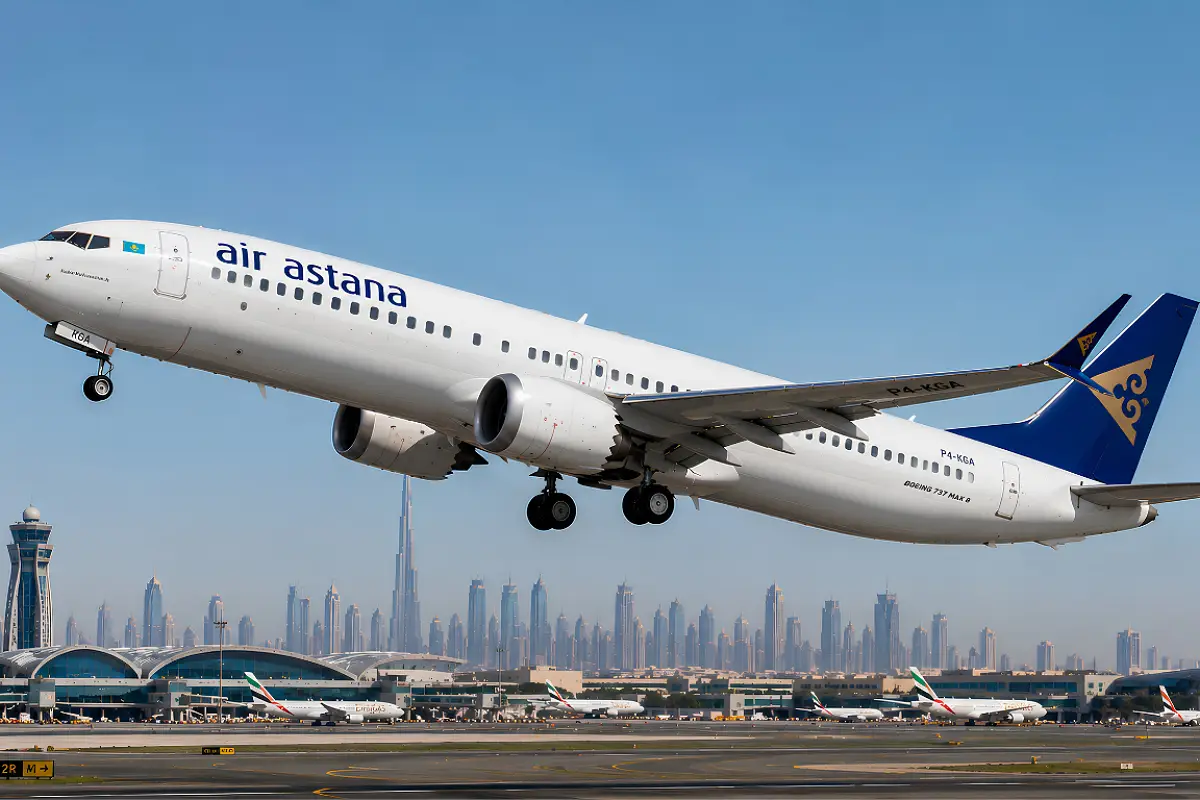
Air Astana Wants to Fly to New York, But the World Has Made It Harder Than Anyone Expected
Boeing deliveries that never arrived. Russian airspace that closed and never reopened. A routing problem with no clean solution. And now a request for state support just to make the economics work. Air Astana's US ambitions tell the full story of what the Russia-Ukraine war quietly did to aviation across Central Asia.
There is a version of Air Astana's New York ambitions that should have been straightforward. Kazakhstan's flag carrier, operating a modern widebody fleet, launching a flagship transatlantic route to the United States as part of a broader push to position Almaty as a genuine international hub. The demand case is real. The strategic logic is clear. The political will is obviously there.
The problem is that almost everything required to make the route work has either been delayed, disrupted, or fundamentally reshaped by events the airline had no control over.
Air Astana is now reportedly seeking state support from Kazakhstan's government to finally unlock its long-delayed US flight plans, and the reasons it needs that support explain more about what the Russia-Ukraine war actually did to global aviation than almost any other single story in the industry right now.
The Two Problems That Broke the Original Plan
Air Astana's transatlantic ambitions ran into two simultaneous obstacles that individually would have been manageable and together have become genuinely difficult to solve.
The first is Boeing 787 delivery delays. Air Astana needs widebody aircraft with the range and economics to operate a viable transatlantic service. The 787 Dreamliner is the natural tool for exactly this kind of route, long-range, fuel-efficient, right-sized for the passenger volumes a carrier of Air Astana's scale can realistically fill on a new US service.
The problem is that Boeing's 787 production and delivery crisis has hit carriers of Air Astana's size disproportionately hard. Larger carriers with bigger order books and more negotiating leverage have managed to secure deliveries or find alternatives. Smaller international carriers have waited.
The second problem is Russian airspace. Before February 2022, the most logical routing for a flight from Almaty to New York ran directly over Russian territory, a path that dramatically shortened the journey and made the economics of a direct or single-stop service viable. That routing is now closed, not just technically but politically, with no realistic prospect of reopening on any timeline that Air Astana can plan around.
What is left when you remove Russian overflight from the equation is a routing problem with no elegant solution. Flying west to New York without Russian airspace means going south and west through Central Asian, Middle Eastern, or European corridors, adding hours to the journey and fundamentally changing the fuel and operational economics of the service.
Why a Europe Stop Changes the Entire Business Case
Air Astana's current best option appears to be a service that stops in Europe en route to New York, essentially a two-sector journey rather than the direct or near-direct service that would be genuinely competitive with the connecting options passengers already have through Gulf and Turkish hubs.
The economics of a Europe-stop routing for New York are significantly more challenging than a direct service. Every stop adds turnaround costs, ground handling fees, crew considerations, and passenger inconvenience that makes the product harder to sell at fares that cover the operating costs.
For passengers in Almaty evaluating whether to book Air Astana to New York via a European city, the alternative is already well-established, connect through Dubai on Emirates, through Istanbul on Turkish Airlines, or through Doha on Qatar Airways, all of which offer smooth, frequent, and well-priced connections to the United States with strong onward networks.
Air Astana competing against that alternative with a stop-in-Europe routing needs either a price advantage, a schedule advantage, or a convenience advantage that is genuinely meaningful to passengers. Achieving any of those three without the direct routing that would make them naturally achievable is the commercial problem that state support is being asked to help solve.
Kazakhstan's Strategic Calculation
The request for government backing is not simply about airline economics. Kazakhstan views direct US connectivity as a strategic asset in a way that goes well beyond what the route's commercial performance alone could justify.
Direct flights between Almaty and New York are a piece of national infrastructure in the same way that a major highway or a trade corridor is national infrastructure, they create connections between economies, facilitate investment flows, enable diplomatic engagement, and signal to international audiences that Kazakhstan is a country serious enough and connected enough to warrant direct access.
For a country that has spent years working to diversify its international relationships and reduce dependence on Russian-mediated connectivity, a dependence that the airspace closure has made uncomfortably visible, the ability to fly directly to the United States is symbolically and practically important in ways that transcend the airline's profit and loss account.
State support for the route is Kazakhstan essentially deciding that the strategic value of having that connection justifies subsidising the commercial gap between what the route can earn and what it costs to operate under the current routing constraints.
That is not an unusual calculation for governments to make about flagship aviation routes. It is the same calculation that drives route development funds, government-backed ticket guarantees, and airport incentive schemes across dozens of countries that view direct international connectivity as a public good rather than purely a commercial question.
The Broader Story of What the Airspace Closure Did to Central Asia
Air Astana's situation is the most visible example of a problem that is affecting carriers across the entire Central Asian region in ways that have not received adequate coverage in global aviation media.
The closure of Russian airspace did not just add distance to European and transatlantic routes. It fundamentally restructured the competitive dynamics of long-haul flying from a region that sits directly adjacent to the territory that is now inaccessible.
Kazakhstan, Uzbekistan, Kyrgyzstan, and Tajikistan all lost the natural geographic advantage they previously held for certain long-haul routings. Their carriers are now flying longer routes at higher costs to reach markets that should by geography be among their most accessible. The fuel burn, the operational complexity, and the competitive disadvantage relative to Gulf and Turkish carriers who face no equivalent constraint are real and ongoing costs that show up in every long-haul business case these carriers attempt to build.
For Air Astana specifically, the irony is acute. Kazakhstan has the economic scale, the geographic ambition, and the political desire to support a carrier capable of meaningful transatlantic operations. The infrastructure for that ambition, the aircraft, the routes, the market demand, is within reach. What is blocking it is a geopolitical event that has nothing directly to do with Kazakhstan and that nobody at Air Astana had any power to prevent or reverse.
What Needs to Happen for New York to Become Real
Air Astana's path to New York requires at minimum two things to align that are currently not aligned.
The 787 deliveries need to materialise on a schedule that gives the airline the aircraft it needs to operate the route with viable economics. State support can help bridge the commercial gap but cannot substitute for having the right aircraft in the first place.
And the routing problem needs a solution that is commercially sustainable rather than just technically possible. A Europe-stop service can launch and demonstrate demand, but it is unlikely to build the long-term passenger loyalty and load factors that make the route genuinely self-sustaining without ongoing subsidy. The ideal outcome, which requires either Russian airspace reopening or polar routing alternatives becoming economically viable for Air Astana's fleet, is not within the airline's control to deliver.
State support buys time and makes the launch possible. It does not by itself resolve the structural challenges that made the route difficult in the first place.
What It Means for Kazakhstan and for Passengers
For Kazakhstan, a successful New York service, even one that requires government backing initially, would represent a meaningful win in the country's effort to establish itself as a serious player in international aviation and a genuinely connected destination for American business, tourism, and investment.
For passengers in Almaty and across Kazakhstan who currently have no direct or near-direct option to the United States, the service would provide a connectivity upgrade that changes the practical relationship between their country and the world's largest economy.
And for the broader Central Asian aviation story, the one about a region building its own airline capacity, claiming its own passengers back from Gulf and Turkish intermediaries, and connecting its economies directly to global markets, Air Astana getting to New York matters beyond Kazakhstan's borders.
It is the route that proves the ambition is real. The question is whether the economics, the aircraft, and the political support can all arrive at the same time.