Air Europa Faces $205 Million in Blocked Funds in Venezuela Amid Ongoing Currency Restrictions
Air Europa has $205 million in funds blocked in Venezuela due to currency controls, highlighting ongoing financial challenges for airlines operating in the country.
 Jishan Khan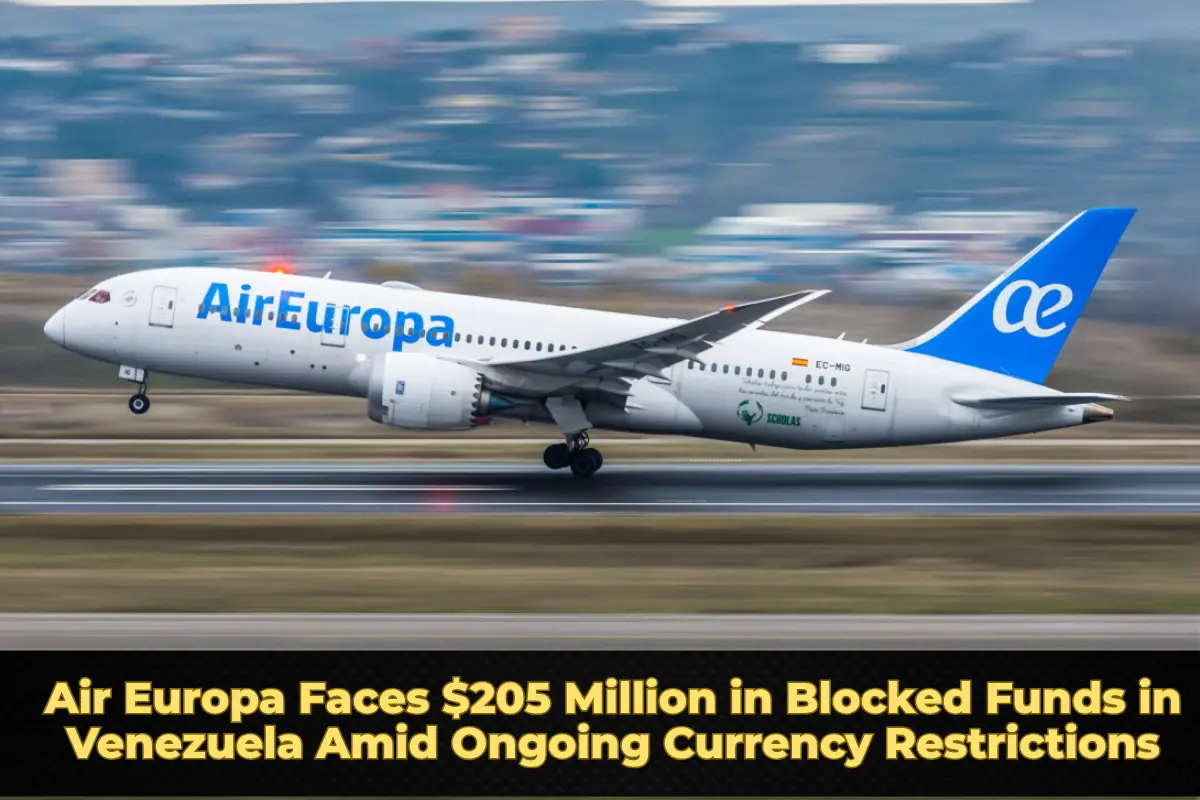
Air Europa is dealing with approximately $205 million in funds that remain blocked in Venezuela, as strict currency controls continue to prevent the airline from repatriating earnings generated from ticket sales in the country. The situation, reported in 2026, highlights ongoing financial challenges for international carriers operating in Venezuela’s tightly regulated economic environment.
The Spanish airline, which operates international routes connecting Venezuela with Europe, has accumulated significant revenue in local currency that cannot be converted into foreign exchange or transferred خارج the country. The issue stems from longstanding government-imposed controls over currency exchange, which have affected multiple airlines over the past decade.
Impact of Currency Controls on Airlines
Venezuela’s currency control regime requires companies to convert local earnings through official channels, often at regulated exchange rates that differ significantly from market rates. In many cases, access to foreign currency has been limited, leaving airlines unable to repatriate their revenues.
For Air Europa, the $205 million in blocked funds represents a substantial financial exposure, tying up capital that would otherwise be used for operations, fleet investments, and debt obligations. The inability to access these funds creates liquidity constraints and complicates financial planning.
Airlines operating in Venezuela have long cited these restrictions as a major operational risk, leading some carriers to reduce capacity, suspend routes, or withdraw from the market entirely.
Broader Industry Challenges in Venezuela
The issue of blocked funds is not unique to Air Europa. Several international airlines have faced similar challenges in Venezuela, with billions of dollars collectively trapped due to currency restrictions over the years. The situation has been a recurring concern for the global aviation industry.
These financial constraints have contributed to a decline in international connectivity to and from Venezuela, as airlines reassess the viability of operating in a market where revenue cannot be freely accessed. Reduced competition has, in turn, impacted travel options and fares for passengers.
Despite these challenges, some airlines continue to maintain limited operations, driven by demand for international travel and strategic considerations.
Operational and Strategic Implications
For Air Europa, maintaining a presence in Venezuela involves balancing commercial opportunities with financial risks. While demand for travel between Venezuela and Europe remains, the inability to repatriate funds limits the profitability of such operations.
The airline may need to explore alternative strategies, such as adjusting capacity, modifying pricing structures, or negotiating arrangements with authorities to mitigate financial exposure. However, options remain constrained by the broader regulatory environment.
Airlines often factor in such risks when planning routes and allocating resources, particularly in markets with economic instability or regulatory uncertainty.
Economic Context in Venezuela
Venezuela has experienced prolonged economic difficulties, including hyperinflation, currency devaluation, and limited access to foreign exchange. These factors have led the government to maintain strict controls over currency transactions in an effort to manage reserves and stabilize the economy.
While such measures aim to address domestic economic challenges, they have had significant implications for foreign companies operating in the country, including airlines. The gap between official exchange rates and market rates further complicates financial transactions.
The broader economic environment continues to influence the operating conditions for international businesses in Venezuela.
Potential Pathways for Resolution
Resolving the issue of blocked funds typically requires government intervention or policy changes that allow for greater access to foreign exchange. In some cases, airlines have negotiated partial repayments or reached agreements to convert funds over time.
However, progress has often been slow, and uncertainties remain regarding the timing and extent of any potential resolution. Airlines must therefore account for the possibility that funds may remain inaccessible for extended periods.
Industry stakeholders continue to engage with authorities in efforts to find workable solutions that balance economic constraints with the needs of international operators.
Impact on Passengers and Connectivity
The financial challenges faced by airlines in Venezuela have direct implications for passengers. Reduced flight frequencies and limited airline participation can lead to higher fares and fewer travel options.
Connectivity between Venezuela and key international destinations has been affected over time, influencing tourism, business travel, and the movement of people between regions. Airlines’ ability to sustain operations in such markets plays a critical role in maintaining these links.
Passengers may experience changes in schedules, pricing, and service availability as airlines adjust to the evolving situation.
Global Aviation Perspective
The situation in Venezuela underscores the importance of stable financial and regulatory environments for international aviation. Airlines operate on global networks that rely on the ability to move capital across borders efficiently.
When restrictions disrupt this process, they can have ripple effects across the industry, influencing route planning, investment decisions, and overall market dynamics. The Air Europa case serves as a reminder of the risks associated with operating in economically constrained markets.
Airlines must continuously assess these risks and adapt strategies to ensure long-term sustainability.
Future Outlook
Looking ahead, Air Europa’s ability to recover its blocked funds will depend on developments in Venezuela’s economic policies and foreign exchange framework. Any easing of restrictions could provide relief to the airline and others facing similar challenges.
In the meantime, the airline is expected to continue managing its exposure while maintaining operations where feasible. The situation remains fluid, with potential implications for both financial performance and network strategy.
Industry observers will be closely watching for any policy changes or agreements that could unlock trapped funds and improve operating conditions.
Current Status
Air Europa currently has approximately $205 million in funds blocked in Venezuela due to currency controls, with no immediate resolution in sight as regulatory restrictions remain in place.