Air India Faces Backlash Over Cabin Crew Grooming Policy Row
Air India faces scrutiny after social media posts questioned its cabin crew grooming rules, with the airline clarifying the guidelines were outdated.
 Jishan Khan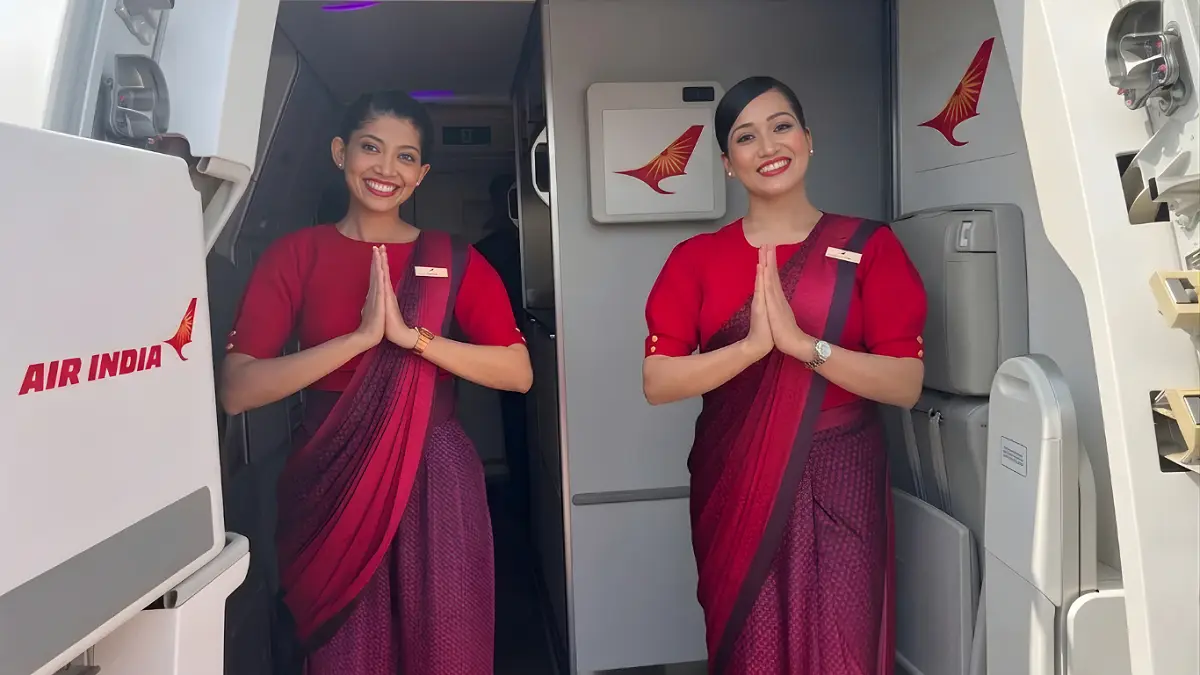
Air india has come under public scrutiny after social media posts circulated images allegedly showing restrictive grooming guidelines for cabin crew, sparking debate over workplace policies and cultural expression. The controversy emerged in April 2026, with the airline later clarifying that the material referenced outdated internal documentation.
The issue gained traction after users shared images claimed to be from the airline’s cabin crew handbook, suggesting that certain traditional items such as choora, mangalsutra, teeka and sindoor were not permitted. The posts quickly spread across social platforms, prompting questions about whether the airline’s grooming standards restricted cultural or religious expression among employees.
Social Media Backlash and Public Reaction
The controversy intensified after widely shared posts highlighted what appeared to be strict grooming restrictions, triggering reactions from users across India. The discussion centered on whether corporate dress codes should accommodate traditional and religious symbols, particularly in a diverse workforce.
Some users criticized the alleged rules as being insensitive to cultural identity, while others pointed out that similar grooming standards exist in various industries where uniformity and presentation are emphasized. The debate extended beyond aviation, reflecting broader concerns about workplace inclusivity and corporate governance.
The issue also followed recent scrutiny faced by other companies over employee policies, amplifying public attention on corporate guidelines and their implications in India’s social context.
Air India’s Response and Clarification
In response to the controversy, air india stated that the images circulating online were from an outdated manual that is no longer in use. The airline clarified that current grooming standards do permit certain cultural elements, including the wearing of a bindi by cabin crew.
The airline emphasized that its policies are aligned with international aviation practices, aiming to maintain a consistent and professional appearance among crew members. This approach reflects broader industry norms where uniformity is often prioritized as part of brand identity and service standards.
The clarification sought to address concerns raised online while reaffirming that existing guidelines have evolved since earlier documentation was created.
Standardisation Following Tata Group Acquisition
The grooming policy discussion comes in the context of ongoing changes at Air India following its acquisition by the Tata group. Since returning to private ownership, the airline has been undergoing a comprehensive transformation, including updates to branding, service standards, and employee policies.
As part of this transformation, Air India has worked to align its operational and presentation standards with those of global carriers. Grooming guidelines for cabin crew are typically designed to ensure consistency across international routes, where airlines compete on service quality and brand perception.
Such standardisation efforts often involve revisiting legacy policies and introducing updated frameworks that reflect both global practices and organizational objectives.
Industry Context and Policy Debate
Grooming and uniform policies have long been a subject of debate within the aviation sector, where airlines balance professional presentation with employee individuality. Cabin crew roles, in particular, are closely associated with brand representation, leading airlines to implement detailed appearance guidelines.
However, the increasing visibility of such policies through social media has led to greater public scrutiny. Internal documents that were previously confined to employee handbooks can now become widely circulated, prompting immediate reactions and discussions.
The Air India case highlights how corporate policies intersect with cultural and social considerations, especially in countries with diverse traditions and practices. It also reflects the growing expectation for transparency and inclusivity in workplace guidelines.
Current Status
Air india has clarified that the controversial grooming rules were based on outdated material and reiterated that current policies are in line with international standards while allowing certain cultural expressions. The airline continues to face public discussion around the issue, though no changes to its existing guidelines have been formally announced.
The episode underscores the challenges airlines face in balancing global operational standards with local cultural sensitivities, particularly as digital platforms amplify internal policy debates into wider public discourse.