Air Premia Raises KRW 110 Billion to Cut Debt
Air Premia will raise KRW 110 billion through a rights offering to reduce debt and support network expansion across Asia and the U.S.
 Jishan Khan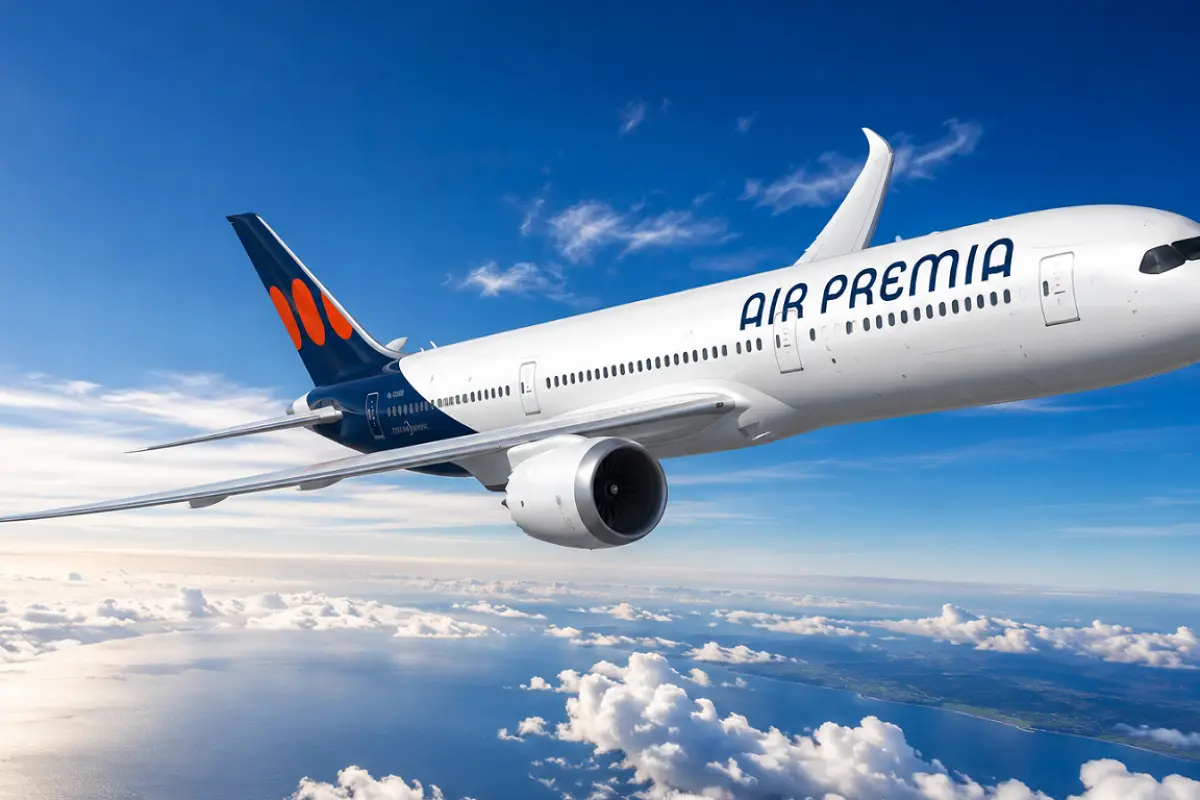
Air Premia Is Raising KRW 110 Billion From Shareholders, Eight Aircraft, Four US Cities, and a Balance Sheet That Needs Fixing
Air Premia announced on July 28, 2026 that its board has approved a rights offering of 550 million new common shares at KRW 200 each, raising approximately KRW 110 billion. The record date is August 19, with subscription on September 18 and payment on September 29. The proceeds will reduce Air Premia's debt ratio, maintain competitiveness on its existing Americas routes, and fund new Asian route launches this winter.
A hybrid carrier with eight aircraft and four US cities on its network is asking existing shareholders for USD 76 million. The ask is large relative to the airline's size. The reason tells you why it is necessary.
What Air Premia Actually Built
Air Premia is one of South Korea's most unusual airline experiments. Founded in 2017 by the former president of Jeju Air, it launched operations in August 2021 positioning itself as a hybrid carrier, more comfortable than a low-cost airline, cheaper than a full-service carrier, with a deliberate focus on long-haul routes that South Korea's LCC sector had historically ignored. Today it operates 27 weekly flights to Los Angeles, San Francisco, Honolulu and New York Newark from Seoul Incheon, a genuinely distinctive network for an eight-aircraft carrier that has no domestic routes and no short-haul operations at all.
The model has commercial logic. Korean-American traffic on the transpacific corridor is substantial, price-sensitive, and historically underserved between Korean Air's premium product and the absence of a credible lower-cost long-haul option. Air Premia filled that gap, achieved its first quarterly profit in Q3 2023, and built a loyal customer base on its premium economy-heavy cabin configuration.
What Is Squeezing the Balance Sheet
The rights offering is explicitly framed as a response to external uncertainties including high exchange rates and oil price volatility, the same Iran conflict fuel shock that is hitting every airline globally, compounded for Korean carriers by the KRW-USD exchange rate that makes dollar-denominated fuel and lease costs significantly more expensive when converted to local currency. Air Premia's all long-haul operation means it is maximally exposed to both factors simultaneously, every flight it operates burns more fuel per departure than a short-haul carrier, and every lease payment it makes is denominated in dollars.
In May 2025, Tire Bank acquired a majority stake in Air Premia for approximately USD 86 million, a relatively recent ownership change that brings a new controlling shareholder into a rights offering designed to dilute the existing register in favour of whoever participates most heavily. Tire Bank's willingness to support the raise will determine both its success and the post-issuance ownership structure.
The Asian Route Expansion That Needs the Capital
The winter schedule expansion is the forward-looking piece of the capital raise. Air Premia has been exclusively a transpacific carrier since abandoning its brief domestic phase in October 2021. Moving into Asian routes for the first time represents a meaningful strategic pivot, adding shorter-haul international flying to a network built entirely around 10-hour-plus missions. The Boeing 787-9s that form the entire Air Premia fleet are capable on Asian routes but not optimally sized, the 787 carries more passengers per departure than most Asian routes require at the frequencies Air Premia would initially operate.
That mismatch is manageable if the routes are chosen carefully, high-demand corridors where the 787's capacity can be filled at competitive yields. Which Asian cities Air Premia is targeting for winter has not yet been disclosed. The capital raise needs to close first.
Eight aircraft. Four US cities. One controlling shareholder who bought in thirteen months ago. A fuel shock running through the balance sheet. And a winter expansion plan waiting on the shareholders to write the cheques. Air Premia is asking a precise question of its investor base: do you believe in this model enough to fund what comes next?
The answer arrives September 29.