Bamboo Airways Bets on IPO to Fuel Fleet Growth Strategy
Bamboo Airways is evaluating a public listing and new aircraft acquisitions as part of a broader recovery strategy focused on fleet growth and expansion.
 Jishan Khan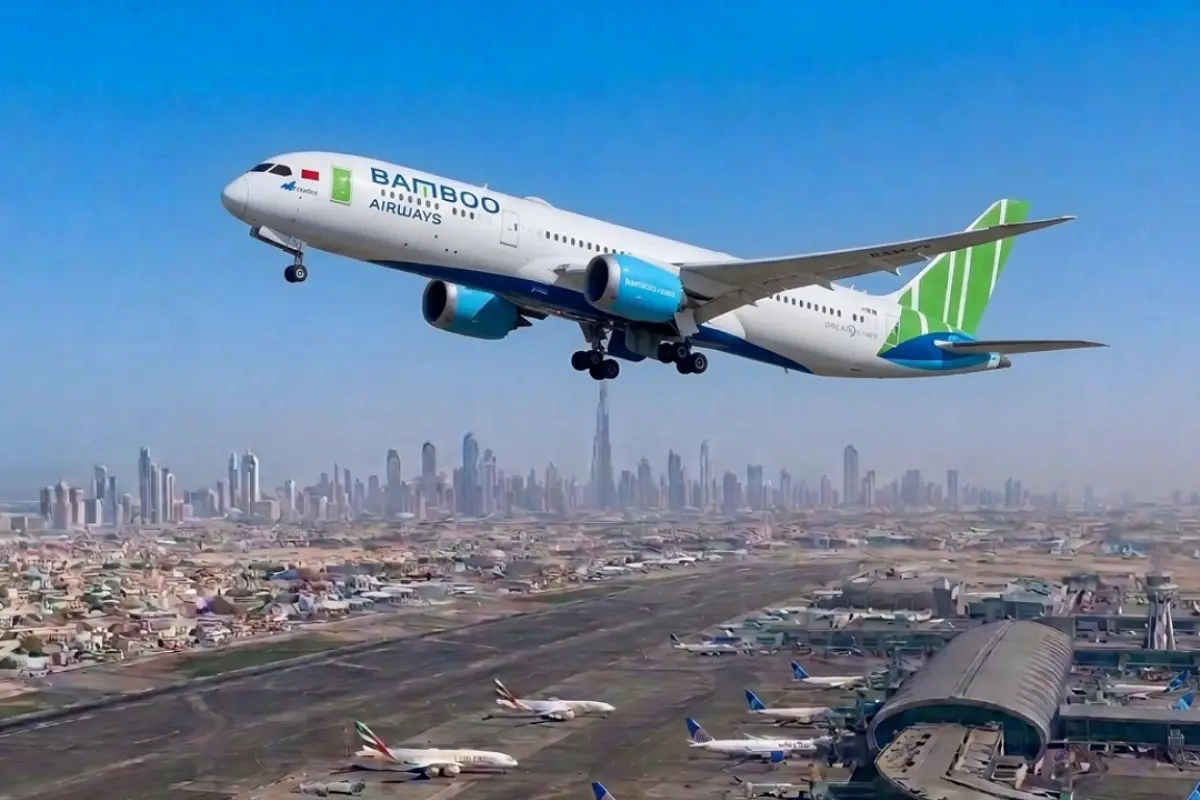
Bamboo Airways is exploring a public market listing and fresh aircraft acquisitions as part of a broader revival push under parent company FLC Group, which reacquired the airline in September 2025. The carrier, which once operated nearly 30 aircraft, is rebuilding from a fleet of just seven jets after years of leadership scandals, ownership battles and financial turbulence.
Vietnam's aviation market is booming. The question is whether Bamboo can move fast enough to matter in it.
How Far It Fell
The numbers tell a brutal story. When Bamboo Airways was handed back to FLC in September 2025, it was down to seven aircraft and 12 domestic routes, compared to nearly 30 aircraft and 60 domestic routes at its peak, along with several international services. The restructuring period that was supposed to stabilise the airline instead hollowed it out. One of the most critical missteps, acknowledged by the restructuring team itself, was the decision to return most of the airline's aircraft during the process, severely limiting operational capacity and revenue potential at exactly the moment the airline needed both.
The debt burden inherited from that period remains unresolved, with FLC's own chairman and a former executive personally committing to cover obligations incurred during restructuring.
What FLC Is Actually Building Now
The IPO ambition does not exist in isolation. In February 2026, FLC Group launched FLC Aircraft Investment and Leasing JSC, a dedicated subsidiary focused on aircraft leasing and trading, initially capitalised at approximately USD 60 million before rapidly increasing its capital to VND 6 trillion within weeks. The move mirrors the Sun PhuQuoc Airways model, a parent company building the financial infrastructure to own and deploy aircraft rather than relying entirely on third-party lessors. It reduces costs, accelerates fleet decisions, and gives the airline a funding mechanism that does not depend on bank credit alone.
Bamboo's government-approved roadmap targets 30 aircraft with additions of 8 to 10 jets annually through 2026 to 2030, an aggressive pace for a carrier rebuilding from seven planes, but one that Vietnam's infrastructure expansion makes structurally plausible. Long Thanh International Airport, opening in 2026 with an eventual capacity of 100 million passengers annually, gives Bamboo a second major hub to grow into as congestion at Tan Son Nhat limits everyone else.
The Problem With Doing All of This at Once
An IPO while rebuilding a fleet while restructuring debt while competing against Vietnam Airlines, VietJet and a newly launched Sun PhuQuoc Airways is not a recovery plan. It is four separate challenges running simultaneously, each one capable of derailing the others.
Vietnam's aviation market is genuinely booming, passenger demand is strong, Long Thanh opens new capacity, and international tourism into the country is growing fast. But Bamboo is walking into that opportunity carrying more baggage than any of its competitors. Public market investors will want to see stable operations before they write cheques, and stable operations require the fleet that requires the capital that the IPO is supposed to provide.
It is a circular problem that only breaks one way, if the airline can demonstrate enough operational momentum to make the listing credible before the debt pressure makes it impossible.
The runway exists. Whether Bamboo reaches it in time is the only question that matters.