China Fuel Export Halt Could Disrupt Aviation Fuel Supply in Australia
A potential halt in China’s refined fuel exports could disrupt aviation fuel supplies in Australia, raising concerns about airline operations and regional fuel availability.
 Jishan Khan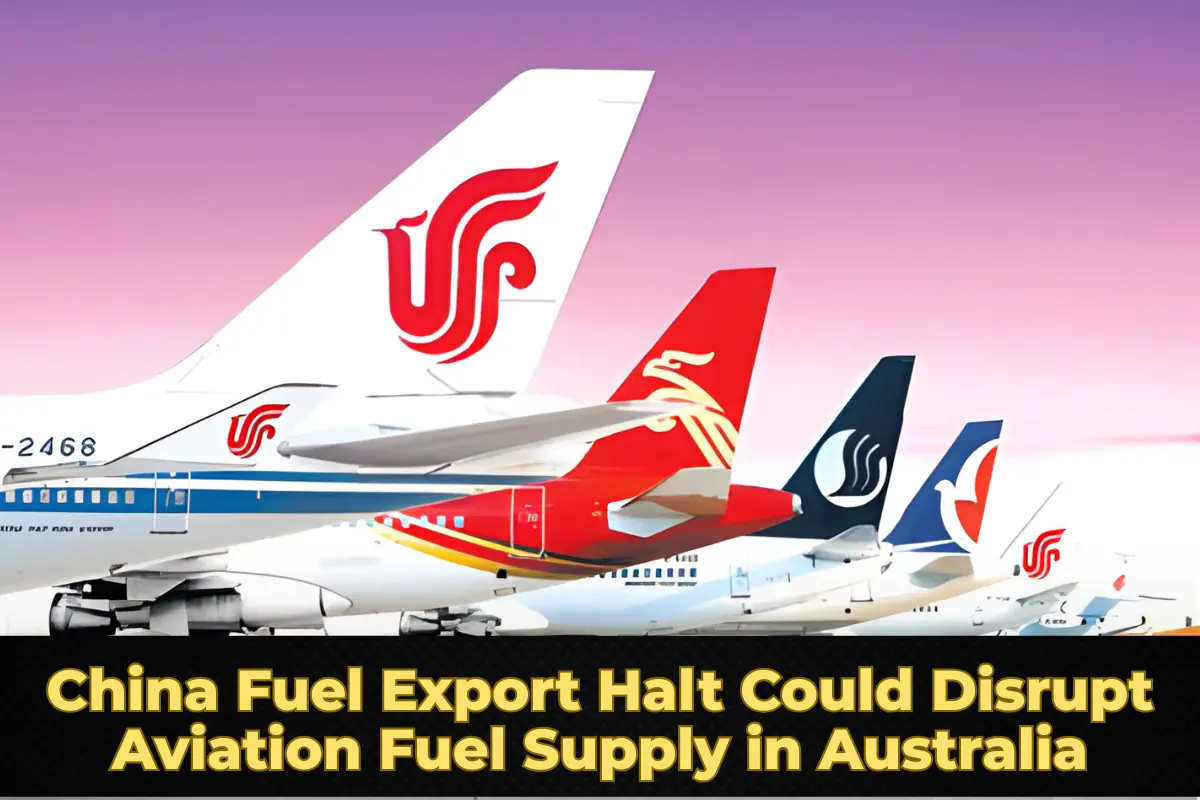
China Fuel Export Halt Could Disrupt Aviation Fuel Supply in Australia
A potential halt in refined fuel exports from China could disrupt aviation fuel supply chains in Australia, raising concerns among airlines, fuel suppliers, and industry regulators about possible operational challenges across the country’s aviation sector. The issue has emerged as energy policy shifts in China threaten to limit exports of key refined products, including jet fuel, which are an important component of regional fuel markets.
Industry analysts say the development could have significant implications for Australia’s aviation industry if supply disruptions occur. Airlines depend on stable jet fuel availability to maintain flight schedules, and any disruption in global supply chains could lead to higher fuel costs, logistical challenges, or potential adjustments to airline operations.
Impact of China’s Fuel Export Policies
China plays a major role in the global refined fuel market, exporting large volumes of petroleum products to countries across Asia‑Pacific and beyond. Changes in export policies or production priorities can therefore have a ripple effect across regional energy markets.
Recent indications that Chinese authorities may halt or reduce refined fuel exports have prompted concern among energy traders and aviation industry observers. Such a move could tighten fuel supplies in several markets that rely on imported refined petroleum products.
Australia, which imports a significant portion of its refined fuel requirements, could be particularly vulnerable to supply shifts if Chinese exports decline. Although the country maintains diversified supply channels, sudden changes in regional availability may still affect fuel pricing and distribution.
Importance of Jet Fuel for Airline Operations
Jet fuel represents one of the largest operating costs for airlines worldwide. Stable fuel supply is critical for maintaining reliable flight schedules and ensuring that airports can support both domestic and international air travel.
If disruptions occur in the regional supply chain, airlines may need to source fuel from alternative markets, potentially increasing transportation and procurement costs. Such changes can affect airline profitability and operational planning.
Airlines operating in Australia have historically relied on a combination of domestic refinery output and imported refined fuel. However, the closure of several local refineries over the past decade has increased the country’s dependence on international fuel suppliers.
This growing reliance on imports means that changes in global energy flows can have a more immediate impact on Australia’s aviation sector compared with markets that maintain larger domestic refining capacity.
Regional Aviation Market Sensitivity
The Asia‑Pacific region has experienced strong growth in air travel demand over the past decade, leading to increasing fuel consumption across the aviation sector. Major hubs throughout the region rely on steady fuel deliveries to support high volumes of passenger and cargo flights.
Any disruption in refined fuel exports from a major supplier such as China could create supply imbalances that ripple across the broader aviation market. Fuel traders may redirect shipments from other markets to compensate, but such adjustments often take time and can result in temporary price increases.
Airports and fuel distributors typically maintain storage reserves to manage short‑term fluctuations in supply. These reserves help prevent immediate disruptions to airline operations, though prolonged shortages could eventually require additional measures.
In extreme scenarios, airlines may need to adjust flight schedules or tanker additional fuel from alternative airports where supply is more readily available. While such measures are rarely required, they highlight the importance of reliable fuel supply chains for global aviation.
Global Energy Market Dynamics
The potential impact of a Chinese export halt also reflects broader changes in the global energy market. Governments often adjust fuel export policies to manage domestic demand, stabilize local prices, or prioritize national energy security.
China has previously used export quotas to regulate refined fuel shipments abroad. By adjusting these quotas, authorities can influence both domestic supply conditions and international market dynamics.
Energy analysts note that shifts in policy do not necessarily translate into immediate shortages but can create uncertainty for markets that depend heavily on imported fuel. Traders and supply companies may respond by seeking alternative suppliers or adjusting trading strategies.
Other major refining centers in Asia, including facilities in South Korea, Singapore, and India, could potentially increase shipments to offset reduced Chinese exports. However, the scale and timing of such adjustments would depend on available refining capacity and logistical considerations.
Airline and Industry Response
Airlines operating in Australia are closely monitoring developments in global fuel markets as they plan operations for the coming months. Fuel procurement strategies often involve long‑term contracts and hedging arrangements designed to reduce exposure to sudden price fluctuations.
Industry stakeholders emphasize that aviation fuel supply systems are generally resilient and capable of adapting to market changes. However, continued monitoring of supply conditions is essential to ensure that potential disruptions are managed effectively.
Airports, fuel suppliers, and airline operators frequently coordinate to ensure that sufficient fuel reserves are available to support operations even during periods of supply uncertainty.
Government authorities may also monitor developments closely, particularly if energy market changes begin to affect critical transportation infrastructure. Maintaining reliable aviation fuel supply is considered essential for economic activity, tourism, and cargo transport.
Outlook for the Aviation Fuel Market
While concerns about possible disruptions have emerged, industry experts note that global energy markets often adapt quickly to supply shifts. Alternative suppliers may step in to fill gaps if exports from one major producer decline.
Nevertheless, the situation highlights the vulnerability of aviation supply chains to geopolitical and economic developments. Airlines and energy companies increasingly view supply diversification as a key strategy for maintaining operational stability.
For Australia’s aviation industry, ensuring consistent access to jet fuel will remain a critical priority as international travel demand continues to recover and expand.
The potential halt in Chinese fuel exports has therefore drawn attention to the importance of resilient supply networks and effective coordination between energy markets and aviation operators.
For now, industry participants continue to monitor developments closely as global fuel supply conditions evolve.