CommuteAir Adapts to US Regional Shift With Charter Expansion
CommuteAir is seeking foreign charter approval as shrinking United Express operations and pilot shortages reshape US regional aviation.
 Jishan Khan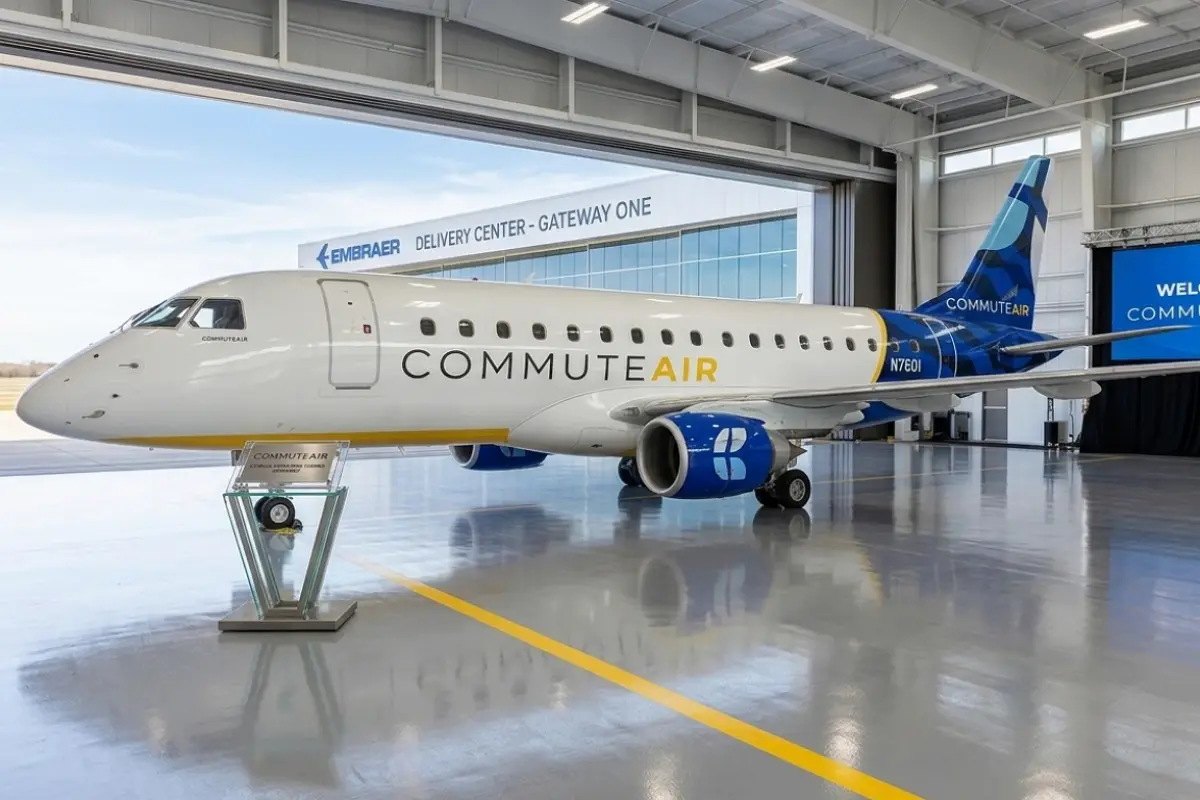
CommuteAir Wants to Fly International Charters, And the Reason It Is Looking Outside Its United Express Contract Tells You Everything About Where US Regional Aviation Is Heading
Shrinking feeder deals. Pilot shortages. Fifty-seat jets being phased out. The traditional regional airline model is under pressure from every direction simultaneously. CommuteAir's push into foreign charter operations is not an expansion story. It is a survival story.
The US regional airline business has one of the most precarious commercial structures in aviation. You fly under a major carrier's brand, on routes the major carrier designates, at frequencies the major carrier decides, under a capacity purchase agreement that the major carrier can renegotiate, reduce, or terminate as its own network strategy evolves.
When that model works, it provides stability. When the major carrier starts phasing out the aircraft type you operate, starts bringing flying in-house with its own mainline jets, or starts reducing regional feed as its own capacity grows, the regional carrier finds itself holding an operating certificate, a workforce, and a fleet with a shrinking commercial reason to exist.
CommuteAir is not at the terminal point of that process. But it is reading the direction clearly enough to be seeking approval for foreign charter operations, a move that signals the airline understands its United Express future is narrowing and is actively building an alternative before the narrowing becomes a crisis.
The United Express Problem That Nobody in Regional Aviation Wants to Say Out Loud
United Airlines gradual phase-out of older 50-seat regional jet operations is not a secret. It is a documented, publicly discussed strategic direction that reflects the economics of 50-seat flying in the current cost environment, fuel prices, crew costs, and maintenance expenses that make smaller regional jets increasingly difficult to operate profitably on a per-seat basis compared to larger mainline alternatives.
For CommuteAir, which operates Embraer E170 aircraft under the United Express brand, the exposure is real and the timeline is not indefinite. Every year that United reduces its 50-seat and smaller regional jet flying is a year in which CommuteAir's contracted flying base either stays flat or shrinks, neither of which supports the kind of fleet investment and workforce development that building a sustainable airline requires.
The pilot shortage dimension compounds this. Regional carriers have been losing qualified pilots to mainline carriers at an accelerating rate as major airline hiring has surged. Attracting and retaining pilots when the long-term trajectory of your major carrier partnership is uncertain is genuinely difficult, pilots make career decisions based on where they see stability and growth, and a regional carrier whose contract base is gradually contracting is not the most compelling option when mainline alternatives are hiring aggressively.
CommuteAir seeking foreign charter authority is a rational response to both pressures. It creates a potential revenue stream that is not dependent on United's network decisions, not limited to the routes United designates, and not subject to the capacity purchase agreement terms that govern regional flying.
What Foreign Charter Operations Actually Opens Up
The categories of business that foreign charter authority unlocks for an operator like CommuteAir are meaningfully different from its current United Express flying in ways that could genuinely diversify its revenue base.
Sports team charters are one of the most consistently profitable charter segments in aviation. Professional sports franchises, international sports organisations, and collegiate athletic programs all require reliable, flexible charter capacity for team travel, and they pay well for operators who can deliver consistently. An E170 operator with the flexibility of charter authority can compete for this business in ways that a regional carrier locked into scheduled feeder flying cannot.
Government and military contract flying represents another segment where smaller operators with foreign charter authority can build sustainable revenue. These contracts tend to be longer-term, better-specified, and less subject to the revenue volatility that characterises commercial charter markets.
ACMI flying, providing Aircraft, Crew, Maintenance, and Insurance to other carriers on a wet-lease basis, is the segment that arguably makes most strategic sense for CommuteAir given its existing E170 operation. Airlines across international markets periodically need E170-category capacity on a short-term basis, and an operator with foreign charter authority and an established E170 maintenance and crew infrastructure can step into those opportunities in ways that purely domestic regional carriers cannot.
Corporate travel rounding out the mix gives CommuteAir access to the business aviation adjacent market, companies that need international group travel capability beyond what scheduled commercial services can provide efficiently.
The E170 Is Actually a Good Charter Aircraft
One detail that works in CommuteAir's favour in this strategic pivot is that the Embraer E170 is not a bad charter aircraft for the segments it would be targeting.
It seats around 70 passengers in a two-cabin configuration that can be adapted for charter use, has the range to handle regional international routes across North America, the Caribbean, and into Latin America comfortably, and has operating economics that make it competitive for the group sizes that sports teams, corporate travel programs, and government contracts typically involve.
The E170 is not a widebody capable of transatlantic or transpacific charter operations. But the segments CommuteAir is realistically targeting, regional international charters, ACMI flying for Caribbean and Latin American carriers, sports team travel in the Americas, are well-matched to what the aircraft can do.
That means the strategic pivot does not require a fleet transformation. It requires an operating certificate expansion and the commercial development capability to win business in markets CommuteAir has not previously competed in. Both of those are achievable. Neither of them requires CommuteAir to fundamentally change what it is or what it operates.
A Broader Pattern Across US Regional Aviation
CommuteAir's foreign charter push is not happening in isolation. It is one visible example of a strategic rethinking that is underway across the US regional airline sector as the structural pressures on the traditional major carrier partnership model intensify simultaneously from multiple directions.
The 50-seat jet phase-out is removing contracted flying. Pilot movement to mainline carriers is creating workforce pressure. Major carriers are bringing more flying in-house as their own capacity recovers. And the capacity purchase agreement model that has governed regional aviation economics for two decades is being renegotiated on terms that increasingly favour the major carrier partner.
Regional carriers that respond to these pressures purely defensively, cutting costs, waiting for conditions to improve, hoping their major carrier partnership stabilises, are making a bet that the structural trends reverse. The evidence that they will reverse is limited.
The ones responding strategically, developing charter capability, seeking new certificate authorities, building revenue streams outside their major carrier dependency, are at least creating options for themselves that pure defensive management does not provide.
CommuteAir seeking foreign charter approval is that second kind of response. It does not guarantee survival. But it demonstrates the kind of strategic thinking that gives a regional carrier a fighting chance at building something sustainable beyond the contracting window of its current United Express relationship.
What It Means for the Regional Aviation Ecosystem
If CommuteAir successfully develops a foreign charter business alongside its regional flying, it establishes a template that other regional carriers facing similar pressures will study carefully.
The US has dozens of regional carriers whose commercial existence depends on major airline partnerships that are becoming less generous, less stable, and less central to the majors' network strategies than they were a decade ago. Not all of them will find charter markets that work for their fleet type and geographic position. But the ones that explore seriously are more likely to find viable paths than the ones that do not.
The foreign charter approval CommuteAir is seeking is a regulatory step in what will be a longer commercial journey. The harder work, building broker relationships, winning the first sports team contract, competing for the first government tender, demonstrating to potential ACMI customers that an E170 operator from the US regional market can deliver reliable international charter service, comes after the approval.
But the willingness to pursue that harder work, rather than simply waiting for United's next capacity purchase agreement terms, is what distinguishes a regional carrier that is building its own future from one that is simply managing the decline of someone else's.
CommuteAir is trying to build its own future. In the current environment for US regional aviation, that instinct alone puts it ahead of where most of its peers are thinking.