Elon Musk Proposes Covering TSA Salaries Amid Rising Airport Wait Times
Elon Musk has suggested funding TSA worker salaries as U.S. airport wait times worsen, sparking debate over aviation security staffing and efficiency.
 Jishan Khan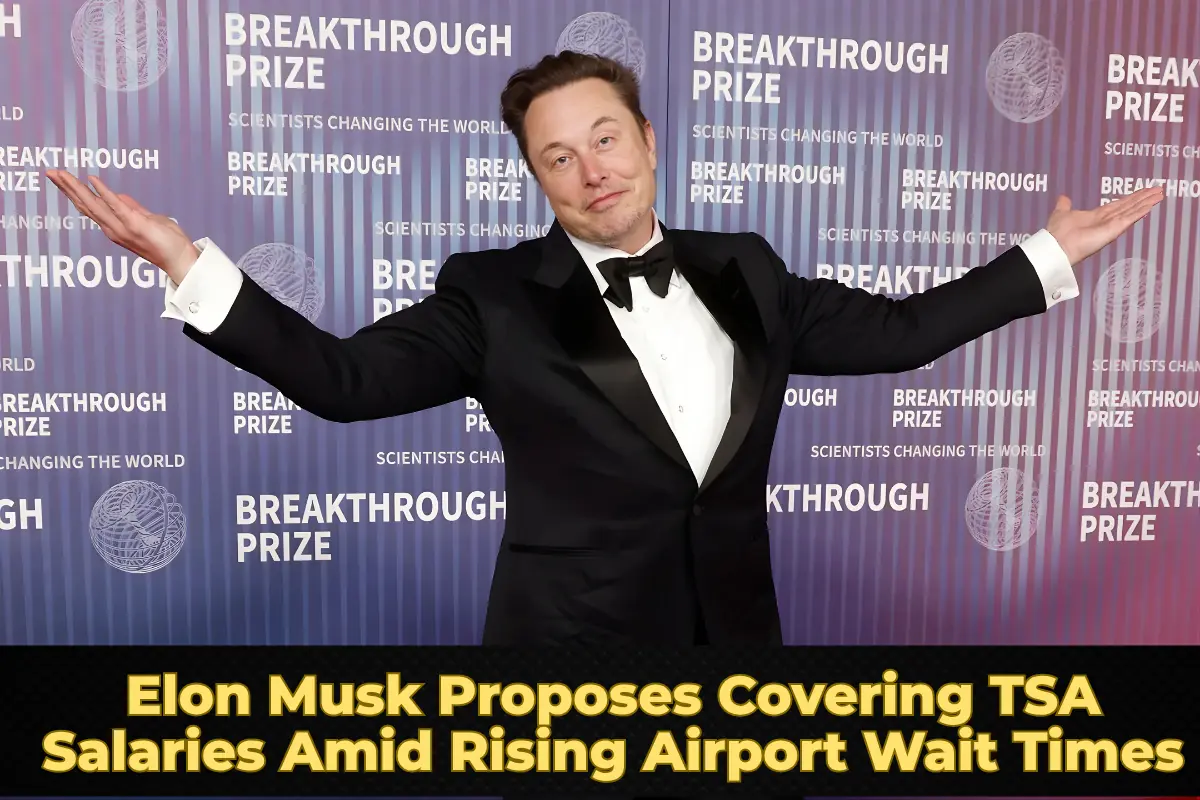
Elon Musk has proposed personally funding the salaries of Transportation Security Administration (TSA) workers in the United States as airport wait times worsen, raising concerns over staffing shortages and operational efficiency at major airports. The suggestion comes in 2026 amid increasing passenger volumes, strained security resources, and growing frustration among travelers facing long queues.
The billionaire entrepreneur made the proposal in response to reports of extended security screening delays at airports across the country, where insufficient staffing and rising demand have created bottlenecks. His comments have sparked widespread debate over the role of private funding in public aviation security and the long-term sustainability of such measures.
Rising Pressure on Airport Security Systems
Airport security checkpoints in the United States have been experiencing significant strain due to a combination of factors, including increased travel demand, workforce shortages, and operational inefficiencies. As passenger numbers continue to recover and grow, existing infrastructure and staffing levels are being pushed to their limits.
Travelers at several major airports have reported wait times stretching beyond acceptable thresholds, particularly during peak travel periods. These delays not only impact passenger experience but also pose challenges for airlines and airport operators striving to maintain smooth operations.
The situation has prompted calls for urgent action to address staffing gaps and improve the efficiency of security processes.
Musk’s Proposal and Its Implications
Musk’s suggestion to pay TSA worker salaries is an unconventional approach aimed at addressing immediate staffing concerns. While the proposal has not been formally structured or submitted to authorities, it reflects a growing recognition of the critical role that security personnel play in the aviation ecosystem.
The idea raises important questions about the boundaries between public and private sector responsibilities. The TSA is a federal agency responsible for ensuring aviation security, and its funding traditionally comes from government budgets and passenger fees.
Introducing private funding into such a system could have far-reaching implications, including potential changes to governance, accountability, and operational control.
Staffing Challenges at the TSA
The TSA has faced ongoing staffing challenges in recent years, with recruitment and retention emerging as key issues. The demanding nature of the job, combined with relatively modest pay and high stress levels, has made it difficult to maintain adequate workforce levels.
Efforts to address these challenges have included wage adjustments, hiring initiatives, and investments in training. However, the pace of improvement has not always matched the rapid growth in passenger traffic.
As a result, staffing shortages continue to affect the efficiency of security operations, contributing to longer wait times and increased pressure on existing personnel.
Impact on Passengers and Airlines
Extended wait times at security checkpoints can have a cascading effect on the broader aviation system. Passengers may miss flights, airlines may face delays, and airport operations can become congested.
For travelers, the experience of long queues and uncertainty can diminish overall satisfaction and confidence in air travel. This is particularly significant as the industry seeks to sustain recovery and encourage continued growth in passenger numbers.
Airlines and airports are working closely with security agencies to mitigate these challenges, but solutions often require coordinated efforts and significant investment.
Debate Over Public vs Private Funding
Musk’s proposal has reignited discussions about the role of private sector involvement in public infrastructure and services. While private investment can provide additional resources and innovation, it also raises concerns about oversight, equity, and long-term sustainability.
Critics argue that aviation security is a core government responsibility that should not rely on private funding, while supporters suggest that partnerships could enhance efficiency and responsiveness.
The debate reflects broader questions about how to address infrastructure challenges in a rapidly evolving aviation landscape.
Potential Alternatives and Solutions
In addition to funding considerations, experts are exploring a range of solutions to improve airport security efficiency. These include the deployment of advanced screening technologies, process optimization, and increased automation.
Investments in technology can help reduce processing times and improve accuracy, while better workforce management can enhance productivity. Expanding trusted traveler programs and streamlining procedures are also being considered as ways to ease congestion.
Addressing the issue will likely require a combination of measures rather than a single solution.
Government Response and Policy Considerations
U.S. authorities are aware of the challenges facing airport security and have been working to implement policy changes aimed at improving performance. Budget allocations, staffing initiatives, and operational reforms are part of ongoing efforts to address the issue.
Musk’s comments may add pressure on policymakers to accelerate these efforts and explore innovative approaches. However, any significant changes to funding structures would require careful evaluation and legislative approval.
Ensuring the balance between security effectiveness and passenger convenience remains a key priority.
Broader Aviation Industry Context
The challenges faced by the TSA are not unique to the United States, as airports around the world grapple with similar issues related to demand growth and operational capacity. The global aviation industry is undergoing rapid transformation, with increasing emphasis on efficiency, technology, and passenger experience.
Addressing security bottlenecks is essential for maintaining the smooth functioning of the aviation system and supporting continued growth. As travel demand evolves, stakeholders must adapt to changing conditions and expectations.
The situation highlights the importance of proactive planning and investment in critical infrastructure.
Future Outlook
Looking ahead, the effectiveness of efforts to reduce airport wait times will depend on the ability of authorities and industry stakeholders to implement sustainable solutions. While Musk’s proposal has drawn attention to the issue, long-term improvements will require comprehensive strategies and collaboration.
Enhancing staffing levels, adopting new technologies, and optimizing processes are likely to play central roles in addressing the challenges. Continued monitoring and adaptation will be essential as travel patterns evolve.
The aviation sector remains focused on improving efficiency while ensuring the highest standards of security.
Current Status
Elon Musk’s proposal to fund TSA salaries has intensified debate over airport security staffing as U.S. airports continue to face prolonged wait times and operational strain.