European Cargo Could Return to Paul Stoddart After 19 Months
Paul Stoddart's European Aviation reportedly plans to buy European Cargo back from administration 19 months after selling its majority stake.
 Jishan Khan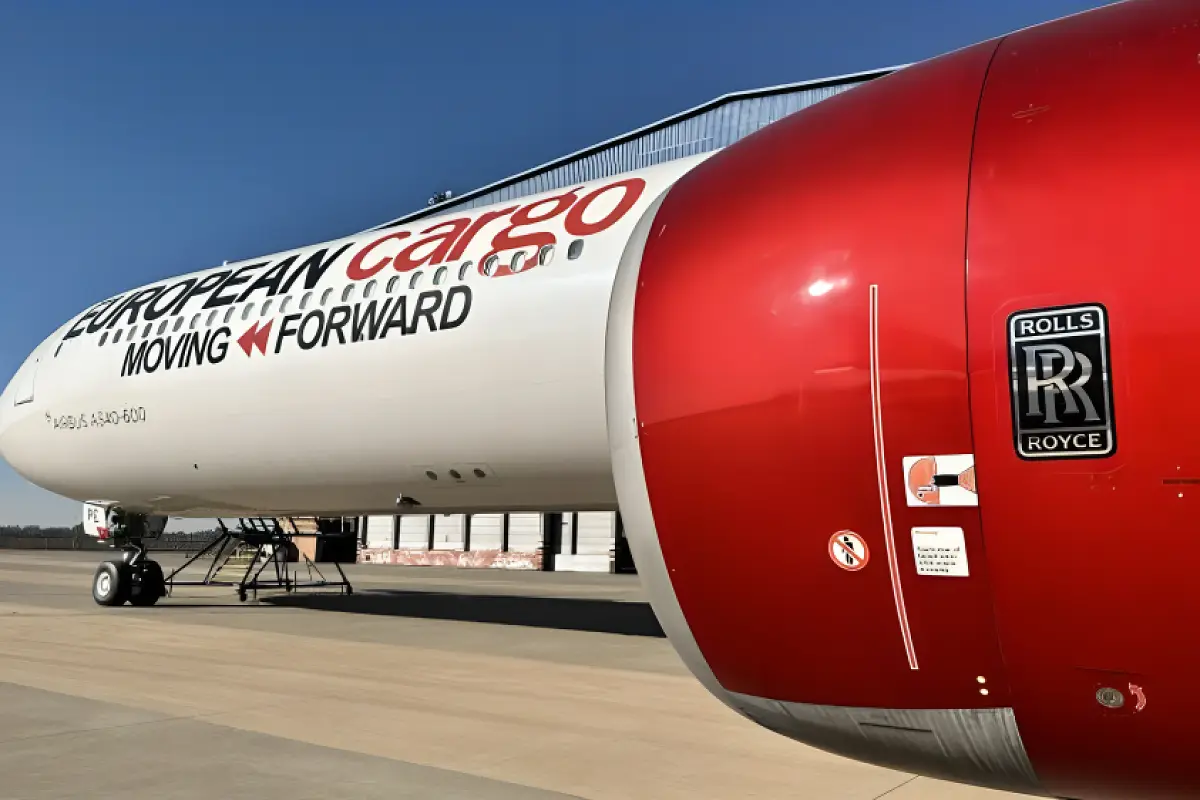
Paul Stoddart's Company Sold European Cargo to Escape Its Losses, Nineteen Months Later, He's Reportedly Buying It Back Out of Administration
Sky News reported that European Aviation, the Bournemouth-based aviation group founded by entrepreneur Paul Stoddart, is on the verge of reacquiring European Cargo out of administration, with a deal potentially announced within days. The rescue would return the failed A340 freighter operator to the same ownership group that sold its 50.01% majority stake in November 2024, specifically to escape the business's mounting losses and refocus on aviation leasing and MRO services instead.
That sequence is the part of this story that matters most. European Aviation did not lose money on European Cargo and walk away for good. It sold at what now looks like exactly the wrong moment, watched the buyer run the business into administration within nineteen months, and is reportedly coming back for what remains.
Why the World's Only Dedicated A340-600 Freighter Operator Could Not Make the Model Work
European Cargo's origin story explains why its downfall came as such a sharp reversal. The business began in the earliest weeks of the pandemic, when European Aviation repurposed several Airbus A340-600 passenger jets, acquired cheaply from carriers including Virgin Atlantic as the type fell out of favour with airlines moving toward more efficient twin-engine widebodies, to fly personal protective equipment and test kits from China to the UK on behalf of the NHS. That emergency capacity later evolved into a genuine commercial freighter operation, with European Cargo securing approval to operate permanently converted A340-600P2F aircraft carrying a 76-tonne payload, primarily serving Chinese e-commerce and express freight flows into the UK.
The economics that made the A340 attractive at acquisition, low upfront capital cost, cheap airframe depreciation, easy market entry, were precisely the economics that killed the business once conditions normalised. A four-engine widebody built for passenger service in the 1990s and 2000s burns dramatically more fuel per tonne of cargo than the twin-engine 777Fs and A350Fs that dominate modern freighter fleets. As global freight rates fell back from pandemic-boom highs and fuel costs climbed through 2025 and into 2026 amid the broader Iran conflict fuel shock this feed has documented extensively across the airline industry, European Cargo's structural cost disadvantage went from tolerable to fatal. The company's own most recent financial statement shows a net loss of USD 26 million in 2024 on revenue of USD 136 million, an improvement on the prior year's USD 30.6 million loss, but nowhere close to viability.
One-Way Traffic and Price-Sensitive Shippers Made a Bad Cost Structure Worse
The China-to-UK e-commerce cargo flow that European Cargo built its identity around carried its own structural weakness independent of the aircraft type. Outbound cargo demand from the UK back to China never matched the volume flowing in the opposite direction, leaving the airline effectively subsidising empty or lightly loaded return sectors on every rotation, a one-way traffic economics problem that erodes yield on every single flight regardless of how full the inbound leg runs. Layer that onto price-sensitive Chinese e-commerce shippers with substantial negotiating leverage over freight rates, and European Cargo was simultaneously absorbing the industry's highest fuel costs and its weakest pricing power on the same routes.
The airline's expansion just months before collapse makes the timing especially harsh in hindsight. European Cargo opened a second UK base at Teesside International Airport in March 2026, specifically designed to support five weekly long-haul China flights, an ambitious bet on the same commercial model that was already under mounting pressure, doubling down on capacity precisely when the underlying economics were deteriorating rather than improving.
What European Aviation Would Actually Be Buying Back
The administrators' sales process, run by Teneo Financial Advisory, has invited offers covering a substantial asset base: six A340-600P2F freighters owned by sister company Priority 1 Logistics and maintained in flight-ready storage, a further nine A340s, three -500s and six -600s, in long-term storage, one additional A340-600 designated purely for spares, and what the administrators describe as a "substantial" engine inventory. That inventory reportedly includes 82 Rolls-Royce Trent 500 engines, the specific powerplant fitted to the A340-600 family. The sale also covers European Cargo's UK Air Operator's Certificate, Part 145 Maintenance Approval, Continuing Airworthiness Management Organisation approval, and the corporate entity itself.
Industry analysis is consistent on where the real value sits in that package: the Rolls-Royce Trent 500 engines are expected to be the most valuable assets, given the converted A340 airframes themselves have a limited secondary market and are more likely destined for parting out than a full return to commercial freighter service. That distinction is critical to understanding why European Aviation, specifically, would want this deal when the previous owner could not make the airline work. European Aviation's core business today is aviation leasing and MRO, not running scheduled freighter routes. A collection of 15-plus A340 airframes and 82 Trent 500 engines is a genuinely valuable inventory for a leasing and parts business, entirely independent of whether European Cargo ever flies another commercial route.
The AOC and Approvals Could Be Worth More Than the Aircraft
Beyond the physical hardware, European Cargo's UK Air Operator's Certificate and maintenance approvals carry standalone value that a pure asset liquidation would forfeit entirely. Obtaining a UK AOC from scratch is a lengthy, expensive regulatory process, acquiring one already in existence, along with Part 145 maintenance approval and CAMO certification, gives a buyer the option to either restart cargo operations on a different, more efficient aircraft type, or simply preserve the certificate's value for a future transaction rather than letting it lapse. Whether European Aviation intends to actually resume flying under the European Cargo name, or is purely acquiring the assets and licences opportunistically at a distressed price, has not been confirmed publicly ahead of the reported deal announcement.
What This Means for Bournemouth and Teesside
European Cargo's collapse left a visible operational gap at both UK bases. Bournemouth lost a high-profile specialist tenant that had differentiated the airport from other UK regional fields through long-haul widebody freighter movements — a distinct identity most comparably sized UK airports do not have. Teesside lost an operation that had only just begun in March 2026, built around the promise of five weekly China flights that, per reporting, may never have fully materialised before the company's operational shutdown on May 19.
One Air, operating Boeing 747-400 freighters and 777Fs, has emerged as the dominant independent UK widebody cargo operator in European Cargo's absence, a more conventional, more fuel-efficient fleet than the A340s that defined European Cargo's brief but distinctive run. Whether a European Aviation-led rescue restores any meaningful flying activity at Bournemouth or Teesside, or simply converts the collapsed airline into leasing inventory managed from afar, will determine whether either airport recovers the cargo identity European Cargo briefly gave it, or whether that chapter closes for good with this acquisition.