Hi Fly Ends Airbus A340 Operations After Nearly 20 Years
Hi Fly has retired its Airbus A340 fleet after nearly two decades, marking a strategic shift in its widebody operations and fleet structure.
 Jishan Khan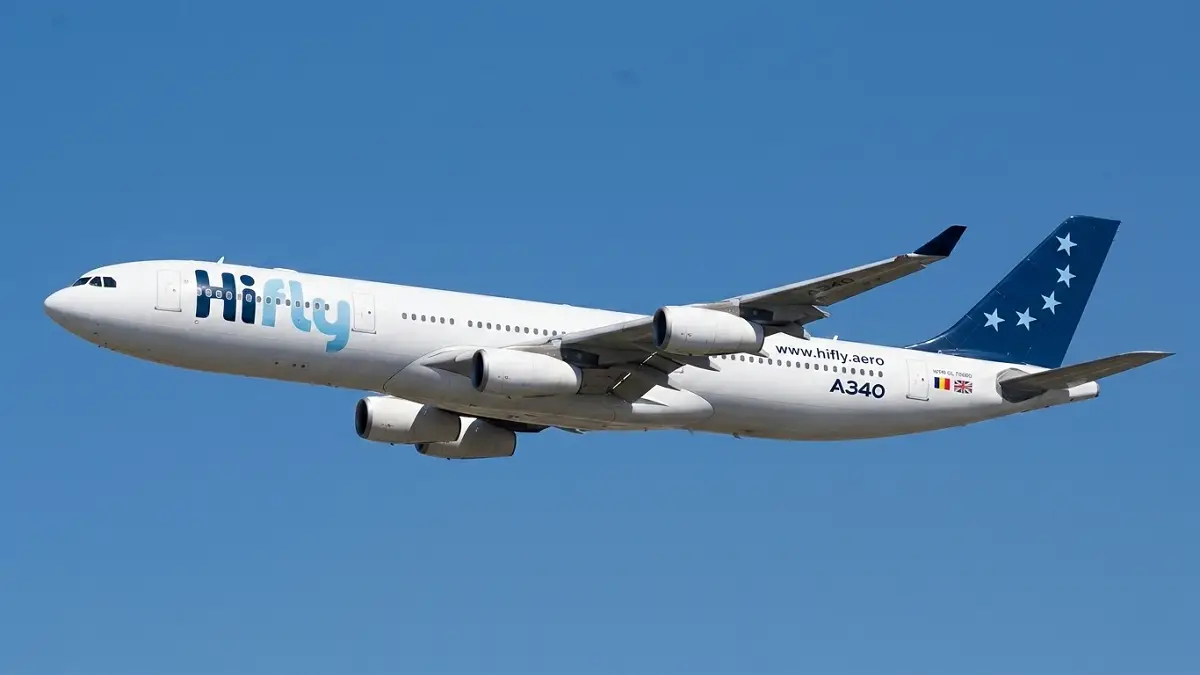
Portuguese wet-lease specialist Hi Fly has officially exited Airbus A340 operations, bringing to a close nearly two decades of service with the four-engine widebody aircraft. The move marks a significant shift in the airline’s fleet strategy as it continues to modernize its long-haul capabilities.
The retirement of the A340 fleet concludes an era for the carrier, which had built a reputation for operating the aircraft in specialized wet-lease and charter missions across global markets.
End of Long-Standing A340 Operations
Hi Fly had been one of the last remaining operators of the Airbus A340 in the wet-lease market, deploying the aircraft on a variety of missions including government charters, humanitarian flights, and airline capacity support.
The A340, known for its long-range capabilities and four-engine configuration, had played a central role in the airline’s operations since the early 2000s. Over the years, the aircraft enabled Hi Fly to serve demanding routes requiring extended range and operational flexibility.
With the final phase-out now complete, the airline has fully withdrawn the type from active service, signaling the end of its A340-era operations.
Fleet Strategy Shift
The decision to retire the A340 aligns with broader industry trends, as airlines increasingly transition away from four-engine aircraft in favor of more fuel-efficient twin-engine alternatives. Rising fuel costs and environmental considerations have accelerated this shift across global fleets.
Hi Fly has been progressively adapting its fleet to reflect these changes, focusing on newer-generation aircraft that offer improved economics and operational efficiency. The removal of the A340 is part of a wider effort to streamline operations and reduce operating costs.
The carrier’s evolving fleet strategy emphasizes flexibility and efficiency, key factors in the competitive wet-lease and charter market where cost control and reliability are critical.
Operational Role of the A340
Throughout its service with Hi Fly, the Airbus A340 was deployed on a range of missions that required high capacity and long-haul performance. The aircraft’s ability to operate long distances without ETOPS restrictions made it particularly suitable for remote or complex routes.
Hi Fly’s A340 fleet was often used to support airlines facing capacity shortages, aircraft maintenance issues, or unexpected operational disruptions. The type also played a role in special operations, including repatriation flights and humanitarian missions.
Its versatility allowed the airline to maintain a niche position in the market, catering to clients requiring immediate and reliable widebody lift.
Industry Context and Trends
The retirement of the A340 at Hi Fly reflects a broader decline in the use of four-engine widebody aircraft worldwide. Airlines have steadily phased out types such as the A340 and Boeing 747 in favor of more efficient models like the Airbus A350 and Boeing 787.
These newer aircraft offer significant advantages in fuel consumption, maintenance costs, and environmental performance, making them more viable in today’s cost-sensitive operating environment.
For wet-lease operators, fleet modernization is particularly important, as clients increasingly seek cost-efficient solutions and environmentally compliant aircraft.
Current Status
With the A340 now fully retired, Hi Fly’s fleet composition is expected to center on more modern aircraft types better suited to current market demands. The transition reflects the airline’s ongoing adaptation to industry changes and its focus on maintaining competitiveness in the global wet-lease sector.
The end of A340 operations marks a notable milestone for Hi Fly, closing a chapter that defined much of its long-haul activity while paving the way for a more efficient and sustainable fleet structure.