Kenya Airways Faces $2.4B Debt and Negative Equity
Kenya Airways has $2.4 billion in debt and negative equity of Sh132 billion as Kenya’s Treasury targets December 2026 to find a strategic investor.
 Jishan Khan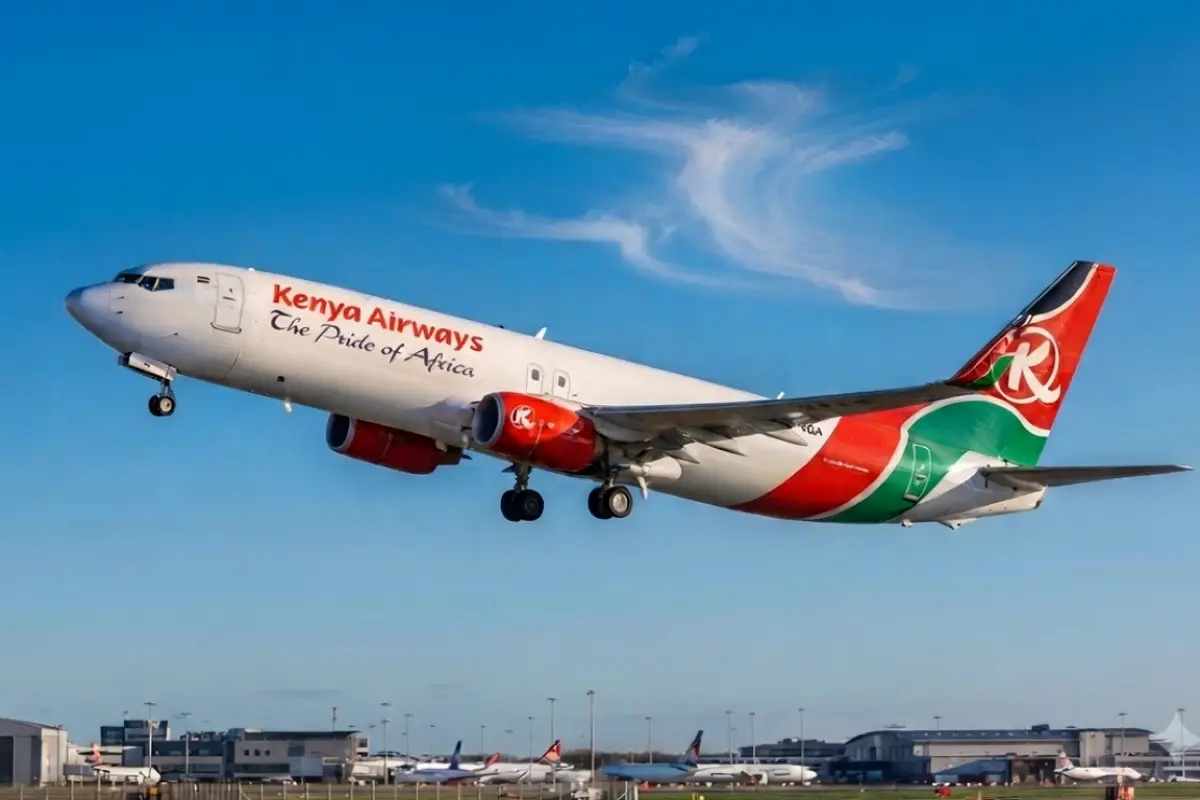
Kenya Airways Owes $2.4 Billion and Has Negative Equity of Sh132 Billion, the Investor Search Is the Only Exit Left
Kenya Airways' $2.4 billion debt remains at the centre of the airline's financial crisis. Kenya's Treasury confirmed to Parliament in mid-August 2026 that the search for a strategic investor in Kenya Airways is targeted for completion by December 2026, in response to a Public Accounts Committee demand for a formal debt management and exit strategy. The airline's equity position has worsened to negative Sh132 billion from negative Sh118.2 billion the previous year, with total liabilities of Sh315.2 billion against assets of just Sh183.2 billion. If Kenya Airways were liquidated tomorrow, shareholders would recover nothing.
This is not the first time Kenya has announced a deadline for this search. It is at least the fourth.
A Search That Has Been Ending Soon Since 2016
Kenya Airways has been trying to find a strategic investor in some form since 2016, when the government first agreed to swap loans for equity as part of a debt restructuring following what was then the biggest loss in Kenyan corporate history. Parliament voted to nationalise the airline in 2019 after that restructuring failed to stick. CEO Allan Kilavuka told reporters in September 2024 that a strategic investor was expected "by December or early next year." That did not happen either. Kilavuka departed in November 2025, months before his contract was due to expire, leaving the search leaderless at a critical juncture. In February 2026, Treasury Cabinet Secretary John Mbadi announced a fresh international expression of interest targeting $1.2 to $2 billion. Six months later, the government is telling Parliament the same process remains ongoing with a new December 2026 target.
The IMF made finding a strategic investor a formal condition of its lending programme with Kenya. That conditionality remains unmet. Every missed deadline is not just an internal corporate delay, it is Kenya failing to satisfy a commitment it made to its most important external creditor.
What Makes This Attempt Different, and What Doesn't
The government has structured the current search more concretely than previous attempts. The state has assumed Sh63.1 billion of Kenya Airways' debt through the novation of the Tsavo Aircraft Financing Facility, with a plan to convert it into equity once an investor is secured, reducing what a new partner would need to absorb on day one. Treasury CS Mbadi has been explicit that the ideal partner must bring more than capital: "This is not about a partner who merely injects money, but one who can run a successful airline." That framing echoes precisely how Singapore Airlines was brought into Air India and how Ethiopian Airlines veteran Tewolde Gebremariam was installed at Pakistan International Airlines, global aviation operators are increasingly viewed as inseparable from the capital they bring.
What has not changed is the fundamental math. Kenya Airways debt stands at $2.4 billion. Its fleet has an average age of 14.5 years, with aircraft parked awaiting maintenance even as demand surges, the airline has directly benefited from Iran conflict-driven disruption at Gulf hubs, redirecting connecting traffic through Nairobi, and responded by taking Amsterdam and Paris-CDG services to daily frequency from July 1. An investor is being asked to fund fleet modernisation targeting 60 aircraft within two to three years, while simultaneously absorbing a balance sheet nobody has fully repaired.
Why Four Investors Circling Does Not Mean a Deal Closes
Kenya Airways Chairman Sasini Kamal disclosed in March 2026 that four investors were examining a potential stake, with some interested in equity and others in debt instruments, the structure itself still undecided. That ambiguity is instructive. A serious Kenya Airways investor evaluating a $1.2 to $2 billion commitment needs clarity on exactly what they are buying, equity stake percentage, foreign ownership limits capping any single investor at 49%, and critically, certainty that historical liabilities are firewalled before closing. Aviation consultant Sean Mendis put the industry's core scepticism plainly: No serious investor will step in without clarity on Kenya Airways' historical liabilities... any buyer paying billions will insist that past obligations are addressed upfront even if it means the taxpayer shoulders the cost one last time.
That is the unresolved tension sitting underneath every deadline Kenya has announced. The government wants a Kenya Airways strategic investor who absorbs financial risk and brings operational discipline. Any credible investor wants the opposite, legacy debt cleaned up before they arrive, not after. Until Kenya's Treasury can demonstrate that the Kenya Airways negative equity position is genuinely being resolved rather than simply reclassified, December 2026 carries the same credibility as every deadline that preceded it.
Kenya Airways posted its first decade-long profit in 2024, slipped back to a $138 million pre-tax loss in 2025 largely from the Boeing 787 groundings, and is now riding a demand surge from Middle East disruption in 2026. The operational story is genuinely improving. Whether that improvement survives long enough to convert investor interest into a signed, closed transaction is the question East Africa's Kenya aviation sector has been asking for nearly a decade.