MHI Canada Aerospace Officially Joins Bombardier
Bombardier is acquiring MHI Canada Aerospace in Ontario to bring wing and fuselage production for its Global and Challenger jets in-house.
 Jishan Khan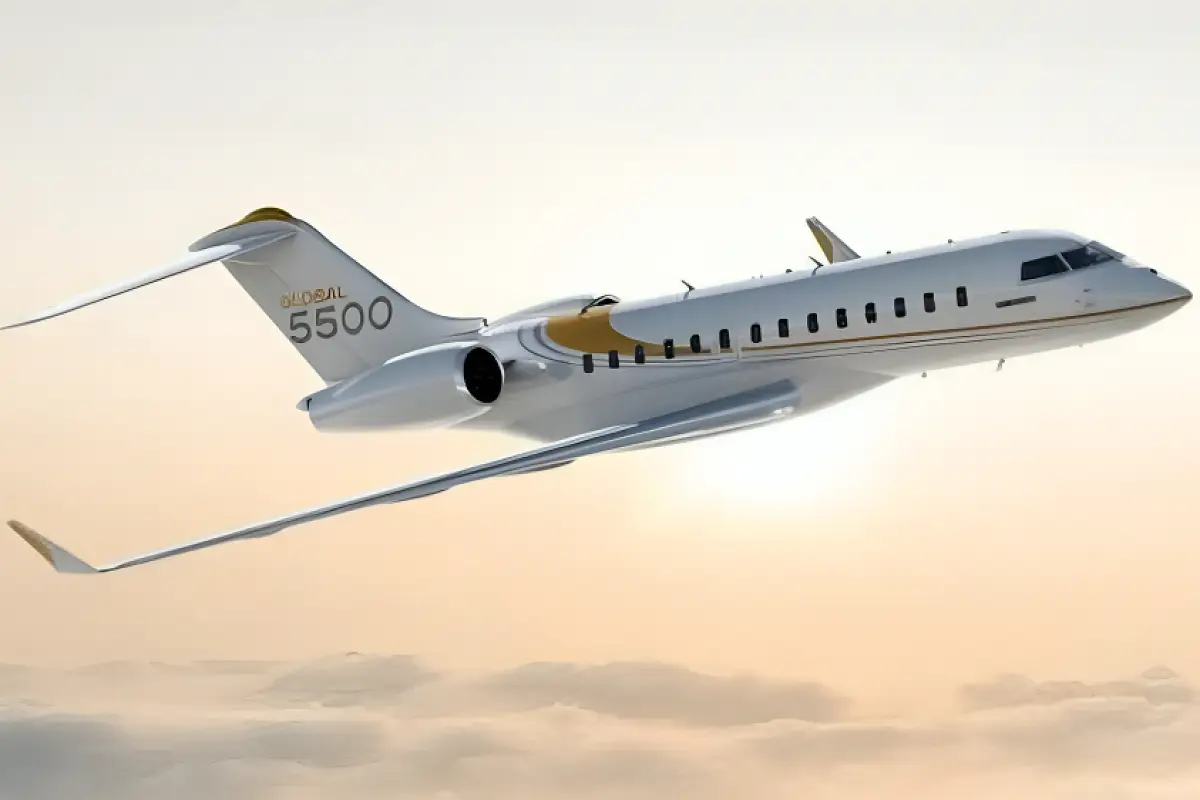
Bombardier's $21.8 Billion Reason for Buying Back the Factory That Builds Its Best-Selling Wings
Bombardier and Mitsubishi Heavy Industries announced on September 1, 2026 that Bombardier will acquire the assets of MHI Canada Aerospace in Mississauga, Ontario, bringing roughly 750 employees, a 270,000-square-foot manufacturing facility and a 70,000-square-foot logistics centre in-house. MHICA builds wings and fuselage structures for three of Bombardier's current best-selling business jets: the Global 5500, Global 6500 and Challenger 3500, the exact aircraft family this feed has covered extensively through 2026, from the 200th Challenger 3500 delivery to Ferrari's Piero Ferrari, to FLYINGGROUP's first Global 5500 addition in Belgium. Financial terms were not disclosed. The deal closes later this year, pending regulatory approval.
Why This MHI Canada Deal Is Not a Distressed Asset Being Offloaded
The most notable detail in the coverage is what is conspicuously absent from every version of the announcement: no statement, from either Bombardier or MHI, suggesting MHICA is loss-making, underperforming or being sold because of declining demand. That absence is itself informative, because it rules out the most common reason an aerospace supplier changes hands, a struggling operation a parent company wants off its books. MHI's own Hiroyuki Koguchi, Executive Vice-President and Head of Commercial Aviation Systems, praised MHICA's employees for having "built one of Canada's aerostructures manufacturers" and framed the sale as ensuring "a bright future for our employees",language consistent with a healthy, functioning operation changing ownership for strategic reasons on both sides, not a rescue or a write-down.
Why Bombardier MHI Canada Acquisition Gives Bombardier a Factory It Doesn't Have to Build From Scratch
The acquisition gives Bombardier immediate access to something that cannot be replicated quickly at any price: experienced employees, established manufacturing processes, existing tooling, current aerospace certifications and decades of accumulated operational know-how specific to producing wings and fuselage sections for exactly the aircraft Bombardier is currently selling. Building an equivalent capability from an empty building would require years of hiring, training, certification and process validation, all while demand for the Global and Challenger families continues at the pace this feed has documented throughout the year, including VistaJet's reported order for up to 160 Challenger 3500s and Bombardier's broader Global family momentum. Buying an already-functioning, already-certified operation collapses that multi-year build-out into a single closing date.
A $21.8 Billion Bombardier Backlog Is the Real Reason This Deal Exists
The most important number in this entire story is not the 750 employees or the two manufacturing buildings, it is Bombardier's order backlog, reported at $21.8 billion, which frames every other detail of the acquisition. A backlog that size represents years of forward aircraft deliveries already committed to customers, and every one of those deliveries depends on a stable, sufficiently scaled supply of exactly the wing and fuselage structures MHICA produces. An external supplier relationship, however well-run, introduces a layer of commercial negotiation, capacity allocation and scheduling coordination that sits partially outside Bombardier's direct control. Owning the facility outright removes that layer entirely, letting Bombardier's own production planners set MHICA's output priorities directly against its own delivery schedule rather than negotiating priority access as one customer among MHI's broader portfolio.
David Murray, Bombardier's Executive Vice President of Manufacturing, Supply Chain Execution, framed the acquisition explicitly in those terms: "a key step in Bombardier's long-term growth strategy, strengthening critical capabilities, enhancing operational resilience and supporting the company's flexibility to meet growing customer demand." That is a direct statement that supply chain control, not simply capability acquisition, is the core commercial logic, Bombardier needs certainty over its wing and fuselage supply specifically because its own order pipeline has grown large enough that supplier dependency has become a genuine execution risk rather than a manageable cost-efficiency tradeoff.
Why Bombardier MHI Canada Represents Selective Vertical Integration, Not a Wholesale Strategy Reversal
Bombardier's manufacturing history over the past two decades has run overwhelmingly in the opposite direction from this deal, the company sold off multiple aerostructures operations to suppliers, including its own commercial aircraft programme entirely to Airbus in 2018, as part of a broader strategic pivot to focus exclusively on business jets while offloading capital-intensive manufacturing operations that outside specialists could run more efficiently. Reading the MHICA acquisition as a wholesale reversal of that outsourcing philosophy would overstate what is actually happening. This is a single, targeted acquisition of one supplier producing components for Bombardier's current flagship product lines, not a broader campaign to bring every outsourced Bombardier component back in-house. The company is choosing to internalize specifically the capabilities judged most critical to sustained production of its highest-demand aircraft, while presumably continuing to rely on external suppliers for components where that dependency carries less strategic risk.
What "Autonomy" Actually Buys Bombardier Beyond This One MHI Canada Deal
Bombardier's own language, describing the deal as strengthening "in-house aerostructures capabilities, resilience and operational independence", echoes a phrase this feed has now tracked across an entire year of aviation supply chain stories: resilience has become the industry's dominant strategic word in 2026, appearing in contexts ranging from Air Astana's Pratt & Whitney engine recovery to Kenya Airways' spare-parts regulatory battle to China's own aviation self-reliance plan through 2030. The common thread across every one of those stories is the same lesson the pandemic, the Boeing supply chain crisis, and Russia's post-sanctions parts scramble have collectively taught the entire aerospace industry, relying on a single external partner for a mission-critical component, whether it is engines, avionics or, in this case, wings, carries a tail risk that becomes unacceptable once a manufacturer's own order backlog and delivery commitments grow large enough that any single point of supplier failure could cascade into missed deliveries across an entire product line.
Bombardier is not simply buying a factory. It is buying insurance against exactly the kind of supply chain disruption this feed has documented crippling other manufacturers throughout the year, purchased at a moment when its own $21.8 billion backlog makes that insurance considerably cheaper than the alternative of a wing shortage delaying deliveries on three of its most commercially important aircraft simultaneously