Oman Air freighter strategy proved right after Iran war
Oman Air freighter operations are being rebuilt through partnerships after the airline sold its only freighter, using a lower-risk strategy amid rising regional demand.
 Jishan Khan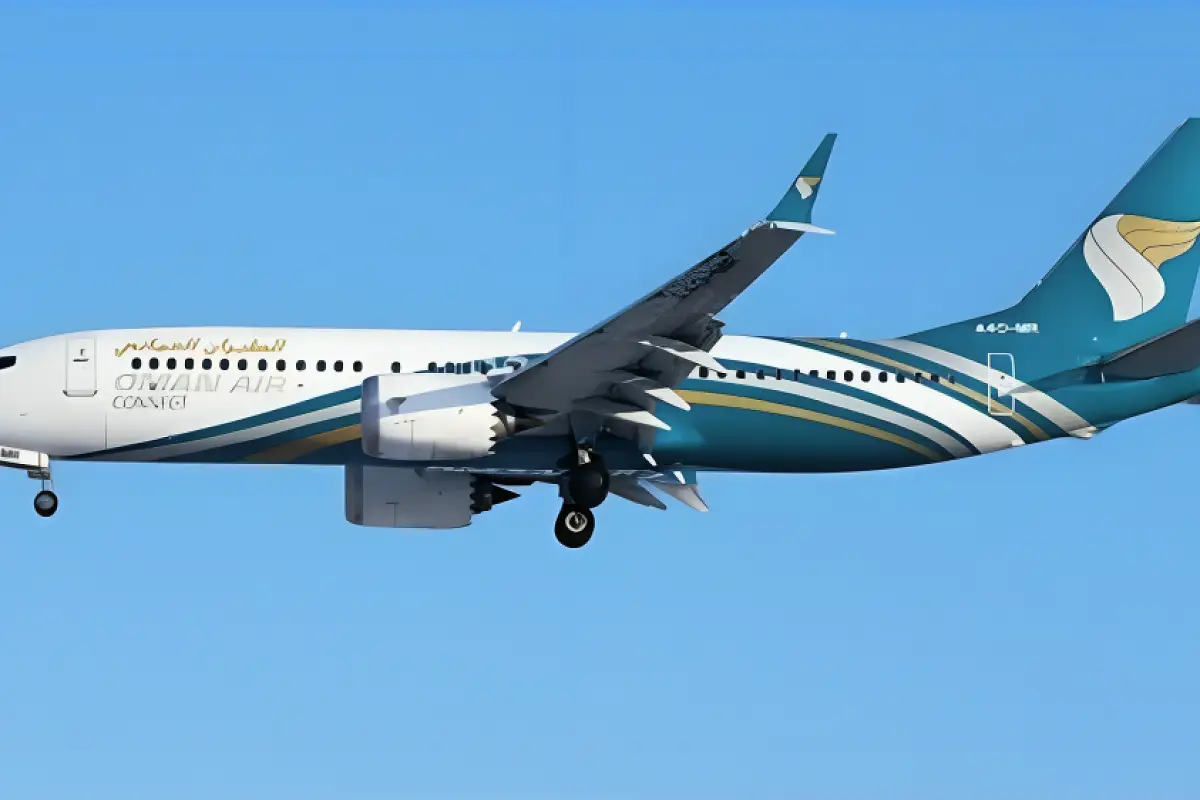
Oman Air Sold Its Only Freighter Last Year, the Iran War Just Proved That Might Have Been the Right Call
Oman Air is rebuilding a dedicated freighter operation entirely through airline partnerships rather than aircraft ownership, according to head of cargo Mike Duggan, who told AGBI the carrier is taking a "lower-risk approach" using Oman Air block space agreement arrangements with carriers across India, Africa, Asia and Europe before considering any capital commitment of its own. The strategy follows the May 2025 sale of Oman Air's only dedicated freighter, a Boeing 737-800BCF, as part of a wider financial restructuring. What makes the timing notable is what happened in the sixteen months since that sale: the Iran conflict handed Muscat exactly the kind of strategic cargo relevance Oman Air is now trying to build a business model around.
Why Selling the Only Freighter Turned Out to Be a Precursor, Not a Retreat for Oman Air Cargo
When Oman Air offloaded its single 737-800BCF in May 2025, the airline was explicit that it remained "100% committed to operating significant freighter capacity" and was shifting from an insourced to an outsourced model, language that, at the time, could easily have read as face-saving spin around a straightforward cost-cutting divestment during a state-owned carrier's restructuring to curb mounting losses and debt. Sixteen months later, Duggan's public strategy confirms that framing was not spin. Oman Air genuinely walked away from owning freighter metal specifically to test whether partnership-based capacity could deliver the same commercial outcomes at a fraction of the balance sheet risk, and the airline posted its first operational profit in 15 years in 2025, the same year it made that sale, giving the Oman Air freighter strategy argument real financial backing rather than just rhetorical cover.
How the Oman Air Iran War Situation Turned Muscat Into an Accidental Cargo Winner
The single most important development shaping this strategy has nothing to do with Oman Air's own planning, it is the direct commercial byproduct of the Iran conflict this feed has documented reshaping aviation economics across the entire Middle East and South Asia throughout 2026. Duggan told AGBI that Oman Air continued operating throughout most of the conflict with cargo loads "relatively stable," while other carriers pulled out of the region entirely: "We have benefited with a reduction in foreign carriers operating into the region," he said, specifically naming British Airways, Lufthansa, KLM and Austrian among the airlines that withdrew or reduced Gulf services during the crisis.
That pattern mirrors almost exactly what this feed covered with Qatar Airways' evacuation flight surge and Turkish Airlines' record August passenger day, airlines and hubs positioned outside the direct conflict zone, but still geographically central to it, absorbed displaced capacity and traffic that competitors could no longer safely or reliably serve. Muscat's specific advantage in that dynamic is geographic: Oman sits adjacent to, but structurally outside, the immediate flashpoints that forced Gulf carriers further north and west to suspend or curtail operations, giving it a comparative resilience that turned crisis-driven capacity withdrawal elsewhere into an opportunity Oman Air's cargo division was positioned to capture.
Why "Triangulating Muscat" Is a More Specific Oman Air Freighter Strategy Than It Sounds
Duggan has described the emerging network concept as "triangulating Muscat" between three distinct demand regions, Asia, Africa and Europe, with named origin markets including Hong Kong, Vietnam and Thailand feeding cargo westward into Europe and Africa via the Middle East. That is a materially more specific proposition than generic "Gulf hub" positioning. Hong Kong represents high-value electronics and time-sensitive express cargo; Vietnam and Thailand represent the manufacturing and garment export flows this feed has covered extensively in the context of Dhaka's textile industry and Saudia Cargo's Frankfurt route; and the westbound leg into Europe and Africa gives those Asian origin markets a Middle East-routed alternative to the more heavily trafficked and increasingly congested Dubai and Doha cargo corridors.
Oman Air's existing bellyhold network already reinforces this triangulation, the airline's 2026 strategy, as described separately by cargo commercial lead Pereira, centres explicitly on "strengthening flows from the Far East, Southeast Asia, and the Indian subcontinent into Europe," with India specifically flagged as a priority growth market driven by perishables demand out of Mumbai. Layering dedicated freighter partnerships on top of an already-established bellyhold network gives Oman Air two complementary capacity types serving the same strategic east-west corridor, rather than building freighter capability in an entirely separate direction from its existing commercial strengths.
Why Partners Are Being Asked to Do More Than Just Sell Space in Oman Air Cargo Expansion
The detail distinguishing Oman Air's approach from a conventional Oman Air block space agreement is Duggan's insistence that any partnership "would extend beyond a straightforward block-space agreement, with Oman Air involved in routing and scheduling." A standard BSA is a relatively passive commercial arrangement, an airline simply purchases guaranteed capacity on a partner's existing scheduled service. What Oman Air is describing instead is closer to a genuine operational collaboration, where Oman Air's own commercial and network planning teams help shape which routes get flown and when, rather than accepting a partner's pre-existing schedule as fixed. That distinction matters because it lets Oman Air influence network design toward its own Muscat-centric triangulation strategy, rather than simply buying into whatever capacity a partner airline happens to already be flying for its own separate commercial reasons.
Why Yields Falling While Tonnage Rises Makes the Oman Air Freighter Strategy Look Smart, Not Timid
Air Cargo News data cited in coverage of Oman Air's strategy shows cargo yields fell 15-20% between 2024 and 2025 even as overall tonnage increased, a margin-compression pattern that has played out across global air cargo markets as post-pandemic capacity normalised faster than demand could absorb it. That environment is precisely the wrong moment for an airline recovering from 15 years without an operational profit to commit fresh capital to owned freighter aircraft, whose economics depend heavily on yield stability to justify the fixed costs of ownership, financing and dedicated crew training. Testing demand through partner capacity first, where the downside of a miscalculated route or an underperforming lane is a renegotiated or cancelled agreement rather than a stranded, depreciating owned asset, is a structurally more conservative way to rebuild freighter presence during exactly the kind of margin-compressed cargo market Oman Air is currently navigating.
What "Eventually" Actually Means for Oman Air's Own Widebody Ambitions
Duggan has been consistent for over a year that Oman Air widebody freighter ambitions remain the longer-term ambition sitting behind the partnership strategy, telling Air Cargo News as far back as mid-2025 that he was "looking at widebody freighters, either as a dedicated programme or what we can do with partners through joint ventures or block space agreements," specifically to relieve what he described as "a little bit of a bottleneck from east to west" in Oman Air's passenger bellyhold network. That bottleneck framing is the throughline connecting the 2025 BCF sale, the current partnership-first strategy, and any eventual return to owned freighter capacity: Oman Air's underlying cargo demand, particularly on Asia-to-Europe lanes, appears to exceed what bellyhold capacity alone can efficiently carry, and the airline is working through partnerships now specifically to prove out exactly which routes and volumes would eventually justify committing to its own widebody freighter fleet, rather than repeating a costly and unprofitable single-aircraft freighter experiment a second time.
The 737-800BCF sale in 2025 was Oman Air admitting a single, standalone narrowbody freighter never generated the network-wide leverage the airline needed. The partnership strategy now underway is Oman Air trying to prove the demand exists for something considerably larger, using other airlines' aircraft to gather the evidence before risking its own capital on the answer.
That is the logic behind Oman Air cargo expansion: build the network first, prove the demand, and only then decide whether owning aircraft makes sense.