Qatar Airways Parks Aircraft at Teruel, Resumes Limited Cargo Operations
Qatar Airways has parked several aircraft at Teruel Airport while resuming limited cargo operations, reflecting adjustments to capacity and network strategy.
 Jishan Khan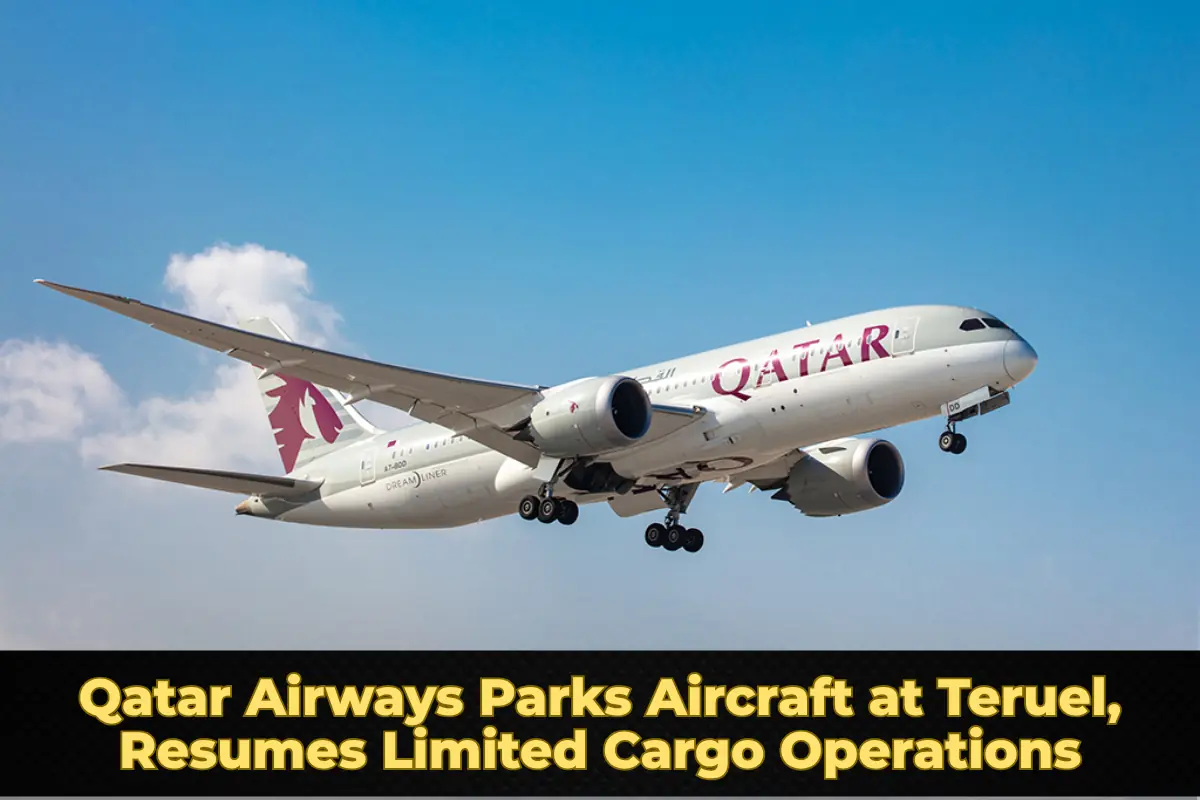
Qatar Airways has parked a number of its aircraft at Teruel Airport in Spain while resuming limited cargo operations, as the airline adjusts its fleet deployment and operational strategy in response to evolving market conditions in 2026. The move reflects a combination of capacity management and a gradual return to cargo activity amid shifting global demand.
The aircraft have been placed in storage at Teruel, a facility widely used by airlines for long-term parking and maintenance due to its dry climate and cost-effective infrastructure. At the same time, Qatar Airways has begun restoring select cargo services, signaling a cautious approach to reactivating parts of its network.
Fleet Parking at Teruel
Teruel Airport has become a key hub for aircraft storage in Europe, offering favorable conditions for preserving aircraft over extended periods. Qatar Airways’ decision to park jets at the facility indicates a temporary reduction in active fleet utilization, allowing the airline to manage capacity more efficiently during a period of fluctuating demand.
The parked aircraft are understood to include widebody jets typically used for long-haul operations. By relocating these aircraft to storage, the airline can reduce operational costs associated with maintenance, crew deployment, and airport fees while retaining the flexibility to bring them back into service when needed.
Aircraft parking is a common strategy among global carriers during periods of uncertainty or when demand does not justify full fleet deployment. It enables airlines to align capacity with market conditions without permanently retiring assets.
Resumption of Cargo Operations
Alongside the fleet adjustments, Qatar Airways has resumed limited cargo operations, focusing on select routes where demand remains stable or is showing signs of recovery. Cargo has played a critical role in the airline’s operations in recent years, providing a steady revenue stream even as passenger traffic has fluctuated.
The airline’s cargo division is known for its extensive global network and ability to transport a wide range of goods, including medical supplies, perishables, and industrial equipment. The resumption of services is expected to support key trade routes and maintain connectivity for essential shipments.
However, the scale of operations remains below pre-adjustment levels, reflecting a measured approach to capacity restoration.
Strategic Capacity Management
The combination of aircraft storage and selective cargo operations highlights Qatar Airways’ strategy of balancing capacity with demand. By reducing the number of active aircraft while maintaining critical services, the airline aims to optimize efficiency and control costs.
This approach allows the carrier to remain responsive to market changes, scaling operations up or down as needed. It also reduces the risk of operating underutilized flights, which can negatively impact profitability.
Capacity management has become a central focus for airlines worldwide, particularly in an environment characterized by economic uncertainty and variable travel patterns.
Role of Cargo in Airline Revenue
Cargo operations have become increasingly important for airlines, offering a source of revenue that is less dependent on passenger demand. For Qatar Airways, cargo has been a significant contributor to overall performance, supported by a dedicated fleet and specialized logistics capabilities.
The decision to resume cargo services, even on a limited basis, underscores the importance of this segment in the airline’s business model. By maintaining cargo connectivity, the airline can support global supply chains and generate income while passenger operations are adjusted.
Industry trends indicate that cargo demand remains relatively resilient, driven by e-commerce growth and the need for efficient transportation of goods across regions.
Operational and Economic Factors
Several factors are influencing Qatar Airways’ operational decisions, including fuel prices, geopolitical developments, and shifts in global trade patterns. Airlines must continuously adapt to these variables to maintain financial stability and operational efficiency.
The use of aircraft storage facilities such as Teruel provides a practical solution for managing surplus capacity during periods of reduced demand. At the same time, maintaining a presence in the cargo market ensures that the airline remains active in key sectors.
These measures are part of broader efforts to navigate a complex and evolving aviation landscape.
Impact on Global Aviation Market
Qatar Airways’ actions reflect wider trends in the aviation industry, where carriers are adopting flexible strategies to cope with changing conditions. The ability to adjust fleet deployment and service levels has become a critical factor in maintaining competitiveness.
Other airlines have also utilized aircraft storage and adjusted cargo operations as part of their response to market dynamics. These strategies help mitigate risks and enable airlines to respond quickly to opportunities as they arise.
The situation highlights the interconnected nature of passenger and cargo operations, with each segment influencing overall airline performance.
Future Outlook
Looking ahead, Qatar Airways is expected to continue monitoring market conditions and adjusting its operations accordingly. The airline may gradually reintroduce parked aircraft into service as demand improves, particularly if cargo and passenger markets show sustained recovery.
The flexibility provided by aircraft storage and scalable cargo operations will remain important tools in managing future growth. Strategic planning and operational efficiency will be key to navigating ongoing uncertainties.
Industry observers will be watching closely to see how the airline balances its dual focus on cargo and passenger services in the coming months.
Current Status
Qatar Airways has parked several aircraft at Teruel while resuming limited cargo operations, reflecting a cautious approach to capacity management amid evolving market conditions.