Jin Air Merger Pushes Korean LCCs Into Long-Haul Routes
Jin Air, Air Busan and Air Seoul are merging into a 60-aircraft LCC, while Korean regulators push rival carriers into long-haul markets to preserve competition.
 Jishan Khan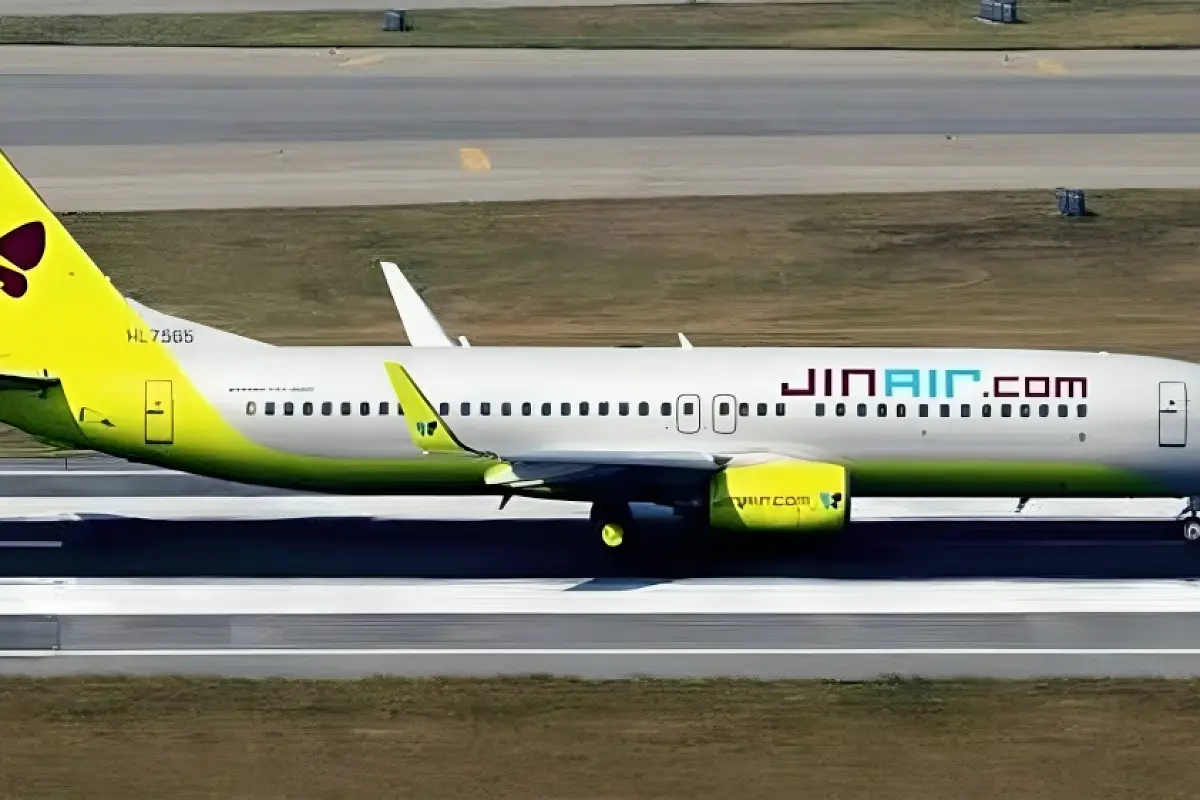
Korea's Regulators Forced Jin Air's Rivals Into Long-Haul Routes as the Price of Approving This Merger, and the Backlash Is Already Reshaping the Market
Korean Air confirmed that Jin Air, Air Busan and Air Seoul will merge into a single low-cost carrier operating under the Jin Air brand, with integration targeted for completion by the first quarter of 2027. Hanjin Group Chairman Walter Cho said the combined LCC will operate roughly 60 aircraft once complete, alongside a unified Korean Air-Asiana fleet of 240, positioning Hanjin's total group fleet at exactly the scale Cho says should now compete globally rather than domestically. That framing matters because it explains a decision the merger itself didn't make: Korean regulators required Hanjin's competitors to expand into markets the merger created gaps in, as the price of approval.
Combining three LCCs into one sounds like simple consolidation. What it actually triggered was a race among every other Korean carrier to avoid becoming irrelevant.
Why Three Airlines Existed in the First Place, and Why That Made No Sense Post-Merger
Air Busan and Jin Air were never meant to compete with each other by design, Air Busan built its network around Gimhae International in Busan specifically because Jin Air and Jeju Air already dominated the Seoul market, letting Asiana's LCC find growth room where Korean Air's LCC subsidiary wasn't already established. Air Seoul, launched in 2016, existed for an even narrower reason: to strengthen Asiana's competitive position and shore up underperforming secondary Japanese city routes, operating a tiny six-aircraft fleet compared to Jin Air's 31 and Air Busan's 20.
That fragmented structure made commercial sense when Korean Air and Asiana were separate, competing companies. It stopped making sense the moment Korean Air's KRW 1.8 trillion acquisition of Asiana closed and both parent airlines came under one roof. Having three LCC brands with overlapping route networks, separate maintenance operations, separate crew bases and separate booking systems, all now owned by the same conglomerate, is simply duplicated cost structure with no competitive rationale left to justify it.
What Regulators Extracted in Exchange for Approving All of This
The most underreported part of this consolidation story is what South Korea's competition authorities demanded before signing off on the Korean Air-Asiana merger, and by extension, the LCC integration that follows from it. As part of the corrective measures the regulator imposed during the merger review, T'way Air, rebranded Trinity Air, received certain European routes that Korean Air and Asiana were required to divest. That is not a minor footnote. It means a purely short-haul, Japan-and-Southeast-Asia-focused Korean LCC was handed long-haul European route rights specifically because regulators judged that letting Korean Air and Asiana's combined dominance go unchecked required creating a genuine competitor with international reach.
The knock-on effect has been immediate: Korean LCCs that built their entire business model on short-haul, low-fare routes to Japan and Southeast Asia are now scrambling into medium- and long-haul markets including Europe and the Americas specifically because the coming Jin Air mega-carrier and the unified Korean Air-Asiana giant will otherwise squeeze every smaller player out of the only segment where meaningful growth remains. Consolidation at the top of the market didn't just create one bigger LCC, it forced a structural repositioning across the entire remainder of the Korean airline industry.
The Fleet and Network Math Behind the New Jin Air
Once merged, the integrated Jin Air inherits complementary rather than overlapping geography, Air Busan's strength from Gimhae in the country's southeast, and Jin Air and Air Seoul's networks from Incheon and Gimpo in the northwest. Korean Air's president Kee Hong Woo framed the logic precisely when the plan first emerged: "By consolidating these three airlines, it can become a top-level low-cost airline not only in Korea but also in Asia," specifically citing the enhanced northeast and southeast Asia network the merger produces from having genuine bases in both Seoul and Busan simultaneously.
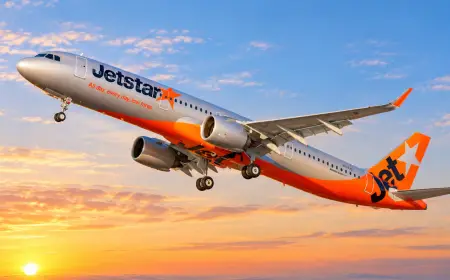
The fleet integration is not trivial. Jin Air currently operates an all-Boeing fleet, 737-800s, 737 MAX 8s and 777-200ERs used for long-haul leisure routes to Hawaii and Guam. Air Busan operates a mixed fleet that includes Airbus A321s. Absorbing up to 20 A321s into a previously Boeing-only carrier means Jin Air will operate mixed-manufacturer fleet types for the first time, requiring new pilot type ratings, separate maintenance certifications and a genuinely more complex operational structure than the "simple consolidation" framing suggests. Whether those A321s get reconfigured and rebranded into a Jin Air-standard cabin, or whether Jin Air runs a genuinely dual-fleet operation long-term, remains one of the integration's unresolved technical questions.
Why Korea Now Has Two Mega-Carriers Instead of Four Meaningful Ones
With 51.7% of domestic seat capacity and 41.9% of international capacity already running through LCCs in 2025, South Korea's aviation market was already unusually budget-carrier-dominated by global standards. The Jin Air merger, arriving alongside the completed Korean Air-Asiana integration in December 2026, collapses what was previously a genuinely competitive field, Korean Air, Asiana, Jin Air, Air Busan, Air Seoul, Jeju Air, T'way, Eastar Jet, Aero K and newcomer Parata Air, into a market structurally dominated by two giants: a combined full-service Korean Air-Asiana operating roughly 240 aircraft, and a combined Jin Air-Air Busan-Air Seoul operating roughly 60.
Every other Korean carrier, Jeju Air, the rebranded Trinity Air, Air Premia, Eastar Jet, Aero K, and Parata Air building its own transpacific ambitions, now competes not against three separate mid-sized LCCs, but against one carrier explicitly built to be Asia-scale rather than Korea-scale. That is precisely why the long-haul rush described among Korean LCCs isn't really about opportunistic international expansion. It is survival positioning against a competitor that didn't exist a year ago and will be the largest LCC in the country the moment integration completes in early 2027.