India Becomes Lufthansa’s Second-Largest Intercontinental Market
India has become Lufthansa's second-largest intercontinental market as the airline expands flights and Allegris cabins while cutting Frankfurt-Beijing service.
 Jishan Khan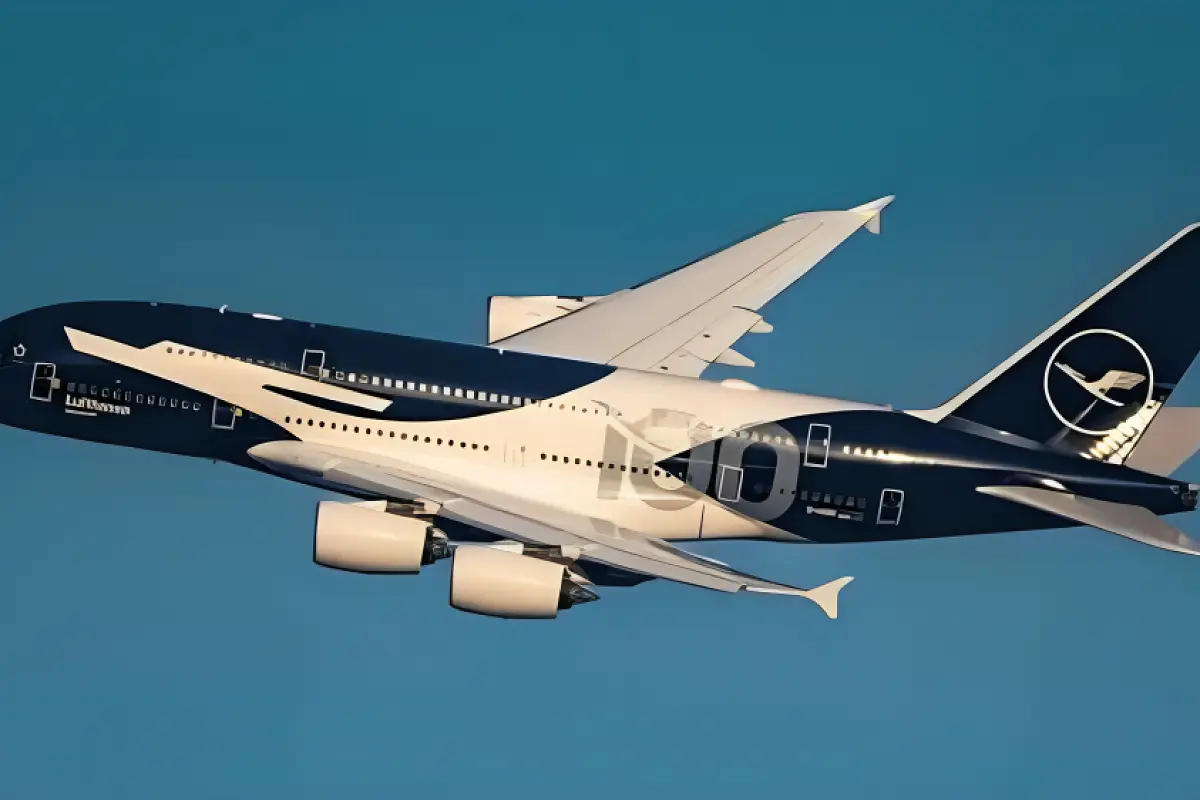
India Just Became Lufthansa's Second-Largest Intercontinental Market, and Its China Route to Beijing Just Got Cancelled
Lufthansa Group confirmed that India is now its second-largest intercontinental market by flight frequency outside Europe, with senior regional sales director Kevin Markette telling reporters in New Delhi that India "has become one of the airline's most important markets outside Europe" and will keep playing a central role in the group's expansion strategy.
The comparison to China is not abstract positioning. Lufthansa eliminated its direct daily Frankfurt-Beijing service specifically because older, fuel-guzzling aircraft on that route made it unprofitable amid Russian airspace closures that force lengthy detours around Russian territory. India carries none of that structural penalty, and Lufthansa's fleet and cabin investment decisions now reflect that gap directly.
One market got a cancelled flagship route. The other got a next-generation cabin rollout. That is what "India has overtaken China" actually looks like in an airline's own capital allocation.
Why Russian Airspace Closure Made China Structurally Worse, Not Just Temporarily Disrupted
The Frankfurt-Beijing elimination is not comparable to the temporary Pakistan-airspace reroutes this feed has covered affecting Indian carriers, nor to Cathay Pacific's Iran-conflict-driven Dubai and Riyadh postponements. Russian airspace closure to most Western carriers has now persisted since February 2022 with no resolution timeline in sight, meaning any Frankfurt-China route permanently carries a distance, fuel-burn and flight-time penalty that has no expiry date attached to it. Lufthansa's decision to retire the older aircraft that were absorbing that penalty rather than deploy new-generation replacements onto the same route is a structural verdict on the corridor's long-term economics, not a response to a passing disruption.
India carries no equivalent structural handicap. Flights from Frankfurt and Munich to Delhi, Mumbai, Bengaluru, Chennai and Hyderabad route through airspace that remains fully accessible, meaning every efficiency gain from Lufthansa's new aircraft deliveries converts directly into route profitability rather than partially offsetting a geography-driven cost penalty that China routes cannot escape.
The Allegris Rollout Is the Real Signal, Not the 80 Weekly Flights
Lufthansa is introducing its next-generation Allegris cabin, upgraded seating across First, Business, Premium Economy and Economy, specifically on Delhi, Hyderabad and Mumbai services, part of a broader long-haul cabin renewal this feed covered in detail when documenting Lufthansa Group's winter 2026/27 network expansion across eleven new Allegris destinations. Airlines do not deploy their most expensive, most differentiated cabin product onto routes they consider secondary or in decline. They deploy it onto the routes where premium yield growth justifies the capital outlay, and Lufthansa's own data shows exactly why India qualifies: load factors on India routes averaged 86% in 2025, among the strongest in the group's entire long-haul network, with what the airline calls a consistently strong trend toward more bookings in premium cabin classes.
That combination, high load factor plus rising premium mix, is the specific pattern that makes an airline's finance department approve cabin retrofit capital. A route running at 86% capacity with a growing share of passengers paying premium fares generates materially better unit economics than a route with similar volume but a thinner mix of high-yield seats.
Frankfurt and Munich's Dual-Hub Model Is Being Built Specifically Around This Market
Lufthansa is not simply adding India flights opportunistically. Frankfurt and Munich together handled 61 million passengers in 2024, with Frankfurt operating as the volume hub running over 300 daily departures while Munich is positioned specifically for premium traffic and long-haul connections to select Asian cities, a deliberate two-tier structure that gives Lufthansa flexibility to route India's business travellers, who predominantly connect through Frankfurt as their default European gateway, differently from the premium leisure traffic Munich is built to capture.
The 2026 summer schedule expansion added services connecting both hubs to Delhi, Chennai, Hyderabad and Bengaluru specifically, a four-city spread that goes well beyond the traditional Delhi-Mumbai duopoly most European carriers have historically concentrated on, and reflects Lufthansa's own assessment that India's outbound long-haul demand is broadening geographically beyond its two largest metros into secondary business and technology hubs.
The Wider Lufthansa Group Long-Haul Bet Explains Why India Gets Priority Capital
CEO Carsten Spohr told Reuters in December that Lufthansa is projecting 6% long-haul capacity growth for 2026 against just 3.5% overall capacity growth, with short-haul routes deliberately constrained while the group integrates further into its hub system, explicitly stating "we don't need to connect every single hub to every single short-haul destination anymore." That is a capital allocation philosophy that concentrates growth investment into the highest-return long-haul corridors rather than spreading it evenly, and Markette's confirmation that India is expanding not just passenger service but cargo, technology and maintenance operations too indicates India has cleared the bar for that concentrated investment across multiple business lines simultaneously, not passenger flying alone.
Lufthansa's broader financial targets, pushing profit margins to 8-10% between 2028 and 2030, depend on exactly this kind of selective long-haul expansion into markets where premium yield and load factor both justify the widebody deployment. India, with its 86% load factors and rising premium share, is doing precisely the commercial work that strategy requires.
Why India's Luxury Travel Growth Curve Makes This a Multi-Decade Bet, Not a Cyclical One
India's luxury travel market is projected to exceed USD 100 billion by 2033, driven by rising disposable incomes and an expanding affluent middle class, the same demographic and economic tailwind that has separately pushed Air India toward its 470-aircraft order and driven the proliferation of long-haul ambitions across IndiGo, Air India and even smaller players attempting international expansion that this feed has documented extensively throughout 2026. Every foreign carrier expanding into India right now, Lufthansa, Emirates, Qatar Airways, British Airways, all of them, is competing for a passenger base that is not just growing in volume, but is specifically growing in willingness to pay premium fares, which is the single hardest kind of demand growth for any airline to walk away from once identified.
Why This Also Sets Up a Collision Course With India's Own Carriers
Lufthansa's India expansion is not happening in a vacuum where only foreign carriers compete for the same passengers. Air India's fleet transformation under Tata ownership and IndiGo's pending widebody entry into long-haul, both extensively covered elsewhere in this feed, are precisely the domestic response to the same premium demand growth Lufthansa is now chasing from the European side. The next several years of India-Europe long-haul competition will be defined by whether foreign carriers like Lufthansa can maintain their historic advantage in premium cabin product and hub connectivity, or whether Indian carriers flying nonstop from Indian cities to European and North American destinations erode that advantage by removing the connection entirely.
For now, Lufthansa's bet is unambiguous, India is where the next decade of intercontinental premium growth actually lives, China's structural cost penalty from Russian airspace closure is not resolving anytime soon, and the group's cabin investment, hub scheduling and route expansion decisions across 2026 all point in the exact same direction.