T’way Air Secures $17 Million Shareholder Backing to Strengthen Financial Position
South Korea’s T’way Air has secured $17 million in shareholder backing to support its financial position and ongoing operational strategy.
 Jishan Khan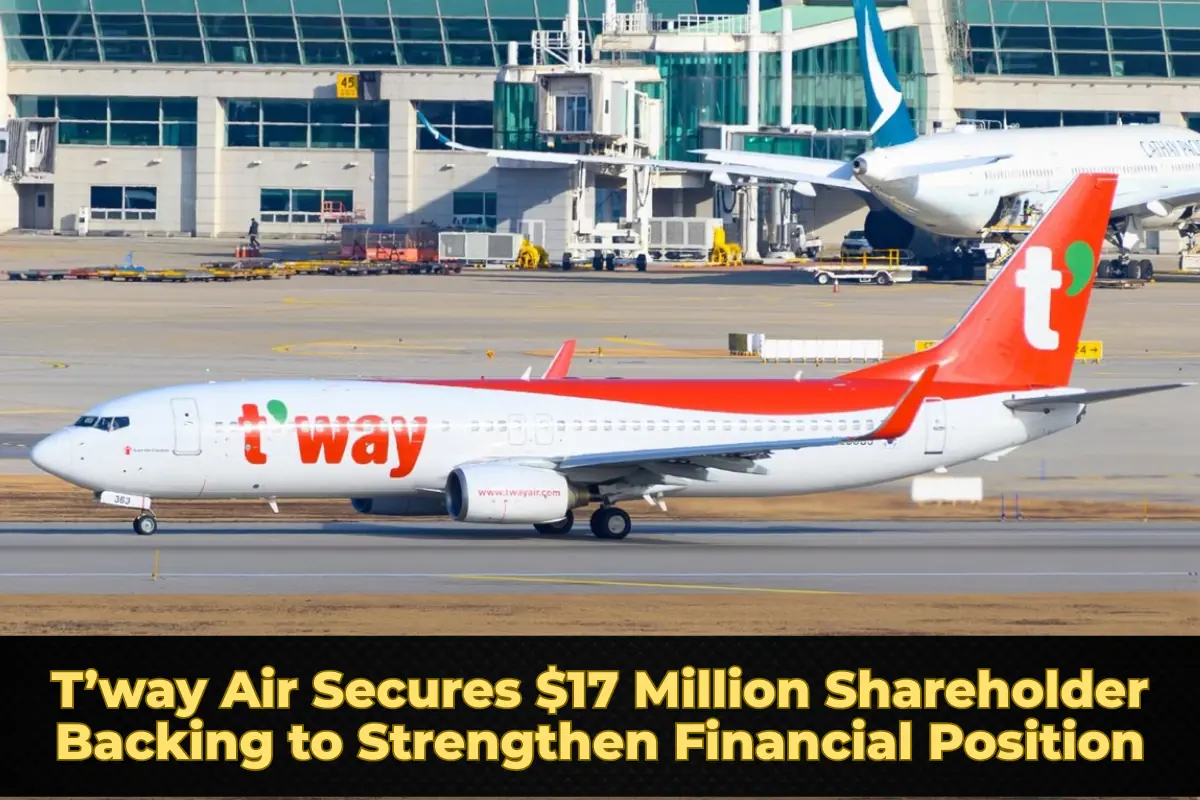
South Korea’s low-cost carrier T’way Air has secured approximately $17 million in financial backing from its shareholders, the airline confirmed, as it seeks to reinforce its balance sheet and support ongoing operations amid evolving market conditions. The funding comes at a time when airlines globally are navigating cost pressures and competitive dynamics while maintaining growth strategies.
The capital injection is aimed at improving the airline’s financial resilience, enabling it to manage operational expenses, enhance liquidity, and continue executing its expansion and service plans. The move reflects shareholder confidence in the airline’s long-term prospects despite industry challenges.
Strengthening Financial Stability
The $17 million funding from shareholders is expected to provide T’way Air with additional financial flexibility, helping the airline address short-term liquidity needs while maintaining operational stability. Airlines often rely on such capital support to manage fluctuations in revenue and costs, particularly in a volatile market environment.
The funding may also support the airline’s efforts to optimize its financial structure, ensuring that it remains competitive within the low-cost carrier segment. Maintaining a strong financial position is critical for airlines seeking to navigate uncertainties such as fuel price volatility and shifting travel demand.
Industry analysts note that shareholder backing is a common approach for airlines looking to strengthen their balance sheets without taking on additional debt.
Operational and Strategic Context
T’way Air operates within South Korea’s competitive aviation market, where low-cost carriers play a significant role in both domestic and international travel. The airline has been focused on expanding its network and increasing capacity to capture growing demand in the region.
The additional funding is expected to support these strategic objectives, allowing the airline to continue investing in operations, route development, and customer service enhancements. The low-cost model requires careful cost management and efficient operations, making financial stability a key priority.
As travel demand continues to recover and evolve, airlines are adapting their strategies to align with changing passenger preferences and market conditions.
Shareholder Confidence and Support
The decision by shareholders to provide additional funding underscores their confidence in T’way Air’s business model and growth potential. Investor support is particularly important in the aviation sector, where capital requirements are high and external conditions can impact performance.
By securing this backing, T’way Air demonstrates its ability to attract and retain investor confidence, which can be a critical factor in sustaining long-term growth. The funding also signals a commitment from stakeholders to support the airline through current market challenges.
Such financial support can enhance the airline’s ability to respond to opportunities and challenges, ensuring continuity of operations and strategic initiatives.
Market Environment and Challenges
The aviation industry continues to face a complex operating environment characterized by fluctuating fuel prices, competitive pressures, and evolving travel patterns. For low-cost carriers, maintaining profitability while offering competitive fares is an ongoing challenge.
Rising operational costs, particularly fuel expenses, can impact margins and require airlines to adjust pricing strategies or seek additional funding. At the same time, strong travel demand in certain markets presents opportunities for growth and revenue generation.
T’way Air’s funding initiative reflects the need for airlines to remain agile and financially prepared to navigate these dynamics.
Role of Low-Cost Carriers in South Korea
Low-cost carriers have become a key component of South Korea’s aviation sector, providing affordable travel options and contributing to increased connectivity. Airlines like T’way Air have expanded their networks to include regional and international destinations, catering to both leisure and business travelers.
The competitive landscape in South Korea includes several low-cost and full-service carriers, all seeking to capture market share through pricing strategies, route expansion, and service improvements. Financial strength is a critical factor in maintaining competitiveness in this environment.
As demand for air travel continues to grow, low-cost carriers are expected to play an increasingly important role in shaping the market.
Use of Funds and Strategic Priorities
The funds raised from shareholders are likely to be allocated toward key operational and strategic priorities, including working capital, cost management, and potential investments in fleet and network expansion. Efficient allocation of resources will be essential in maximizing the benefits of the funding.
Airlines typically prioritize maintaining liquidity and operational continuity, particularly during periods of uncertainty. Additional funding can also support initiatives aimed at improving efficiency and enhancing the passenger experience.
T’way Air’s ability to deploy these funds effectively will be a key determinant of its performance in the coming months.
Competitive Positioning
With the new funding in place, T’way Air is better positioned to compete within the regional aviation market. Financial stability allows the airline to pursue growth opportunities, adapt to market changes, and maintain service levels.
Competition among airlines is expected to remain intense, with carriers focusing on differentiating their offerings and optimizing their operations. T’way Air’s strategy will likely involve balancing cost efficiency with service quality to attract and retain customers.
The airline’s ability to leverage its low-cost model while maintaining financial discipline will be critical in sustaining its competitive edge.
Outlook for the Airline
Looking ahead, T’way Air is expected to continue focusing on strengthening its operations and expanding its network in response to market demand. The additional funding provides a foundation for these efforts, enabling the airline to navigate challenges and capitalize on opportunities.
Industry observers anticipate that airlines with strong financial backing and efficient operations will be better positioned to succeed in the evolving aviation landscape. T’way Air’s recent funding initiative aligns with this trend, highlighting the importance of financial resilience.
The airline may also explore further strategic initiatives, including partnerships or operational enhancements, to support its long-term growth objectives.
Current Status
T’way Air has secured $17 million in shareholder backing, strengthening its financial position as it continues to operate and expand within South Korea’s competitive aviation market.