Uganda Airlines Paid $9 Million to Restore TotalCare Support
Uganda Airlines paid $9 million to restore Rolls-Royce TotalCare support after its A330-800 fleet was grounded, exposing the risks of sole-source engine maintenance.
 Jishan Khan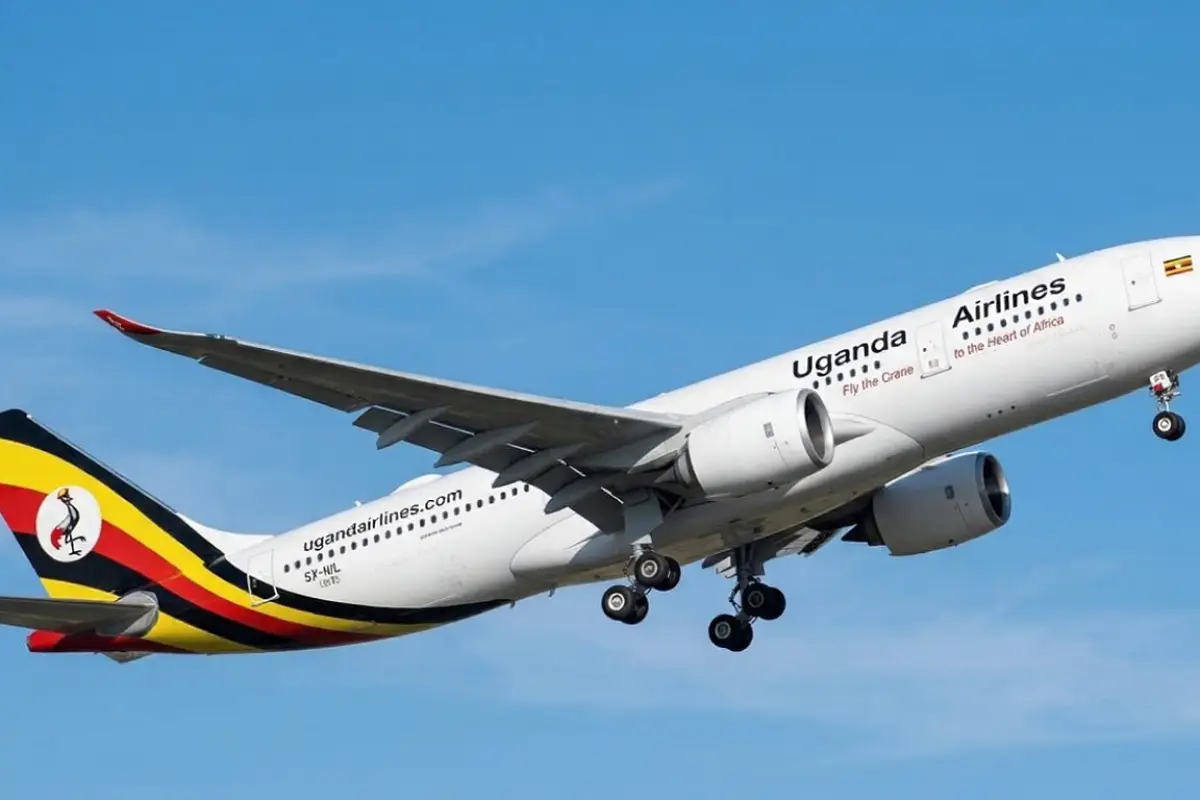
There Are No Independent Third-Party Maintenance Providers Certified for the Engine Type, Why Uganda Airlines Had No Leverage in Its Own Engine Dispute
Uganda Airlines acting CEO Girma Wake gave Ugandan parliament's oversight committee the airline's first public account of a maintenance dispute that had quietly crippled its long-haul operation for most of 2026: Rolls-Royce terminated its TotalCare engine support agreement in October 2025 after Uganda Airlines fell behind on payments, halting parts, maintenance and technical support for the Trent 7000 engines powering both of its Airbus A330-800s. The airline settled by paying $9 million to restore the agreement. Both aircraft are expected back in service by March 2027, nearly a year and a half after the dispute began.
The single sentence in this saga that matters most is the one explaining why Uganda Airlines had no alternative whatsoever once Rolls-Royce walked away: there are no certified independent third-party maintenance providers for the Trent 7000 engine type anywhere. When the manufacturer of a sole-source engine cuts off support, there is no fallback vendor to call. There is only negotiation, or a grounded fleet.
A Payment Structure That Escalated Faster Than the Airline's Revenue
According to reporting cited around the dispute, TotalCare payments that reportedly started at roughly $400,000 per month had climbed to approximately $1.1 million by January 2026, nearly a threefold increase over a relatively short period, tied to the dollar-per-flying-hour structure that underpins Rolls-Royce's TotalCare model globally. That structure is designed to give operators predictable costs and guaranteed engine availability in exchange for a premium built into every flying hour. It works well for an airline whose network and utilisation match what the contract was actually priced around. It becomes financially punishing when either the aircraft fly less efficiently than modelled, or the airline's broader cash position deteriorates faster than the payment obligations can be renegotiated.
Uganda Airlines' own CFO Allan Joel Kyeyune gave the specific mechanism behind that mismatch directly to the parliamentary committee: the airline had actually incurred penalties under the Rolls-Royce agreement because its A330 fleet was deployed mainly on the Mumbai and Dubai sector, routes shorter than what the maintenance contract had been structured and priced around, with London only becoming the airline's first route that matched the aircraft's intended, optimal utilisation profile. That detail reframes the entire dispute. This was not simply an airline failing to pay its bills. It was a mismatch between how Uganda Airlines was actually using aircraft commercially and the technical assumptions baked into the maintenance contract governing those same aircraft, a structural misalignment between network strategy and engine economics that compounded every month the airline kept flying the "wrong" routes for its own maintenance agreement.
From Two Grounded Widebodies to Cannibalising One to Keep the Other Flying
The operational consequence of Rolls-Royce's October 2025 termination was severe and immediate. Both A330-800s were grounded, forcing Uganda Airlines to cannibalise parts from one aircraft simply to keep the second flying — a last-resort maintenance practice that keeps a single airframe operational by physically stripping components from a sister aircraft, at the direct cost of that second jet's own eventual return to service. That is not a sustainable operating posture for an airline with only seven aircraft in its entire fleet, including just two widebodies, one A320 and four Bombardier CRJ900s, as documented in earlier 2026 coverage of the crisis.
With no backup widebody capacity of its own and Gatwick slots operating under strict "use-it-or-lose-it" rules, Uganda Airlines turned to Ethiopian Airlines from March 7, 2026, wet-leasing a roughly 10-year-old Boeing 787-8 configured with 24 business and 246 economy seats specifically to protect its London and Mumbai long-haul services from disappearing entirely. By May, the arrangement expanded further still, two additional Ethiopian Airlines Boeing 737-800s joined under wet lease to cover regional African routes to Nairobi, Johannesburg, Kinshasa and Lagos, with Ethiopian providing crew, maintenance and insurance under the full wet-lease structure.
The Detail That Should Worry Uganda Airlines More Than the $9 Million Bill
Perhaps the most consequential finding buried in the reporting around this crisis is almost throwaway: sources noted the airline discovered that operating the leased Ethiopian aircraft was costing less than deploying its own A330neos. That is not a minor operational footnote, it is a direct challenge to the entire commercial logic of Uganda Airlines owning and operating widebody aircraft under a TotalCare-style maintenance structure at all, if a wet-leased alternative with someone else's crew, insurance and maintenance built in can undercut the cost of flying aircraft the airline already owns outright. If that cost comparison holds under closer scrutiny, it raises a genuinely uncomfortable question for Uganda Airlines' board about whether its long-haul strategy should continue to depend on owned, TotalCare-supported widebodies at all, rather than a more flexible wet-lease or capacity-purchase model for at least part of its intercontinental network.
Why Airbus Got Pulled Into a Rolls-Royce Contract Dispute
The parliamentary briefing also revealed that Airbus became involved in negotiations between Uganda Airlines and Rolls-Royce, a detail that makes sense given the interconnected commercial relationships underpinning any aircraft-and-engine package deal. Airbus, as the airframe manufacturer, has its own vested interest in ensuring an operator of its A330neo family does not end up with grounded aircraft and a public dispute with its exclusive engine supplier, since a customer stranded by an engine-maintenance breakdown reflects poorly on the aircraft programme as a whole, regardless of which specific supplier's contract actually failed. Airbus's involvement likely helped broker terms both Uganda Airlines and Rolls-Royce could accept, leveraging its own commercial relationship with the engine maker to find a resolution neither party had managed to reach bilaterally over the prior several months.
A Debt Problem That Predates and Extends Well Beyond This Single Dispute
The Rolls-Royce settlement is not an isolated financial event, it sits inside a considerably larger debt picture. Uganda Airlines has accumulated approximately $78 million in debt over three years, according to figures presented alongside the Rolls-Royce briefing, meaning the $9 million TotalCare settlement represents roughly one-ninth of the airline's total accumulated liabilities, resolved specifically because failing to pay it left the airline with literally no path to keep its core long-haul fleet flying. Every other creditor in that $78 million total does not carry the same existential leverage that Rolls-Royce held as the sole certified source of Trent 7000 support, which suggests Uganda Airlines likely prioritised this particular payment not because it was the largest or most urgent debt in absolute terms, but because it was the one whose non-payment came with the single most severe and immediate operational consequence.
Why March 2027 Is Still a Long Way Off
Wake's testimony to the Ugandan parliament indicates the airline expects both A330s back in service only by March 2027, with one aircraft potentially returning as early as January or February, meaning Uganda Airlines will have operated with a severely compromised or entirely absent widebody fleet of its own for the better part of eighteen months by the time the dispute is fully resolved. That is an extraordinarily long recovery runway for an airline of Uganda Airlines' size, and it raises the same governance question this feed has now documented repeatedly across African flag carriers this year, from Kenya Airways' decade-long strategic investor search to Air Mauritius' unresolved administrator liability case, about whether the underlying institutional capacity to manage complex, high-value technical supplier relationships exists at the level these ambitious long-haul fleet strategies actually require.
Girma Wake, previously chairman and CEO of Ethiopian Airlines and chairman of RwandAir, was specifically appointed by the Ugandan government in February 2026 to stabilise the carrier following the dismissal of former CEO Jenifer Bamuturaki, meaning the person who ultimately negotiated the Rolls-Royce settlement was not the leadership that allowed the arrears to accumulate in the first place. That leadership change, paired with the $9 million payment and the pending UK lawsuit Wake also disclosed to the parliamentary committee, suggests Uganda Airlines' board recognised the scale of the crisis required both a financial fix and new management credibility to prevent the same TotalCare arrears problem from recurring once the current settlement's payment terms come due again.