Vueling to Deploy Boeing 737-8-200 in Bold Fleet Shift
Vueling will introduce 50 Boeing 737 MAX aircraft into its fleet by 2029, marking the end of its all-Airbus operation under parent company IAG.
 Jishan Khan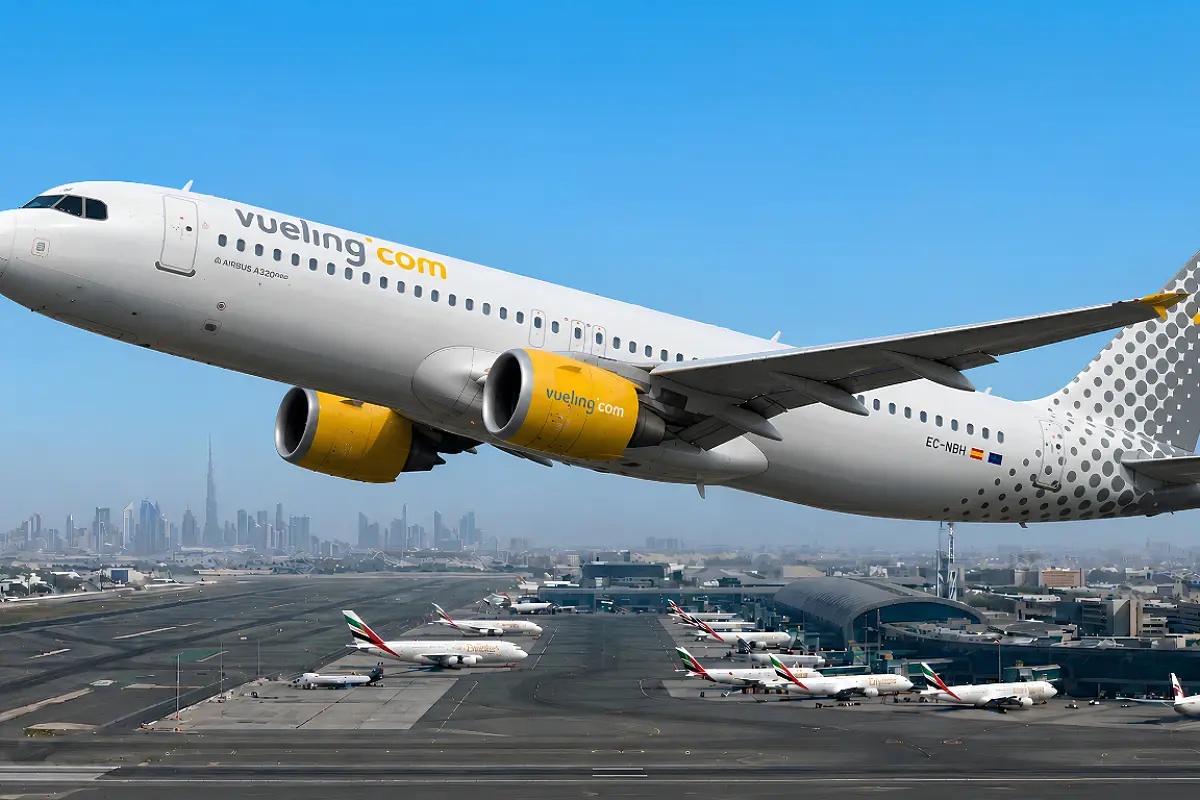
Vueling Is Abandoning Its All-Airbus Fleet, And Boeing Just Won a Battle in Europe It Was Not Supposed to Win
IAG is sending 50 Boeing 737 MAX jets to one of Airbus's most loyal customers. In European aviation, that is not just a fleet decision. It is a signal.
There are airline fleet changes, and then there are fleet changes that make the entire industry stop and pay attention. Vueling switching from an all-Airbus operation to one that includes 50 Boeing 737 MAX aircraft is firmly in the second category.
The Spanish low-cost carrier, which has operated exclusively Airbus jets since its founding, will debut the high-density Boeing 737-8-200 in Q4 2026. Parent company IAG has allocated the full order, 25 MAX 8-200s and 25 MAX 10s, with deliveries running through 2029. By the time the last jet arrives, Vueling will be a fundamentally different airline from a fleet strategy perspective. And Boeing will have done something in Europe that most people did not see coming at this scale.
What Losing Vueling Actually Means for Airbus
Airbus's home turf advantage in Europe is not just about geography. It is about relationships, maintenance infrastructure, pilot type ratings, and the simple inertia of airlines that have been operating the same aircraft family for decades.
Vueling was one of those carriers. An all-Airbus operator inside IAG, Europe's most powerful airline group, sitting in Spain, one of the continent's busiest aviation markets. That is not a customer Airbus loses quietly.
The fact that IAG made this call for Vueling tells you something important about how the group's leadership is thinking about cost structure and competitive positioning. IAG already operates Boeing jets at Iberia and British Airways. Adding Vueling to that mix suggests the group is becoming increasingly comfortable running a mixed-manufacturer strategy, and increasingly willing to use Boeing as a lever to extract better economics wherever the numbers make sense.
For Airbus, the uncomfortable truth is that loyalty only survives as long as the commercial argument supports it. When IAG ran the numbers on what a high-density Boeing operation could do for Vueling's unit costs, the brand relationship was not enough to change the conclusion.
The 737-8-200 Is Specifically Designed to Win This Fight
The Boeing 737 MAX 8-200 is not a standard narrowbody. It is a high-density variant built with one specific purpose, to carry more passengers per flight than almost anything else in its category at the lowest possible cost per seat.
Ryanair, which operates the largest 737-8-200 fleet in the world, has built its entire low-cost dominance model around exactly what this aircraft delivers. More seats, lower fuel burn per passenger, aggressive turnaround times, and unit economics that are extremely difficult for Airbus A320-family operators to match on short and medium-haul routes.
By putting this exact aircraft into Vueling's hands, IAG is not just modernizing a fleet. It is handing Vueling the same weapon Ryanair has been using to dominate European low-cost routes for years and telling it to go compete.
Ryanair Should Be Paying Attention
Vueling and Ryanair have been competing across Southern European routes for years, but they have never been direct equivalents. Vueling's all-Airbus operation and slightly different positioning kept the competitive dynamic at a certain level.
That changes when Vueling starts operating the same high-density aircraft Ryanair uses, with IAG's backing, capital structure, and network connectivity behind it.
The 737-8-200 gives Vueling the ability to drop seat costs on routes where it was previously at a structural disadvantage. Combined with IAG's slot portfolio across Madrid, Barcelona, and London, and the connectivity advantage that comes from being part of a full-service airline group, Vueling's competitive profile in 2027 and beyond looks meaningfully different from what it is today.
Ryanair has never had to face a well-funded IAG subsidiary operating its own aircraft type at scale. That is a new competitive dynamic and one that Michael O'Leary's team will be watching closely.
Boeing Gaining Ground in Airbus's Strongest Market
The geopolitical dimension of this deal should not be underplayed. Europe has historically been Airbus territory in a way that goes beyond commercial preference. There is genuine institutional, political, and industrial pride attached to European airlines flying European-made aircraft.
Boeing has been fighting that headwind for years, particularly after the 737 MAX crisis damaged its reputation severely in markets that were already skeptical. The fact that IAG is now directing a 50-aircraft order to Vueling, inside Europe, for a carrier that had never operated a Boeing jet, represents a meaningful shift in that dynamic.
It will not go unnoticed in Toulouse. And it will not make Airbus's next negotiation with IAG any easier.
What It Means for Passengers Flying Vueling
For anyone who flies Vueling regularly, the arrival of the 737-8-200 means one thing above everything else, more seats in the same aircraft.
The high-density configuration that makes this jet so economically attractive to airlines is not designed with passenger comfort as the priority. Pitch gets tighter. The cabin feels fuller. The experience is optimised for the airline's cost structure, not for the person sitting in row 28.
The trade-off, in theory, is that lower operating costs allow Vueling to price more aggressively and keep fares competitive on routes where it is expanding. Whether that trade-off actually shows up in ticket prices or quietly disappears into margin improvement is something passengers will be watching closely from late 2026 onwards.
What is certain is that Vueling's cabin is about to get busier. And European aviation's fleet landscape just got a lot more interesting.