Asha The Hope Café Delhi Launches Inclusive Initiative
Asha The Hope Café Delhi, launched by Diageo India and AWWA, aims to skill youth with special needs from armed forces families. Read more.
 nishathapa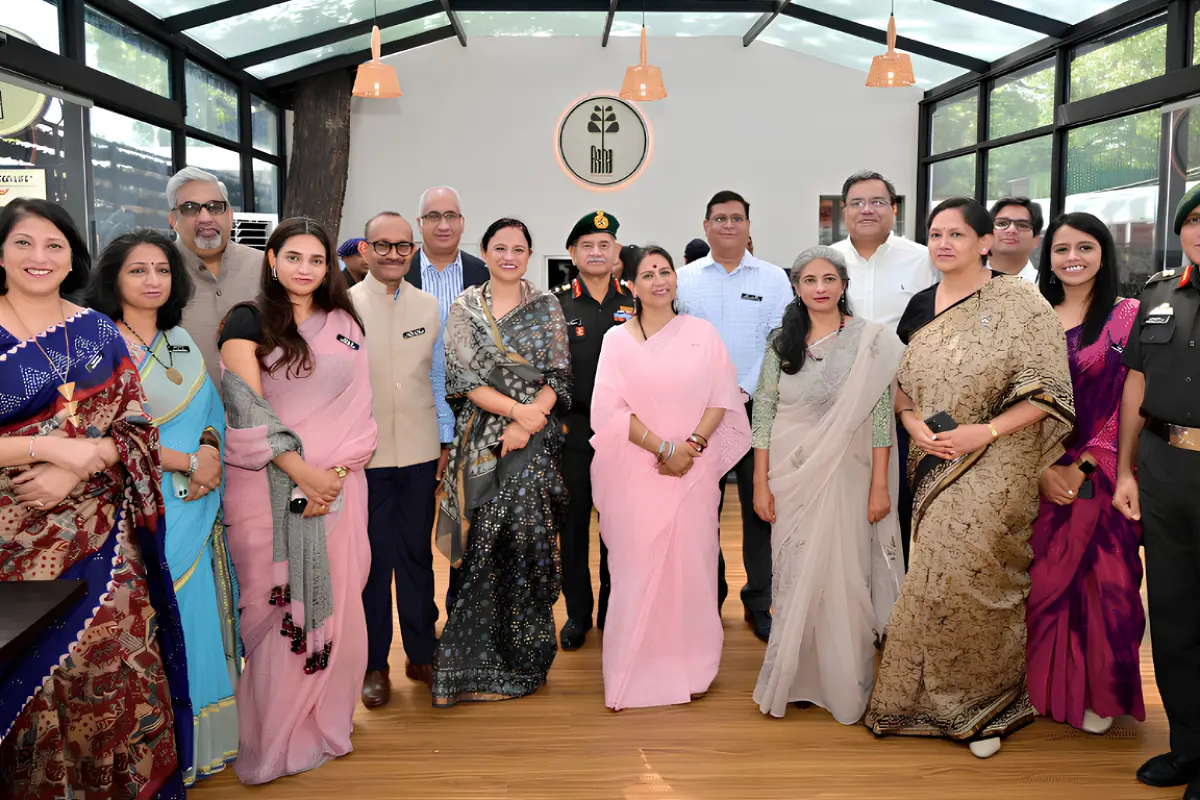
NEW DELHI, June 1, 2026: Asha – The Hope Café has been launched at Delhi Cantonment as a first-of-its-kind social enterprise designed to provide youth with special needs from armed forces families with structured hospitality training, employment opportunities and a pathway into sustainable livelihoods. The café is backed by the Corporate Social Responsibility programme of United Spirits Limited, a Diageo India company, and will be operated under the guidance of the Army Women's Welfare Association (AWWA).
The idea at the centre of Asha – The Hope Café is not complicated, but it is genuinely unusual. A large proportion of India's café and restaurant sector relies on informal labour with minimal training and limited career progression. Asha inverts that norm, it is a professionally managed café where the training and employment of a specific under-served population is the primary purpose, and the café's commercial operation is the vehicle through which that purpose is delivered sustainably. Running a good café is the point, because a good café generates revenue, and revenue supports the livelihoods the initiative is trying to build.
Diageo India and AWWA Launch Asha The Hope Café Delhi
The café brings together two organisations that are well-positioned to make this kind of initiative work. Diageo India's Learning for Life programme has an established track record of hospitality sector skilling across multiple beneficiary cohorts, including youth from marginalised communities, persons with disabilities and, now, youth with special needs from armed forces families. The programme's hospitality focus means it delivers training that has direct employment applicability rather than generic skills that need to be translated into a job context.
AWWA, the Army Women's Welfare Association, brings the cantonment network, community relationships and institutional credibility that make the café viable in its specific setting. For families within the armed forces community, where a child with special needs may have limited access to the kind of supported employment environment that urban civil society increasingly provides, an initiative that creates a real job in a professional café setting within a cantonment carries significance that goes well beyond the employment count.
Devashish Dasgupta on What the Asha Café Represents for Diageo India's Learning for Life Programme
Devashish Dasgupta, Director of Corporate Relations at Diageo India (USL), placed the Asha Café within the Learning for Life programme's evolving scope.
"Through our Learning for Life programme, we have worked to build skills and enable employment opportunities in the hospitality sector for youth, persons with disabilities and now members of the armed forces and their families. We're proud to partner with AWWA on this project."
— Devashish Dasgupta, Director – Corporate Relations, Diageo India (USL)
The sequential expansion of the programme's beneficiary base, from youth and persons with disabilities to armed forces families, reflects a deliberate widening of scope that tracks where genuine employment gaps exist in the Indian hospitality sector rather than staying within an already-served demographic. Youth with special needs from military families represent a population that is neither well-served by standard disability employment programmes (which are designed for civilian contexts) nor by the armed forces' own welfare infrastructure (which addresses service families' needs in many ways but not always in terms of supported civilian employment for dependants with special needs).
A Premium Café With Professional Infrastructure, Bakery and Entrepreneurship Training
Asha – The Hope Café has been designed as a professionally managed establishment with curated artisanal offerings and modern operational infrastructure. The training programme alongside the employment opportunity covers hospitality operations, café management, bakery skills, financial literacy and entrepreneurship, a curriculum broad enough to support participants who want to develop careers within the hospitality industry and those who might eventually run their own ventures.
The inclusion of finance and entrepreneurship training alongside the operational skills is the detail that distinguishes this from a sheltered workshop model. The aim is not to create permanent dependency on a single supported employment environment but to build capability that travels, skills a participant can take with them into other employment or use as the foundation for an independent livelihood. The café is the training ground, not the destination.
A Replicable Model Designed for Expansion Across Cantonments
Asha – The Hope Café has been explicitly envisioned as a replicable model that can be expanded across other cantonments across India over time. That ambition is significant for what it reveals about how the initiative has been designed. A social enterprise conceived as a single standalone project serves the community it is located in. One that has been architected for replication is being built as a programme, with standardised training curricula, operational formats and community engagement models that can be transferred to a new cantonment without having to rebuild the methodology from scratch.
India has a large and geographically distributed network of cantonments, each housing armed forces families that include parents with children who have special needs. Scaling a model that has been proven in Delhi Cantonment across that network would reach a beneficiary population that most mainstream skilling and employment initiatives simply do not extend to.
For Diageo India's Learning for Life programme, which has already reached significant scale in mainstream hospitality skilling, the Asha Café represents a meaningful expansion of both the target population and the delivery model. It is the kind of CSR initiative that tends to attract scrutiny about whether the social purpose and the commercial viability are genuinely aligned rather than one being used to dress up the other. In this case, they are the same thing: a well-run café is both the evidence of successful training and the funding mechanism for its continuation.