Dubai Landmarks Reopening 2026: When to Plan Your Return
Dubai landmarks reopening 2026 includes the Burj Al Arab, Museum of the Future, Armani Hotel, Barasti, AURA Skypool, and Global Village returning with major upgrades.
 RUKAIYA KADIWAL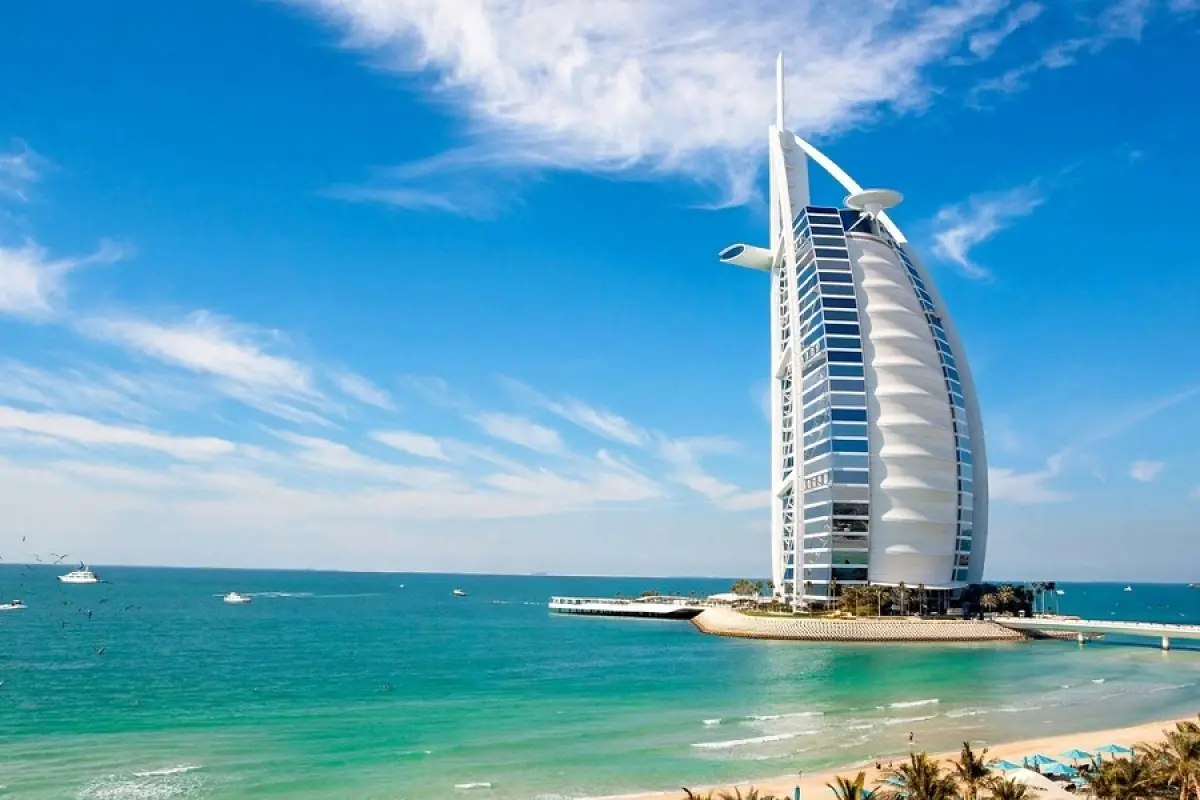
The sail shape has been on the Dubai skyline since December 1999. Drivers crossing the city on certain stretches of Sheikh Zayed Road still look for it instinctively, the way people look for a familiar face in a crowd. When the Burj Al Arab closed in April 2026 for the most significant interior work of its twenty-six-year life, the absence registered even for people who had never stayed there, never dined in its restaurants, never set foot on the man-made island it occupies. Some buildings become part of a city's self-image before most of the city's residents have experienced them directly. The Burj Al Arab is one of those buildings. Its temporary disappearance from the hospitality market is, in itself, a story worth following.
Dubai Landmarks Reopening 2026 Signal a City Reinvesting in Itself
Across a single summer, Dubai landmarks reopening 2026 has become one of the city's defining stories. The Burj Al Arab, Global Village, Museum of the Future, the Armani Hotel at Burj Khalifa, Barasti Beach, and the AURA Skypool are all currently closed or recently closed, each undergoing renovations or exhibition overhauls that will bring them back to their respective audiences in upgraded forms between late 2026 and early 2027. The simultaneity of so many major closures is not coincidence. It reflects a city that has chosen this particular window to address the maintenance and reinvention demands that two to three decades of sustained tourism growth have accumulated.
For visitors planning travel to Dubai in the coming months, the closures represent a practical planning consideration. For the city's hospitality sector, they represent something larger, a coordinated moment of renewal that will determine what Dubai's landmark experience looks and feels like for the next decade.
The Burj Al Arab and the Weight of a French Architect's Brief
The Burj Al Arab's closure is the most symbolically significant of the group. The hotel, which opened in December 1999 and quickly became shorthand for Dubai's ambitions, will have its interiors enhanced, preserved, and upgraded by French interior architect Tristan Auer, who is known for a refined approach to restoration that balances contemporary sensibility with respect for heritage, craftsmanship, and detail.
The brief Auer has been given is delicate in a way that purely new construction rarely is. The Burj Al Arab's interiors have carried their own visual identity since opening, an identity so closely associated with the hotel's global reputation that altering it carelessly would risk losing the very thing that makes a renovation worthwhile. The goal, as the closure announcement framed it, is to make the hotel shine brighter, not to make it into something different. Achieving that distinction is where the skill of Auer's practice will be tested. The hotel is scheduled to reopen in October 2027.
Global Village and the Return of a Dubai Institution
Global Village wrapped its 30th season on May 31 and is now closed for the summer, as it is every year. The attraction, which fills its vast grounds with pavilions, performances, food, and shopping across a season that runs from October to June, has become a fixture of Dubai life that residents and visitors plan around rather than discover by accident. Its 31st season is expected to begin in October 2026, with the most likely opening date being Wednesday October 14, following the pattern of mid-month Wednesday ceremonies that have characterized its recent season launches.
No formal reopening date has been announced, but the established rhythm of Global Village's seasonal calendar gives this particular closure a different quality from the renovation closures affecting other landmarks on the list. It will return in October because it always returns in October. The anticipation it generates is structural rather than contingent.
The Museum of the Future and 1,000 Ideas for What Comes Next
The Museum of the Future's closure carries a different kind of weight. The building itself, whose torus form and Arabic calligraphy facade have made it one of the most photographed structures in the city since its 2022 opening, is not being altered. What is changing is everything inside it. The museum's existing exhibitions made their final appearance on September 1, 2026, and the new works will be unveiled to coincide with the institution's fifth anniversary in the first quarter of 2027.
Museum leadership received more than 1,000 ideas and suggestions from around the world as part of the overhaul planning process, a consultative approach that positions the renovation as a renewal of the museum's relationship with its global audience rather than simply a programmatic refresh. The language used to describe the project, new experiences, new narratives, and a refreshed identity, suggests that what reopens in early 2027 will be different in character, not just in content, from what closed in September 2026.
The Armani Hotel's Comprehensive Refurbishment
The Armani Hotel Dubai, located inside the Burj Khalifa, closed in April 2026 for what its owners described as a comprehensive, full-scale refurbishment. Online bookings are unavailable until January 4, 2027, a timeline that places the anticipated reopening in the first weeks of the new year. The hotel's position inside the world's tallest building has always given it a locational distinction that no competitor can replicate. The refurbishment is designed to bring its physical environment up to a standard that matches the singularity of that address.
A hotel that occupies floors inside a building of the Burj Khalifa's profile operates under a different kind of scrutiny than most luxury properties face. Every aspect of the guest experience carries the implicit weight of the surrounding structure's global visibility. A renovation in that context is both an investment in the hotel's future and an acknowledgment that the standard required to justify the address is one that demands active maintenance rather than passive continuation.
Barasti Beach and Thirty Years of Dubai's Party History
Barasti Beach has been part of Dubai's social landscape for three decades, a tenure that makes it one of the city's most historically significant leisure venues regardless of what one thinks of the beach club format. After thirty years, the venue closed for a major revamp and is expected to return in 2027 with plush pools, decking, restaurants, and a community hub designed to serve adults and families alongside the events-focused crowd that has historically defined its identity.
The ambition behind the new Barasti, to serve a broader community rather than a single demographic, reflects a hospitality calculation that many Dubai venues are making simultaneously, one in which the post-pandemic shift toward family-inclusive leisure has reshaped what a successful beach club is expected to offer. Barasti's longevity gives its renovation project a context that newer venues cannot claim. It is not reinventing itself from a position of weakness but from one of established identity, a distinction that matters for how its return will be received.
AURA Skypool and the November Return
The AURA Skypool, which sits 200 metres above ground on the 50th floor of The Palm Tower and offers 360-degree panoramic views of Palm Jumeirah, closed in June for renovations and is expected to reopen in November ahead of Dubai's busy winter period. Bookings are listed as available from Tuesday November 24 on the official AURA Skypool website, a specific date that suggests the renovation timeline has been planned precisely around the seasonal demand curve that makes November one of the most commercially valuable months in Dubai's hospitality calendar.
The precision of that booking window is telling. A venue that knows it needs to be open by a specific date to capture a specific demand season is one that has planned its renovation accordingly, treating the commercial calendar as a constraint rather than an afterthought. That kind of operational discipline is part of what distinguishes Dubai's hospitality market from cities where landmark venues close and reopen on less predictable timelines.
What Six Simultaneous Closures Say About Dubai
A city willing to close its most famous landmarks simultaneously, accepting the short-term visitor disappointment that inevitably follows, is making a statement about its confidence in its own long-term appeal. Dubai's decision to take this window for renewal reflects a management of the city's hospitality assets that treats them as long-term investments rather than short-term revenue streams. The Burj Al Arab cannot be indefinitely deferred. The Museum of the Future's exhibitions have a natural expiry. Barasti's infrastructure accumulated three decades of use. The AURA Skypool's renovation is timed to a precise commercial reopening. Each closure follows its own logic. Together, they paint a picture of a city that is actively managing its identity rather than simply maintaining it.
For travelers arriving in Dubai between now and October 2026, some of the city's most anticipated experiences will not be available. For those arriving from late 2026 through early 2027, a version of Dubai that has invested significantly in renewing its most iconic offerings will be waiting. The sail on the horizon will return. The exhibitions will be new. The beach club will be different. The skypool will reopen before the winter crowds arrive. Dubai, in other words, is not pausing. It is preparing.
Related reading: Corbett Hideaway Uttarakhand: a retreat in the jungle