HAI Meets New Tourism Secretary For Industry Talks
HAI meets new Tourism Secretary Bhuvnesh Kumar to discuss infrastructure, ease of doing business and public-private tourism collaboration. Read more.
 nishathapa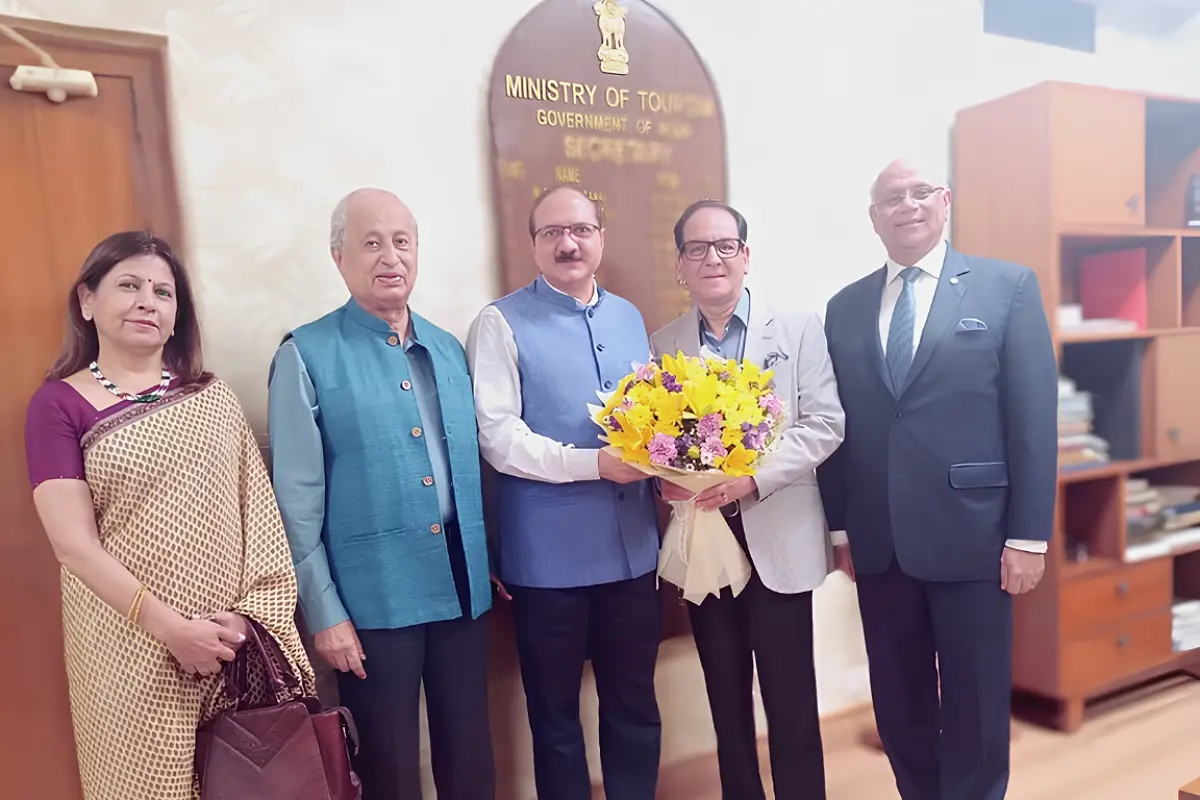
NEW DELHI, May 28, 2026: The Hotel Association of India (HAI) has held a meeting with Bhuvnesh Kumar, who recently assumed charge as Tourism Secretary at the Ministry of Tourism, Government of India. The discussions centred on accelerating tourism growth through stronger public-private coordination, improving the ease of doing business for hospitality operators, and advancing India's destination development and sustainable tourism agenda.
The timing of the meeting is deliberate. A new Tourism Secretary arriving at the ministry creates a window of opportunity that industry bodies use well when they move quickly, to establish the working relationship, put the sector's priority concerns on record early, and help frame the agenda before it is set entirely from within the government. HAI has used that window.
HAI Meets New Tourism Secretary Bhuvnesh Kumar on Public-Private Tourism Collaboration
The HAI delegation used the meeting to press several interconnected arguments about where the hospitality and tourism sector needs government engagement to do its best work. Infrastructure development came first, the road, rail, airport and last-mile connectivity improvements that determine whether a destination is commercially viable for hotels and accessible for travellers, regardless of how attractive the underlying destination may be.
Skill enhancement featured prominently in the conversation, reflecting a challenge that has been present in the sector for years and has not been fully resolved despite multiple government and industry-led initiatives. India's hospitality growth story depends on a pipeline of trained, service-ready hospitality professionals that the current skilling ecosystem is not producing at the scale or speed the sector needs. The association's push for this topic in a first meeting with a new secretary signals that workforce development is not a background issue for HAI, it is a front-of-agenda concern.
Destination Promotion, Sustainable Tourism and Ease of Business on the Table
Destination promotion formed a third pillar of the HAI discussion with Bhuvnesh Kumar, specifically the need for sustained, well-funded marketing of India's tourism offering both domestically and internationally, at a time when competing destinations in Southeast Asia, the Middle East and Central Asia are spending aggressively to capture the same high-value leisure and business travel segments that India is targeting.
The sustainable tourism dimension of the conversation is worth noting separately. HAI's inclusion of sustainability in a policy meeting, rather than treating it purely as an operational matter for individual hotels, reflects growing recognition within the industry that sustainability frameworks need government support to be implemented consistently across the sector. Certification standards, green building incentives, water and energy policy for hospitality developments and responsible tourism guidelines all require ministry-level engagement to move from aspiration to standard practice.
Ease of doing business for the hospitality sector has been a recurring theme in industry-government conversations for several years. Licensing complexity, compliance requirements across multiple departments, approvals for renovations and new construction, and inconsistencies in regulatory interpretation across state and local authorities create friction costs that fall disproportionately on smaller and mid-scale operators who cannot absorb them as easily as large chains. HAI's advocacy on this point with a new secretary carries the implicit request for a fresh look at where the friction is heaviest and where it can be reduced.
Bhuvnesh Kumar's Digital Governance Background Shapes Expectations
Bhuvnesh Kumar comes to the Tourism Secretary role with a background in digital governance and technology-driven public administration. That background has created specific expectations from the hospitality industry about where his priorities are likely to fall: digital tourism infrastructure, technology-enabled destination management, data-driven policy execution and modernisation of the ministry's interface with industry stakeholders.
For a sector that has been pushing for faster digital integration in areas like e-visa processing, tourism statistics collection, hotel classification systems and online grievance redressal, a Tourism Secretary with a technology orientation is potentially a significant advantage. Whether that orientation translates into the specific reforms the industry has been seeking will depend on how clearly those needs are communicated in meetings like the one HAI has now initiated and how consistently they are followed up.
Unlocking Tourism's Full Economic Potential Requires Sustained Coordination
The central argument HAI presented is one that the numbers support. Tourism and hospitality are among India's most significant employment-generating sectors, with strong multiplier effects through transport, retail, food production and allied industries. The sector's contribution to GDP and foreign exchange earnings is material, and its growth potential, given India's expanding middle class, rising aspirational domestic travel and improving international perceptions of India as a destination, is genuinely significant.
The gap between that potential and current performance is largely a policy and infrastructure problem rather than a demand problem. Demand for travel to and within India is growing. The constraints are in capacity, quality of infrastructure, ease of investment for hospitality developers, speed of approvals and the regulatory environment. Those are all areas where a newly appointed Tourism Secretary with a digital governance orientation and an early mandate from the industry can meaningfully move the needle, if the engagement HAI has now opened is sustained over the months ahead and not left as a courtesy call on a ministerial calendar.
The long-term growth strategies HAI highlighted in its discussions with the Ministry of Tourism are aligned with India's expanding domestic travel market, which crossed three billion domestic tourist visits in 2023 and has continued to grow since, and with the government's stated ambition to significantly increase India's share of global tourism arrivals over the current decade.