India Airport Hospitality: Maison Twenty-Seven Signals New Era
Maison Twenty-Seven at Ahmedabad Airport signals a new chapter for India airport hospitality. Read the full analysis here.
 nishathapa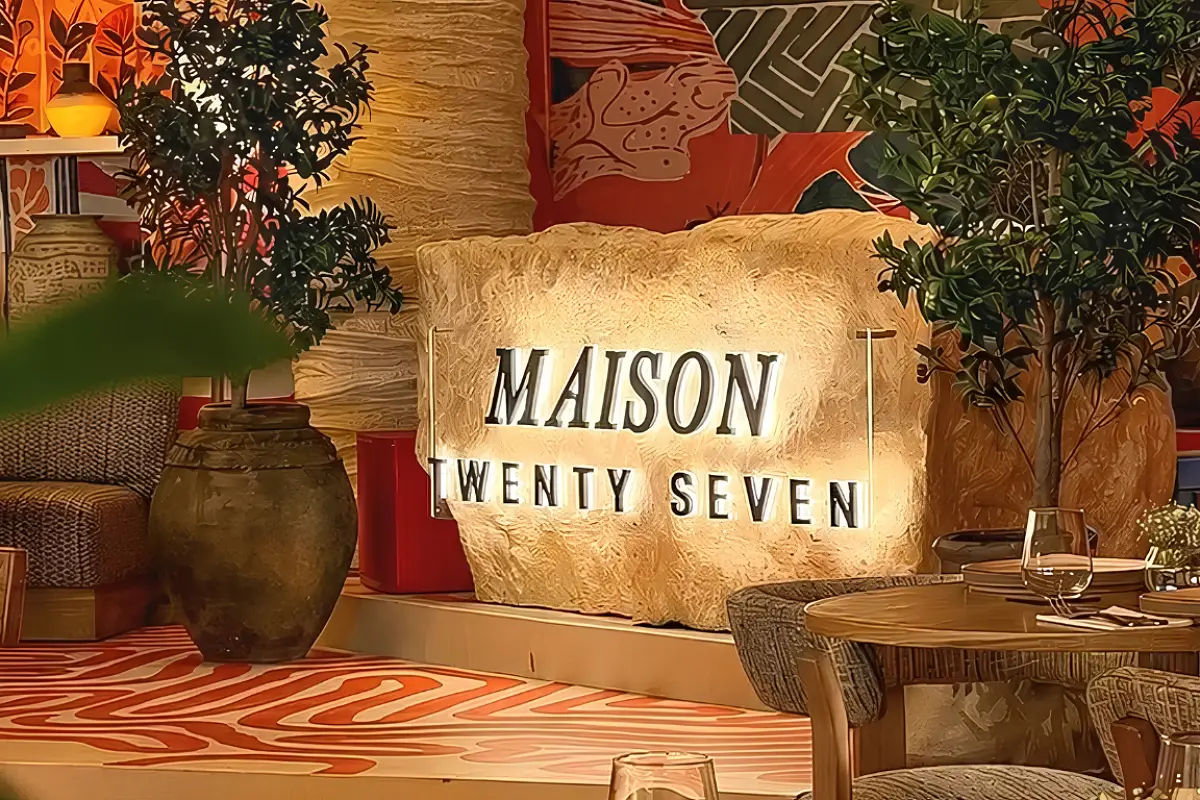
AHMEDABAD, May 29, 2026: For most of its history, the Indian airport experience has been a transaction. You arrive, you clear security, you find a seat and you wait. The food options are functional at best. The retail is overpriced. The lounges, where they exist, are reserved for a narrow tier of frequent flyers with the right credit card or airline status. And the moment your flight lands or departs, the airport's relationship with you is over.
Maison Twenty-Seven, the 52,000 sq ft lifestyle, dining and wellness destination that Adani Airport Holdings Limited and Bastian Hospitality have opened adjoining Terminal 2 at Sardar Vallabhbhai Patel International Airport in Ahmedabad, is a direct argument that this model is finished, and that the airport of the future is a destination in its own right, not a waiting room between two places you actually want to be.
Maison Twenty-Seven Is the Most Ambitious Statement Yet on What India Airport Hospitality Can Become
The concept is not built around the captive passenger who has no choice but to buy an overpriced sandwich because their gate is twenty minutes away. It is built around the GIFT City executive who chooses to come here for a business dinner. The Ahmedabad resident who books the spa on a Saturday afternoon with no flight to catch. The family that arrives three hours early because the dining options at Maison are genuinely better than anything within twenty minutes of the airport by road. And yes, the premium traveller who connects Pranaam's airport assistance services to the venue and transitions seamlessly from arrivals to a treatment room.
That last group, the passenger, is the audience airports have always designed for. The first three groups are the ones that change the economics of the model entirely.
Non-Aeronautical Revenue Is the Thesis, and Maison Twenty-Seven Is Its Most Complete Expression
Indian airports have been building their non-aeronautical revenue strategies for years, with varying levels of ambition. Duty-free retail, food courts, advertising and car parking have historically made up the bulk of non-aeronautical income. The more forward-looking operators have been adding premium lounges, branded retail concessions and hotel adjacencies. But all of those efforts share a structural limitation: they are still fundamentally designed for passengers, optimised for dwell time between security and boarding rather than for a guest who came specifically for the experience.
Maison Twenty-Seven breaks that constraint by being an open-access destination, a venue you can reach without a boarding pass and stay in without a departure time. The reservations and day-pass model gives access to anyone willing to pay for it, which means the airport's catchment area for Maison's revenue is not the daily passenger count at SVPIA. It is the population of Ahmedabad, Gandhinagar and the GIFT City corridor, collectively, a demand base an order of magnitude larger than any single terminal's traffic.
SVPIA handles 13.3 million passengers annually across nearly 280 daily flights and ranked number one in the Airport Council International passenger satisfaction survey for the second quarter of 2025. That is a strong base traffic number to build a lifestyle destination on top of. But it is the non-passenger audience that determines whether Maison Twenty-Seven compounds into something greater than an airport amenity.
The Facility Scope Signals This Is Not an Airport Lounge With a Larger Budget
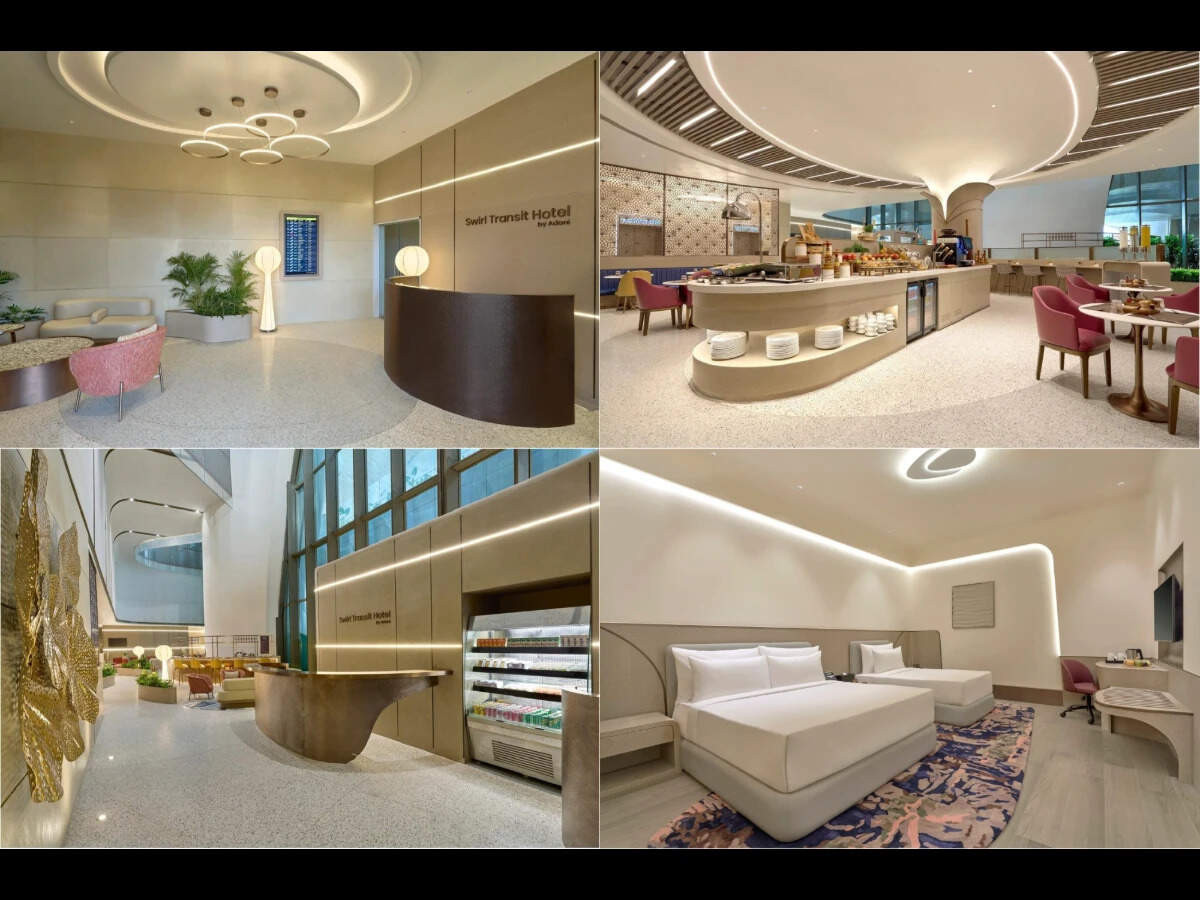
What Adani Airport Holdings and Bastian Hospitality have built at Maison Twenty-Seven does not fit any category that Indian airport hospitality has produced before. Dining formats that run from transit meals through to late-night service. Bastian Bakery as a standalone retail food offer. A Temptation Room for gifting and celebrations. Cryotherapy, hot and cold plunge pools, flotation therapy, sound healing studios, yoga, salon services and fitness spaces. A games arcade. Co-working areas. Indoor and outdoor seating for different occasions and different energies. Space allocated for regional artists and artisans from Gujarat. Integrated access through Pranaam for premium airport service users.
The scope is the point. An airport lounge upgraded with a better food menu is still a lounge. A 52,000 sq ft destination with wellness infrastructure that competes with dedicated urban spas, dining that competes with the city's best restaurants, retail that competes with specialty gift shops and co-working that competes with hotel business centres is a different kind of venue entirely. It happens to sit at an airport. That is its locational advantage, not its conceptual limit.
Arun Bansal's Framing Gets to the Heart of What AAHL Is Actually Building
Arun Bansal, CEO of Adani Airport Holdings, did not describe Maison Twenty-Seven as a hospitality amenity for travellers. He described it as a reimagining of what airports are.
"At Adani airports, we are reimagining airports as dynamic lifestyle and social ecosystems that extend far beyond travel. As Ahmedabad and GIFT City continue to emerge as globally significant growth hubs, we believe destinations like Maison Twenty-Seven will redefine the role airports play in shaping urban experiences."
— Arun Bansal, CEO, Adani Airport Holdings Limited
"Social ecosystems that extend far beyond travel" is the operating thesis. An airport that generates economic and social value for the surrounding city, not just for the passengers passing through it, is a different kind of infrastructure asset than the one India has been building for the past thirty years. It is also, not incidentally, a more commercially resilient one. Aeronautical revenue is tied to passenger volumes, which are tied to economic cycles, route decisions by airlines and events outside the airport's control. A lifestyle destination that attracts non-travelling customers creates a revenue stream that is partially insulated from all of those variables.
Bastian's Ten-Year Journey and What Ahmedabad Represents for the Brand
For Bastian Hospitality, founded by Ranjit Bindra and Shilpa Shetty, the Ahmedabad opening at this specific location marks a meaningful evolution. A decade of building experiential dining and lifestyle venues in Mumbai, Pune and Bengaluru has produced the operational capability to manage a 52,000 sq ft multi-format destination at scale. The decision to make that scale debut at an airport rather than on a high street or in a mall is the conceptually interesting choice, and it reflects Bastian's read that the airport-integrated lifestyle format is where the most defensible long-term opportunity sits.
An airport lifestyle destination with the right operator and the right institutional partner, in this case AAHL, which brings the infrastructure, the passenger access, the Pranaam connectivity and the institutional credibility of operating some of India's busiest airports, has structural advantages that a standalone restaurant or wellness centre on a city high street does not. The location is permanent. The traffic is built in. The premium traveller audience is self-selecting. And the barrier to replication by a competitor is the one thing money alone cannot build overnight: an airport concession.
The Global Precedent and Why India Is Ready for It Now
Airport-integrated lifestyle destinations have existed in mature aviation markets for years. Singapore's Changi Airport has been building destination retail, dining and entertainment experiences for two decades. Amsterdam Schiphol, Dubai International and Hong Kong International all generate substantial non-aeronautical revenue from lifestyle infrastructure that serves both passengers and non-passengers. What those airports understood early, and what Maison Twenty-Seven suggests Adani Airports now understands clearly, is that an airport in a major city is one of the most valuable pieces of urban real estate that exists, and that its value compounds when you build for the city rather than just for the terminal.
India is ready for this model now in a way it was not ten years ago. The middle class is larger, more travelled, more sophisticated in its consumption preferences and more willing to pay for genuinely good experiences than at any previous point in India's economic history. GIFT City's emergence as an international financial hub has created a high-density, high-income professional community within minutes of SVPIA. And Ahmedabad itself has been on a trajectory of commercial and cultural development that makes it one of India's most interesting second-tier hospitality markets. The timing, the location and the product have converged at the right moment. Whether Maison Twenty-Seven becomes the template for what comes next at other Adani airports, and at airports managed by other operators watching this closely, is now the question the whole industry is waiting to see answered.