AI Grill Automation Is Here — What Aniai's Alpha Grill Does in Real Kitchens
Aniai's Alpha Grill uses AI-powered automation to bring consistency and throughput to high-volume grill stations. Here's how it works in real kitchens. Read on.
 Prajakta Sanjay Warwadkar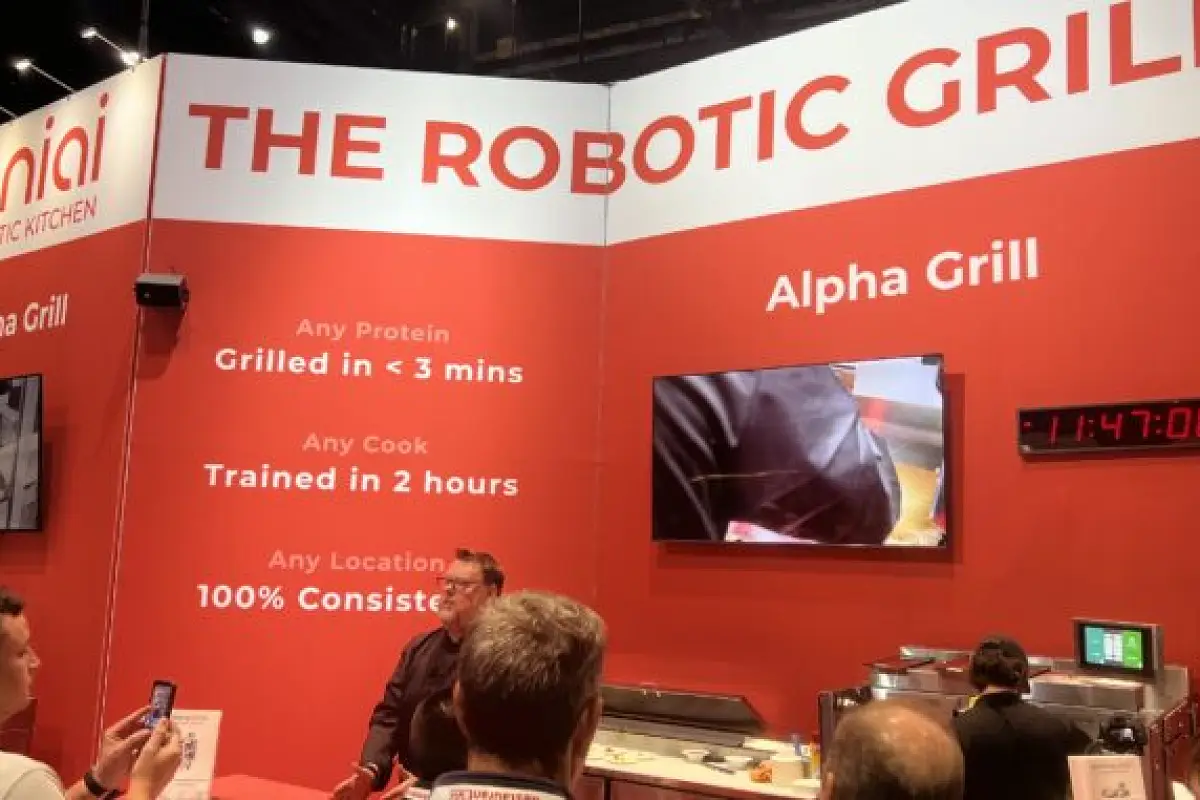
The grill station is one of the hardest spots in any quick-service kitchen to get right. During a lunch rush, it demands speed, precision, and consistency all at the same time, from whoever happens to be working it that day. Anyone who has run a busy kitchen knows how rarely those three things land together perfectly.
That's the problem Aniai is trying to solve. The New York-based kitchen technology company made a significant splash at the 2026 National Restaurant Association Show with its AI-powered cooking platform, and the conversations at their booth went well beyond the usual trade-show buzz. This wasn't about a robot replacing your kitchen team. It was about giving that team a grill station that performs the same way every single service.
Here's a close look at what Aniai's technology actually does, what's new in 2026, and why restaurant operators are paying attention.
The Grill Station Problem Nobody Has Solved Until Now
Every QSR and fast-casual operator has lived this: you train someone on the grill, they get good at it, and then they leave. The next person starts from scratch. Cook times vary. Doneness levels vary. Throughput drops on the days when your most experienced person isn't in.
Consistency on the grill has historically depended on who's standing in front of it. That's a fragile system when you're running 200-cover lunch shifts or managing multiple locations. The variability isn't anyone's fault it's just the nature of a high-repetition, high-pressure station staffed by people who turn over at the industry's well-documented rates.
This is the exact gap Aniai has built its product around. Rather than trying to automate an entire kitchen, the company focused on one station where the operational pain is most acute and most measurable.
What the Alpha Grill Actually Does
Aniai's flagship product is the Alpha Grill, a clamshell cooking system that automates the loading, cooking, and discharge of grilled menu items. The platform can turn out more than 200 burgers per hour while automatically moving finished product to a holding area and running cleaning cycles between batches.
But calling it a burger robot undersells what it actually is. At the NRA Show, Aniai demonstrated the Alpha Grill cooking burgers, chicken, steak, eggs, and French toast reinforcing that this is a flexible cooking platform built for a grill station's full range of output, not a single-purpose machine.
The equipment uses a double-sided cooking configuration that applies heat from both platens simultaneously, which is what makes the throughput numbers possible without compromising cook quality. It's a straightforward mechanical concept executed at a level of precision that's hard to replicate manually during a rush.
The New Single Platen Model Changes Who This Is For
One of the more practical announcements at the NRA Show was the expansion of the Alpha Grill into a single-platen version, alongside the existing double-platen model. On the surface that sounds like a minor product line update but it actually opens the door to a much wider set of operators.
The double-platen Alpha Grill is built for high-volume environments. The single-platen model is designed for operators who face the same consistency and labor challenges but work in smaller physical spaces convenience stores, university dining halls, hospital cafeterias, hotel food and beverage operations, and smaller QSR locations.
These environments have been dealing with the same grill-station headaches as large chains for years, but most automation platforms weren't scaled for them. The single-platen model addresses that directly, which is a smart piece of product strategy.
Alpha Cloud: Where the Real Long-Term Value Sits
The hardware is only part of the story. The software layer Alpha Cloud may be where Aniai's most interesting long-term value proposition lives.
Alpha Cloud uses cameras, sensors, and computer vision to monitor grill performance in real time. It evaluates cooking characteristics, tracks quality metrics, and gives operators visibility into what's happening at the grill station across every location in their portfolio from a single dashboard.
Think about what that means for a multi-unit operator. Right now, knowing whether your grill station in location twelve is performing consistently requires either a manager watching it directly or waiting for customer complaints. Alpha Cloud turns grill-station performance into a data stream that can be monitored, measured, and acted on remotely.
This reflects a broader shift happening across the industry. Restaurant kitchens are becoming connected, data-generating environments. POS systems, inventory platforms, and digital ordering tools have been generating operational data for years. The cooking equipment itself is catching up.
Real Deployments, Not Just Demo Units
One of the more compelling facts Aniai shared at the show: Alpha Grill systems have now cooked more than 3 million food items across more than 50 installations worldwide. That's not a pilot program anymore that's a platform in active production use.
In the U.S., deployments at The SSam and The Filling Station in New York have given the technology real-world testing under live service conditions. Trade-show demos are useful for understanding what a product can do. Restaurant deployments show whether it actually holds up when it matters.
The company has also secured approximately $19 million in total funding, including a recent round from Korea Development Bank, which is being directed toward product development, expanded deployments, and continued North American growth.
What Restaurant Operators Should Actually Take From This
The way Aniai positioned itself at the NRA Show is worth noting. Representatives consistently framed the Alpha Grill as a tool for supporting kitchen teams not replacing them. The pitch was about reducing variability, easing training burdens, and maintaining throughput during peak hours, not about eliminating headcount.
That framing matters because it reflects how most experienced operators think about automation right now. The question isn't "can I replace staff with a robot?" It's "can I make this station perform consistently regardless of who's working it today?"
If you're evaluating kitchen automation, the narrower the scope of what a platform promises to fix, the more seriously you should take it. Aniai isn't selling a vision of a fully autonomous kitchen. They're saying: your grill station has a consistency problem, here's how we solve it. That kind of specificity is usually a good sign.
The restaurant automation space has seen a lot of high-concept products that struggled when they met actual kitchen operations. What makes Aniai worth watching is the combination of a defined problem, a focused solution, a growing real-world deployment base, and a software layer that turns equipment performance into actionable data.
The grill station isn't glamorous. But it's where consistency is made or broken in a QSR kitchen, and that's exactly why it's worth solving well. If you want to dig into the full Alpha Grill platform, the Aniai website has detailed specs on both models.
Are you evaluating kitchen automation for your operation? What's the biggest pain point driving that conversation? Drop it in the comments we'd love to hear what's actually happening on the ground.
Sources: Hospitalitycareerprofile.com
Read more: Restaurant Technology Trends Reshape Hospitality in 2026