Kasama’s Dual-Concept Model Drives Rise as Chicago’s Most Recognized Restaurant
Kasama in Chicago has emerged as a leading restaurant by combining a daytime bakery and brunch service with a Michelin-starred tasting menu concept.
 Prajakta Sanjay Warwadkar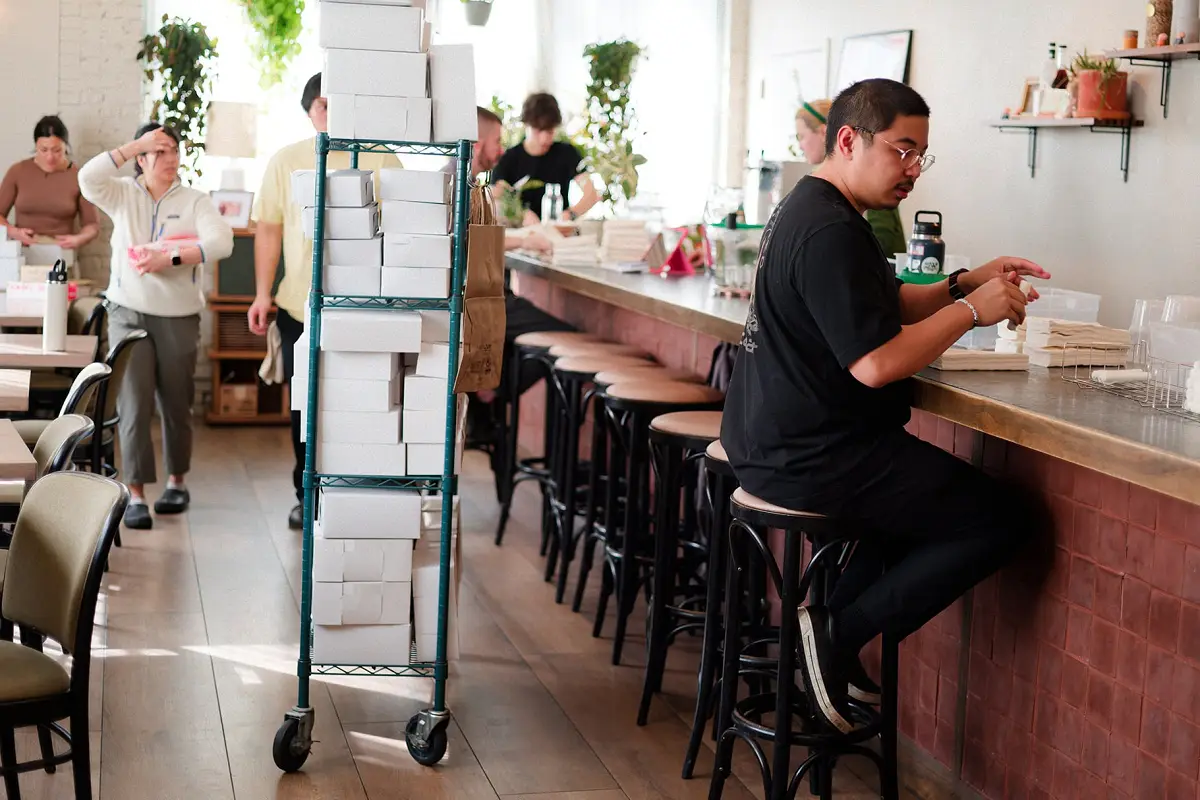
Kasama has emerged as one of the most recognized restaurants in Chicago over the past decade by operating a dual-format model that combines high-volume daytime service with a Michelin-starred tasting menu. The Filipino restaurant, led by chefs Genie Kwon and Tim Flores, runs both concepts from a single kitchen, transitioning between formats daily.
The restaurant operates as a counter-service bakery and brunch outlet during the day, before converting into a fine dining venue offering a 13-course tasting menu in the evening. This operational shift takes place within approximately two and a half hours, requiring a full reset of the kitchen, dining space, and service structure between services.
Dual-Concept Format Drives Operational Efficiency
Kasama’s model is built on maximizing space and resource utilization. The same kitchen infrastructure supports both high-volume breakfast production and precision-driven dinner service. During daytime operations, the restaurant serves hundreds of customers, producing items such as breakfast sandwiches, pastries, rice dishes, and coffee.
By evening, the space transitions into a controlled fine dining environment with limited seating and a structured tasting menu format. Tables are rearranged, lighting is adjusted, and the menu shifts entirely toward plated courses featuring seafood, meats, and curated ingredients.
This dual approach allows the restaurant to cater to two distinct customer segments, casual diners seeking accessible meals and high-end customers pursuing premium tasting experiences, within the same physical footprint.
Recognition and Industry Impact
Kasama has received multiple industry accolades, including a Michelin star, making it the first Filipino restaurant to achieve this recognition. It later advanced to become one of only four Chicago restaurants holding two Michelin stars.
Additional recognition includes a James Beard Award and listings in national restaurant rankings such as Food & Wine’s best restaurants and Eater’s All-Time 38. The restaurant has also gained mainstream visibility through media appearances, including features connected to the television series “The Bear.”
The sustained recognition has positioned Kasama as a destination restaurant, attracting both local diners and international visitors. Morning queues often extend beyond the restaurant, reflecting demand for its bakery and breakfast offerings.
Menu Strategy and Product Integration
The restaurant’s menu strategy integrates fine dining techniques with Filipino culinary traditions. Evening tasting menus reinterpret classic dishes such as adobo, pancit, and sinigang using contemporary methods and presentation styles.
During daytime service, the offering focuses on efficiency and accessibility. The breakfast menu includes items such as longanisa sandwiches, which are designed for quick preparation and portability. The pastry program features both standard baked goods and innovative items incorporating global flavors.
One operational advantage of the dual model is ingredient optimization. Components prepared for fine dining, including trimmed portions of premium ingredients, are repurposed into daytime dishes. This reduces waste while maintaining cost efficiency across both service formats.
Labor Structure and Workflow Management
The restaurant employs approximately 60 staff members, divided between morning and evening teams. Each team operates independently but within a coordinated workflow that allows for rapid transition between services.
The shift from daytime to evening operations involves extensive cleaning, reorganization, and preparation. Kitchen staff replace high-volume cooking setups with precision-oriented stations, while front-of-house teams reset the dining environment for a fine dining experience.
Management has expanded over time, with multiple supervisors overseeing operations to maintain consistency across both service formats. The structure supports high throughput during the day and controlled execution at night.
Growth Context and Business Model Evolution
Kasama’s current format developed in response to operational challenges during the COVID-19 pandemic. Initially conceived as a casual restaurant with a bakery component, the business introduced a tasting menu in 2021 to increase revenue per customer during a period of capacity restrictions.
The addition of the fine dining component created a hybrid model that has since become central to the restaurant’s identity. The format allows the business to generate revenue across multiple dayparts while maintaining brand differentiation.
The approach reflects a broader trend in the restaurant industry, where operators are diversifying concepts within a single location to improve financial sustainability. By combining high-volume daytime sales with premium evening experiences, Kasama has established a model that balances accessibility with exclusivity.
As of 2026, the restaurant continues to operate from its original location, maintaining its dual-service format and focusing on operational consistency. Its ability to execute two distinct concepts within a single space has contributed to its recognition as a leading example of innovation in the U.S. restaurant sector.