Kiez Kebab Opens in West London With Bespoke Steel Communal Table Design
Kiez Kebab restaurant on Golborne Road London opens with a bespoke steel communal table and Berlin-inspired design by Annabel Colterjohn and Red Deer. Read more.
 Prajakta Sanjay Warwadkar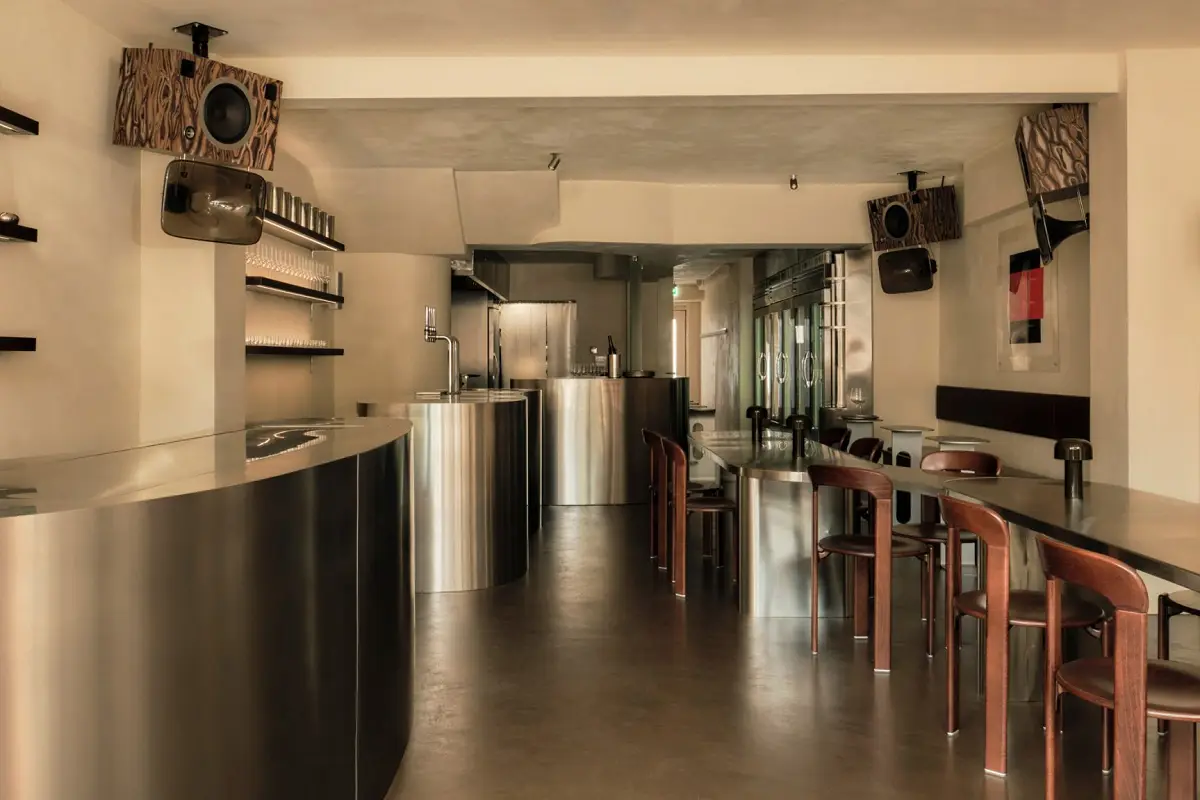
LONDON, June 8, 2026 — Kiez Kebab, a new no-reservation restaurant on Golborne Road in west London, has opened with a bespoke stainless steel communal table at the centre of its dining room a design piece described by its creators as an "archipelago of steel" bringing a Berlin-inspired approach to kebab dining to Notting Hill.
The 30-cover space was designed by Annabel Colterjohn, one of four founding partners behind the restaurant, working in collaboration with London architecture office Red Deer. The project occupies the former site of a Turkish restaurant on Golborne Road and sets out to reposition the kebab as a considered culinary concept rather than a late-night convenience.
Kiez Kebab Restaurant Design Centers on a Bespoke Steel Communal Table
The communal table forms the focal point of the long, narrow interior. Organically shaped and fabricated from stainless steel, it is accompanied by similarly curved bar counters designed and built to challenge conventional perceptions of steel as a purely functional, kitchen-bound material.
Colterjohn explained the intention behind the choice of material. "We took stainless steel a material which might present as cold and unyielding and adapted it to be fluid in form while reflecting warm, golden lighting," she said. The table can be disassembled when the space requires reconfiguration, giving the venue operational flexibility alongside its design ambition.
Red Deer developed the layout to optimise the long, narrow footprint and ensure natural movement for both guests and staff throughout service. The architects also contributed to the development of the bespoke elements, including the communal table and bar counters, as well as a counter that doubles as a DJ booth with a removable panel allowing integrated decks to rise from within the unit, transforming the dining room into a listening bar.
Berlin's Neighbourhood Culture Shapes the Kiez Kebab Concept and Identity
The restaurant takes its name from the German word for neighbourhood, and the concept draws directly from Berlin's casual, community-oriented food culture. Kiez is designed to function as a local gathering point a place to begin an evening rather than end it.
"We love the idea of the foodie friend bringing a sceptical newcomer along to our kebab shop, where they'll immediately realise they're in for much more than just a quick bite of street food," Colterjohn told Dezeen. "We set out to create a space where people want to start the night and stay a while, not just end it with us."
The design brief extended that Berlin sensibility throughout. "We wanted to import the casual, convivial feel of Berlin, with its straight-talking yet surprisingly warm sensibility," Colterjohn added. "For us, the core of that is the 'kiez'. That's the feel we wanted to bring to our Notting Hill community through design a bit cool on the surface, most friendly once in."
Industrial Material Palette References Berlin's Brutalist Postwar Architecture
Beyond the steel communal table, the interior uses microcement, plaster, aluminium and walnut wood in their raw, unfinished states. The selection is intentional the material palette mirrors the brutalist architecture of postwar Berlin while also reflecting the restaurant's commitment to using classic, unprocessed ingredients in the kitchen.
Bar stools, cocktail tables and custom lighting fixtures throughout the space were fabricated by Alan Mueller of Berlin-based metalworking studio Tebton, adapted from his own original designs. A built-in tap system for cocktails, supplied by east London bar consultancy Bar with Shapes for a Name, is integrated into a multi-functional counter. Storage runs throughout the bench seating, keeping the floor plan clean without sacrificing capacity.
Playful details balance the industrial seriousness of the material choices. Mirrored walls in the bathrooms and photographs of former German Chancellor Angela Merkel eating kebabs add personality and signal that the restaurant does not take itself too seriously — a deliberate design decision consistent with the venue's broader tone.
Custom Sound System and Kebab Hatch Extend the Restaurant's Dual Function
In a nod to Berlin's music culture, the space features a high-end sound system custom-built by London soundsystem studio Friendly Pressure. The metal counter that houses the DJ booth integrates the decks invisibly when not in use, allowing the space to operate as a conventional dining room during service and convert for listening events when needed.
The bespoke facade includes a hatch on one side of the entrance, allowing guests to collect a kebab and cocktail without entering the dining room. An extended window shelf on the opposite side adds seating that can be used both inside and on the pavement outside. The result is a venue designed to accommodate quick stops and extended evenings within the same physical footprint.
Elevated Fast Food Concept Positions Kiez Kebab Within a Growing London Design Trend
Kiez Kebab is part of a broader movement in London and internationally toward fast food formats that apply the design attention previously reserved for fine dining. The concept deliberately combines what Colterjohn describes as the "high" execution of its interiors and food quality with the casual, low-key register of a neighbourhood kebab shop.
"There's a youthful, contemporary quality to Kiez, plus a casual, function-forward sensibility," Colterjohn said. "I was driven by the idea of subverting expectations and playing on a sense of oxymoron. We're combining 'high' and 'low' in terms of the concept versus its execution and atmosphere."
For context on how international street food traditions like the kebab have evolved into a global culinary force, Hospitaly Career Profile provides useful background on the dish's diverse regional roots.
Read more: Restaurant Technology Trends Reshape Hospitality in 2026