Why Are Restaurants Closing in Salt Lake City? An Owner Explains
Why are restaurants closing in Salt Lake City? Xiao Bao Bao's owner points to rising costs, parking fees, and a pendulum swinging back toward chains.
 RUKAIYA KADIWAL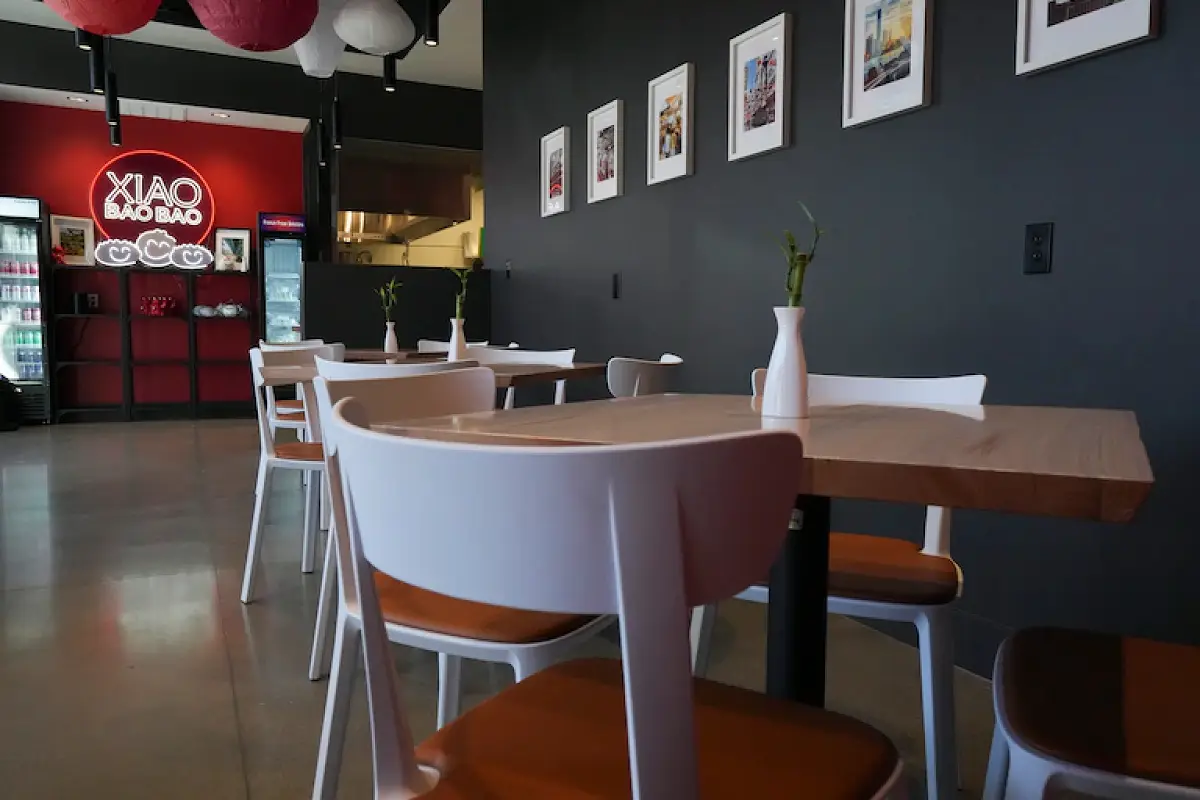
Pastry chef Romina Rasmussen says she will never know the full scope of why her bao shop had to close. Xiao Bao Bao's sales plateaued last summer and never improved, she said, even as labor costs and food costs kept rising at the same time. The rest, she admits, is speculation.
Maybe customers were too unfamiliar with the Chinese steamed buns, a food Rasmussen came to love while living in Asia during most of her twenties. Maybe they simply did not know what time of day to eat them. "Maybe bao just wasn't it," Rasmussen said, a line that captures how much uncertainty even an experienced restaurateur carries after a closure.
A Wave of Closures Raises the Question of Why Restaurants Are Closing
Rasmussen was not alone in shuttering her shop in June. Vegan coffee shop Mark of the Beastro announced that month that its months long closure would become permanent. Yoko Ramen closed, along with Sugar House bar Craft by Proper and downtown Italian restaurant Cucina Toscana.
The most striking closure came from Market Street Grill and Oyster Bar, whose downtown location shut down after almost fifty years in business. In a news release, the restaurant pointed to reduced office occupancy, changing consumer patterns, and lower foot traffic as headwinds that made the location impossible to operate sustainably.
What the Utah Restaurant Association Says About These Closures
The Utah Restaurant Association acknowledged that every closure has its own story, but pointed to shared pressures across the industry, including labor shortages, changing consumer habits driven by inflation, rising operating costs, and shifting dynamics within the capital city itself. For downtown restaurants specifically, the association noted that construction, transportation changes, and reduced parking have added another layer of difficulty.
These structural pressures help explain why restaurants are closing in Salt Lake City even when individual owners cannot pinpoint a single cause. The pattern suggests a citywide shift rather than isolated business failures tied only to one restaurant's choices or menu.
The Real Cost Behind a Four Dollar Bao
Labor expenses hit Xiao Bao Bao especially hard. Rasmussen paid her workers eighteen dollars an hour at the tip free shop, and those costs doubled once she opened a second location in the Milk Block development. Customers were sometimes horrified to hear a bao cost four to four dollars and fifty cents, Rasmussen said, without understanding what that price actually covered.
"That's not just paying for the bao, it's paying for the rent and the person making it and the person giving it to you, and there's no tip line anywhere on our tablet," Rasmussen said. Her explanation reframes a seemingly high menu price as a transparent reflection of true operating costs, a distinction that matters as customers grow more price sensitive across the restaurant industry.
How Parking and Foot Traffic Shape Small Business Survival
Rasmussen also owns Chez Nibs, a chocolate shop and bakery two doors down from the now closed Xiao Bao Bao, and she has watched parking costs directly affect customer behavior. Salt Lake City's parking meters require a minimum card payment of three dollars and fifty cents for one hour, meaning a quick stop for a six dollar and fifty cent kouign amann effectively costs ten dollars total.
"That's a big chunk of money just to run into a store," Rasmussen said. The end of free two hour Saturday parking has compounded the problem, and Rasmussen said Saturdays used to be significantly busier before that policy changed. The corner where her businesses sit, across from the Main Library and the closed Leonardo museum, has seen less foot traffic overall since she first opened Les Madeleines there in 2007.
A Pendulum Swinging Back Toward Chains
Restaurateur Matteo Sogne, who owns Matteo and Strada, predicted in March that the local restaurant industry was headed for what he called a good shake in the tree, where only the strongest businesses would survive. Three months later, he said that shake has begun and is not yet finished, adding that more turnover is likely across the industry in the coming year.
Rasmussen shares that concern through her own lens. When she returned to Salt Lake City in 2003 after being away for fifteen years, she described the scene as chain restaurant central, with few independent options nearby. Independent restaurants gradually took hold in the years that followed, but Rasmussen now sees that pendulum swinging back toward chains once again, a shift she hopes local support for independent businesses might still reverse.
Echoes of a Past Recession
Rasmussen said the current climate, marked by high food costs and customers spending more cautiously, reminds her of 2007 leading into the 2008 recession, a period she experienced firsthand while running Les Madeleines. That earlier bakery eventually became Xiao Bao Bao before Rasmussen closed the original concept in 2022 due to health problems, giving her a rare, extended vantage point on how downtown Salt Lake City's restaurant economy has shifted across nearly two decades.
That long view carries weight beyond nostalgia. It offers a rare comparison between two distinct downturns in the same neighborhood, separated by more than a decade but showing surprisingly similar warning signs to someone who lived through both.
What Comes Next for Rasmussen and Her Remaining Shop
With Xiao Bao Bao closed, Rasmussen has turned her full attention to Chez Nibs, which she acknowledges is also struggling for some of the same reasons. In April, she introduced a decadent soft serve ice cream in an effort to draw in more customers, a small pivot she hopes will help sustain the business through the same headwinds that closed her other shop.
She also plans to keep making the egg tarts she once sold at Xiao Bao Bao, moving them to Chez Nibs rather than letting the recipe disappear along with the restaurant that introduced them. Despite everything, Rasmussen remains clear eyed about the experience. "I'll always be glad that I did it, even if it didn't quite turn out to be the way that I wanted it to," she said. "I am proud of what we did."
What These Closures Reveal Beyond Salt Lake City
The forces behind why restaurants are closing in Salt Lake City, rising labor and food costs, shifting downtown foot traffic, and mounting competition from chains, are not unique to Utah. Independent restaurants nationwide face similar pressure points, even as the small, specific details that keep customers loyal, like a signature dish or a well loved ingredient, continue to matter enormously to the people who notice them.
Coverage of small culinary details making a lasting difference, such as the restaurant secret behind restaurant quality sauces, shows how much craft and care goes into dishes that customers may never fully register as exceptional. That same quiet dedication defined Rasmussen's approach to her bao, built from heritage breed pork and organic chicken, even as the broader economics around her business proved impossible to sustain.
What Remains After a Restaurant Closes
A closed restaurant leaves behind more than an empty storefront. It leaves a gap in a neighborhood's routine, a missing stop on a familiar block, and a set of recipes that either disappear entirely or, as with Rasmussen's egg tarts, find a way to survive somewhere else. Understanding why restaurants are closing in Salt Lake City requires looking past any single business's choices toward the broader economic pressures reshaping the city's downtown corridor.
What Rasmussen's experience makes clear is that pride and loss can coexist in the same sentence. A restaurant can fail by every financial measure and still represent something its owner would choose to do again, a distinction easy to overlook in a headline about closures but impossible to miss in conversation with the person who lived it.
Learn more at The Salt Lake Tribune's official website.