Complete Espresso Basics: Complete Training Guide with SOP & Professional Standards
Learn complete espresso basics training with SOP, extraction process, service sequence, and guest handling techniques for hotel and restaurant coffee service.
 Jyoti Kushwaha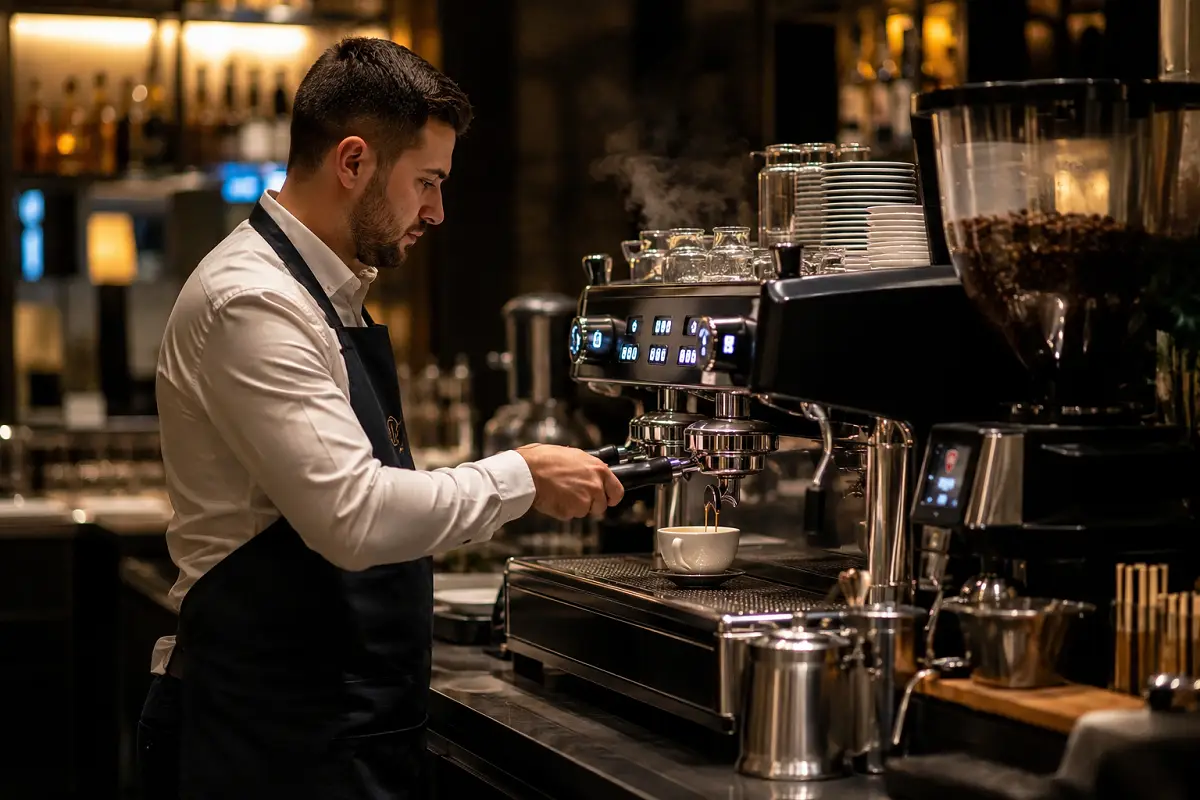
The chatter at the coffee station is always the same during rush shots running too fast, drinks backing up, and the table waiting. Espresso either keeps service tight or breaks the flow. No in-between.
Overview of Espresso Basics in F&B Operations
Espresso is the backbone of your coffee game. Every cappuccino, latte, americano starts here. If the shot is off, the whole drink is off. In service, guests won’t explain extraction problems. They’ll just say “this tastes bad.” That’s on the shot, too bitter, too weak, wrong balance.
Control is everything. Grind size, dose, water temp, extraction time. Miss one, and consistency drops. And speed matters. During peak, you don’t have time to fix mistakes. You get it right the first time or you slow the whole section. Master the basics, and everything else gets easier better drinks, less waste, smoother service.
SOP Procedure for Espresso Preparation
This is your foundation. Espresso basics training, Follow it tight.
1. Pre-Operation Setup
Machine clean. Grinder set. Tools ready. Cups warmed.
Pro-tip: Cold cups kill espresso before it hits the table.
2. Grinding Coffee
Grind fresh. Fine texture. Adjust grind based on flow not guesswork.
3. Dosing and Tamping
18–20g for a double shot. Even distribution. Firm tamp. No tilt. No cracks. Clean surface.
4. Extraction Process Lock in.
Start immediately. Target 25–30 seconds. Too fast = weak. Too slow = bitter.
5. Visual Quality
Check Watch the flow. Smooth stream. Golden crema on top. If it looks wrong, it is wrong.
6. Serve Immediately
Don’t let it sit. Espresso dies fast.
7. Clean Equipment
Knock out puck. Clean portafilter. Flush group head. Every shot. No exceptions.
8. Maintain Hygiene
Keep the station tight. Clean, dry, organized.
Operational Steps and Espresso Service Sequence
Speed and control, both matter here.
Step-by-Step Service Sequence:
- Greet guest and offer coffee options
- Suggest espresso or espresso-based drinks
- Take order and repeat clearly
- Enter into POS fast
- Start prep immediately
- Watch extraction time and flow
- Serve in pre-heated cup
- Place with saucer and spoon
- Offer sugar or extras
- Check back within 2–3 minutes Service
- Timing Benchmarks:
- Order taking: within 2 minutes
- Grinding & dosing: 30–45 seconds
- Extraction: 25–30 seconds
- Service: within 1 minute after extraction
- Check-back: within 2–3 minutes
- Operational Controls:
- Keep grind and dose consistent
- Don’t let tickets stack up
- Double-check before serving
- Watch machine pressure and output
- Smooth espresso = smooth service.
Guest Interaction and Coffee Service Techniques
This is where you show confidence.
Service Interaction Standards:
- Eye contact. Stay present
- Explain simply if asked
- Speak clearly, no hesitation
- Stand clean and sharp
- Upselling Techniques:
- Suggest double shots for stronger preference
- Push cappuccino, latte when it fits
- Add cookies or dessert pairings
- Pro-tip: Don’t oversell. Read the table.
- Handling Special Requests:
- Adjust strength by shot size
- Offer decaf when needed
- Get the customization right the first time
- Handling Complaints:
- Replace immediately no debate
- Apologize once, fix fast
- Inform supervisor if needed Fixing fast saves the table.
Tools and Equipment for Espresso Service
Your tools decide your consistency.
Primary Equipment:
• Espresso machine
• Coffee grinder
• Portafilter and baskets
• Tamper
Support Equipment:
• Knock box
• Milk frother
• Thermometer
• Cups, saucers, spoons
Usage Guidelines:
• Keep everything clean and calibrated
• Use fresh beans always
• Water temp: 90–96°C
• Monitor pressure for stable shots
Dirty machine = bad coffee. Simple.
Service Standards and Performance Metrics
This is what you’re judged on.
Key Performance Metrics:
• Extraction time: 25–30 seconds
• Consistency: 100%
• Order accuracy: 100%
• Service timing: within SOP
• Guest satisfaction: high, no complaints Miss one, and it shows immediately.
Evaluation and Continuous Improvement
You improve during service, not after.
Evaluation Methods:
• Supervisor watches the station
• Taste every now and then don’t assume
• Check calibration regularly
• Read guest feedback
• Review staff performance
Common issues:
• Wrong grind size
• Inconsistent extraction
• Slow response during rush Fix with practice, calibration, and discipline.
Espresso is pressure literally and operationally. Stay sharp, control your variables, and move fast. When your shots are right, the whole service feels tighter.
Read more about tea and coffee training.