Professional Knife Skills Training: Complete Training Guide with SOP & Professional Standards
Learn professional knife skills training with cutting techniques, kitchen SOP, safety practices, and food preparation standards for hotel and restaurant kitchens.
 Jyoti Kushwaha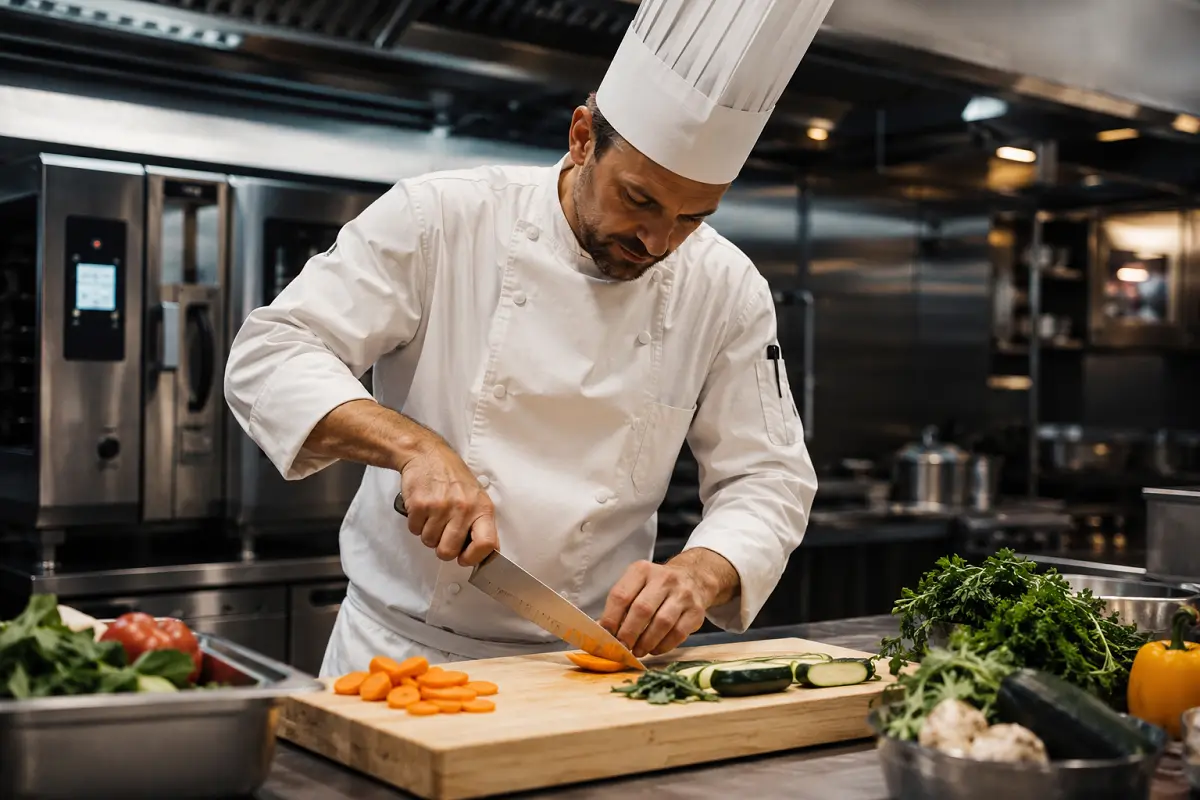
Talk in the prep area always circles back to one thing: bad knife work slows the whole kitchen. Fix your cuts, and everything downstream gets faster. This professional knife skills training module is designed for kitchen staff in hotel and restaurant operations. It focuses on correct cutting techniques, safe knife handling, and structured preparation SOP. Knife skills drive prep speed, food quality, presentation, and overall kitchen flow.
Overview of Professional Knife Skills in Kitchen Operations
Every dish starts on the board. If the cuts are off, the dish is already compromised. Knife skills are not just about cutting. They are about speed, precision, and safety under pressure. Clean cuts mean even cooking. And even cooking means consistent plates. Poor knife work creates service friction. Uneven sizes cook unevenly. Slow prep delays the fire-order. And sloppy handling leads to injuries. Staff must know their knives, their purpose, and how to use each cut properly. This is how you move fast without losing control. Strong knife skills keep prep tight and support smooth coordination across the kitchen.
SOP Procedure for Professional Knife Skills Training
This SOP keeps prep safe, clean, and consistent.
1. Pre-Preparation Setup
Come in ready. Clean uniform, clean hands, clean station. No clutter, no excuses.
2. Knife Selection
Pick the right knife for the job. Chef’s knife, paring, bread. And keep it sharp. A dull knife is a dangerous knife. Pro tip: Sharp knives cut clean. Dull knives slip.
3. Cutting Board Setup
Lock your board in place. Damp cloth underneath. No movement while you work.
4. Ingredient Preparation
Wash everything. Trim properly. No dirt, no waste.
5. Cutting Execution
Use the correct cut for the dish. Keep size and shape consistent. This is non-negotiable.
6. Safety Monitoring
Grip right. Fingers tucked. Eyes on the blade. Stay controlled.
7. Post-Preparation Cleanup
Clean immediately. Store knives safely. Reset your station for the next task.
Types of Knife Cuts and Operational Use
Cuts define how food cooks and how it looks on the plate.
Basic Knife Cuts:
- Julienne – Thin matchstick cuts used for vegetables
- Brunoise – Fine diced cubes for garnishing
- Dice – Uniform cubes (small, medium, large)
- Chiffonade – Thin strips used for leafy vegetables
- Slice – Even cuts for meats and vegetables
Advanced Cuts:
• Batonnet – Thick stick-shaped cuts
• Paysanne – Flat square or round cuts
• Tourne – Decorative curved cuts used in fine dining
Operational Importance:
• Ensures even cooking
• Maintains portion consistency
• Improves presentation
• Reduces cooking time variation Get the cut right, and half the cooking job is already done.
Operational Workflow and Knife Handling Techniques
Good workflow keeps prep fast and safe. Step-by-Step Knife Workflow:
• Set up your station and tools
• Choose the correct knife
• Secure the cutting board
• Use pinch grip for control
• Use claw grip to guide
• Cut with smooth, steady motion
• Keep sizes consistent
• Move prep to next section
• Clean tools immediately
Knife Handling Techniques:
• Use pinch grip for control
• Keep fingers tucked in
• Use rocking motion for chopping
• Maintain a steady pace Slow is smooth. Smooth becomes fast.
Preparation Timing Benchmarks:
• Basic vegetable cutting: 5–10 minutes
• Bulk preparation tasks: 15–30 minutes
• Fine cuts: 5 minutes per batch Timing matters. Slow prep backs up the whole line.
Kitchen Safety and Hygiene in Knife Handling
No safety, no service. It’s that simple. Personal Safety Practices:
• Always use sharp knives
• Cut away from your body
• Stay focused
• No distractions while cutting
Workstation Safety:
• Keep area clean and dry
• Use non-slip boards
• No clutter on the bench
Knife Safety:
• Never leave knives hanging off edges
• Store them properly
• Never try to catch a falling knife
Hygiene Standards:
• Clean knives after each use
• Sanitize boards regularly
• Avoid cross-contamination Clean cuts. Clean station. Safe kitchen.
Tools and Equipment Used in Knife Skills Training
Your tools define your speed and control. Primary Knives:
• Chef’s knife – Multipurpose
• Paring knife – Precision work
• Bread knife – Serrated cuts
• Boning knife – Meat work
Support Equipment:
• Color-coded cutting boards
• Sharpening tools
• Knife racks or blocks
• Storage containers
Handling Guidelines:
• Keep knives sharp
• Use the right knife for each task
• Clean and dry before storing
• Check for damage regularly Respect your tools. They carry your work.
Service Standards and Performance Metrics
Standards keep the kitchen tight.
Key Performance Metrics:
• Cutting accuracy: 100%
• Size consistency: above 95%
• Prep timing: above 90%
• Safety compliance: 100%
• Wastage: minimized Miss these, and it shows on the plate.
Evaluation and Continuous Improvement
You get better by being checked, not guessed.
Evaluation Methods:
• Supervisor observation
• Cut consistency checks
• Time tracking
• Safety monitoring
• Feedback from senior chefs Common issues show up fast. Uneven cuts. Slow hands. Poor grip. Fix them through repetition and discipline. Professional knife skills are your foundation. Get fast, get clean, get consistent. The rest of the kitchen will move with you.
Read more about beginner cooking methods here.