Types of Restaurant Menus Training for Hotel and Restaurant Operations
Learn types of restaurant menus training with menu structures, SOP procedures, operational usage, and menu management standards for restaurant operations.
 Jyoti Kushwaha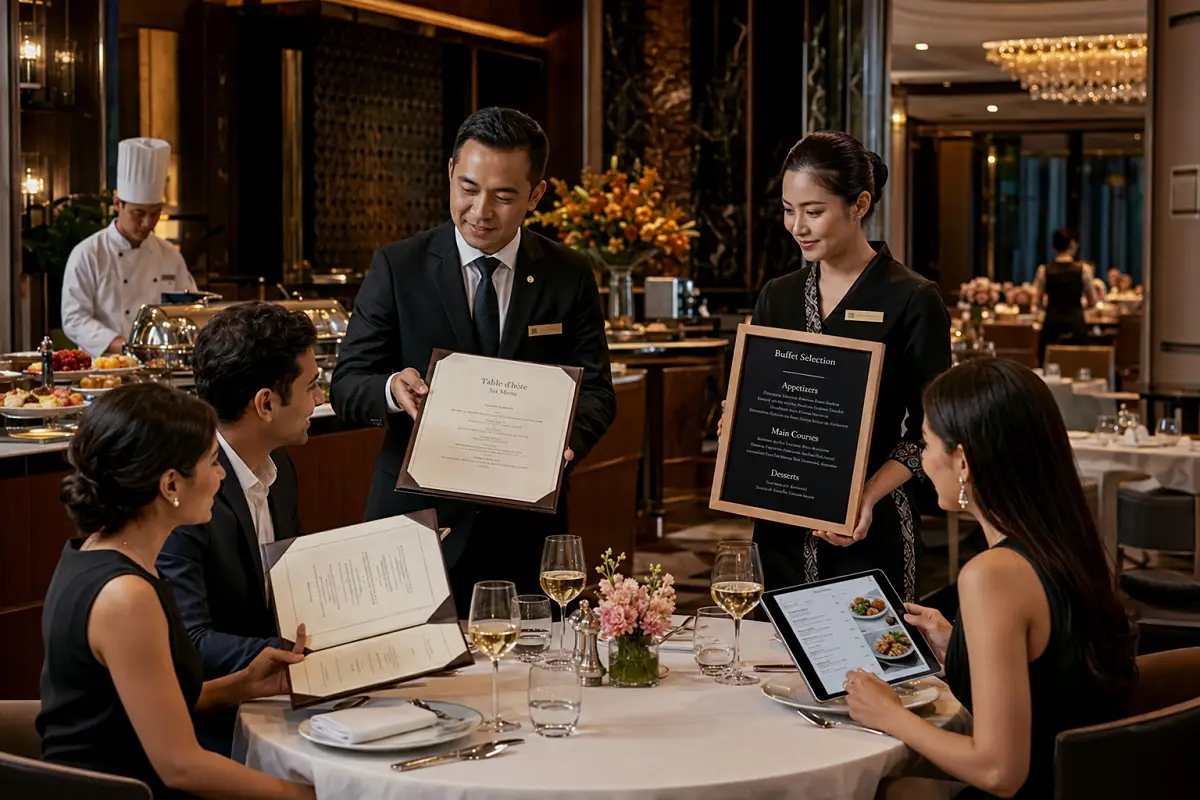
Talk in the pantry is focused on one thing: servers who know the menu sell more, make fewer mistakes, and handle the floor with confidence. A menu isn't just a list of dishes. It's a working tool that drives the kitchen, controls costs, shapes service flow, and influences every order that hits the pass. This article explains types of menus in detail.
Overview of Types of Restaurant Menus
Types of restaurant menus training helps hospitality professionals understand how different menu formats support different restaurant goals.
A menu does more than list food and drinks. It guides sales, supports production, controls costs, and helps guests make decisions.
Hotels and restaurants use different menu formats based on service style, guest expectations, kitchen capacity, and business strategy. Pick the right format, and service runs smoother.
Menu types affect purchasing, staffing, prep methods, inventory levels, and service timing. Service teams must understand menu structures so they can answer questions, make recommendations, and avoid service friction.
Managers also rely on menu knowledge to control food costs, maintain consistency, and adjust offerings when business needs change.
Pro-tip: If a server doesn't understand the menu, the guest won't either.
SOP Procedure for Menu Management
Types of restaurant menus training follows a structured SOP to ensure effective menu implementation and operational consistency.
1. Menu Review
Review menu availability, pricing, promotions, and item changes before service begins.
2. Staff Briefing
Conduct daily menu briefings covering specials, unavailable items, and guest recommendations.
3. Menu Presentation
Present menus professionally and provide accurate explanations when required.
4. Order Guidance
Assist guests in selecting suitable menu items based on preferences and dietary requirements.
5. Order Verification
Confirm menu selections and communicate special requests accurately.
6. Kitchen Coordination
Ensure menu orders are transmitted correctly through the POS system.
7. Menu Monitoring
Track item availability and update service teams regarding stock changes.
8. Post-Service Evaluation
Review menu performance, guest feedback, and sales reports.
Following these procedures supports operational efficiency and service consistency.
Pro-tip: Nothing damages trust faster than selling an item that's already sold out.
Major Types of Restaurant Menus
Hospitality operations commonly use several menu formats depending on service requirements.
À La Carte Menu
An à la carte menu lists individual food and beverage items separately, each with its own price. Guests build their own meal.
Operational Characteristics:
• Individual item pricing
• Greater guest choice
• Flexible ordering options
• Higher preparation customization
Common Usage:
- Fine dining restaurants
- Specialty restaurants
- Hotel signature outlets
Table d'Hôte Menu
This menu offers a complete meal with a fixed number of courses at a predetermined price.
Operational Characteristics:
• Fixed pricing structure
• Limited choices per course
• Faster production planning
• Better cost control
Common Usage:
• Banquets
• Corporate events
• Group dining operations
Set Menu
A set menu provides predetermined dishes served together for a fixed price.
Operational Benefits:
• Simplified production
• Faster service delivery
• Improved inventory control
• Consistent guest experience
Buffet Menu
A buffet menu allows guests to select items from a self-service display.
Operational Characteristics:
• Large food variety
• High-volume service capability
• Reduced table service requirements
• Efficient guest flow management
Common Usage:
• Hotel breakfast operations
• Banquets
• Resort restaurants
Du Jour Menu
This menu features dishes prepared for a specific day based on ingredient availability or chef recommendations.
Operational Benefits:
• Seasonal flexibility
• Inventory utilization
• Fresh ingredient promotion
• Menu variety enhancement
Cycle Menu
A cycle menu repeats over a defined period such as weekly or monthly.
Common Usage:
• Staff cafeterias
• Institutional catering
• Long-stay hospitality operations
Static Menu
A static menu remains largely unchanged throughout the year.
Operational Advantages:
• Consistent guest expectations
• Simplified training
• Standardized purchasing
• Predictable food cost management
Seasonal Menu
A seasonal menu changes according to ingredient availability and market conditions.
Operational Benefits:
• Fresh ingredients
• Market relevance
• Enhanced menu appeal
• Cost optimization opportunities
Operational Steps in Menu-Based Service
Service teams must follow a structured workflow when handling restaurant menus.
Pre-Service Activities
• Verify menu availability
• Review daily specials
• Check item shortages
• Update POS system
• Conduct staff briefing
Guest Arrival Stage
• Greet guests within 30 seconds
• Escort guests to tables
• Present menus within 1 minute
• Explain specials and promotions
Order Taking Stage
• Allow guests time to review menu
• Answer menu-related questions
• Recommend suitable items
• Confirm selections accurately
Order Processing Stage
• Enter orders immediately into POS
• Communicate special requests
• Monitor kitchen preparation progress
Service Timing Standards
• Menu presentation: within 1 minute
• Beverage order taking: within 2 minutes
• Food order taking: within 5–7 minutes
• Beverage delivery: within 3–5 minutes
• Food delivery: within 15–20 minutes
Following these standards improves operational consistency and guest satisfaction.
Pro-tip: Delayed order taking often starts with poor menu guidance.
Guest Interaction and Menu Selling Techniques
Menu knowledge is one of the strongest sales tools on the floor.
Menu Presentation Standards
• Present clean and updated menus
• Open menu appropriately when required
• Highlight specials confidently
• Maintain professional body language
Recommendation Techniques
• Understand menu ingredients
• Explain preparation methods accurately
• Suggest suitable accompaniments
• Recommend beverages that complement dishes
Handling Guest Questions
Staff should provide accurate information regarding:
• Ingredients
• Portion sizes
• Cooking methods
• Allergens
• Dietary restrictions
Common Menu Service Errors
• Recommending unavailable items
• Providing incorrect menu information
• Failing to explain menu choices clearly
• Ignoring dietary requirements
Clear menu communication builds confidence and supports better order taking.
Pro-tip: Don't memorize descriptions. Understand the dish.
Tools, Equipment, and Menu Management Standards
Strong menu operations rely on accurate systems and disciplined updates.
Menu Management Tools
• Printed menus
• Digital menu systems
• POS software
• QR code menus
• Reservation management systems
Support Equipment
• Tablets for digital ordering
• Kitchen Display Systems (KDS)
• Menu display boards
• Promotional display materials
Menu Standards
• Accurate pricing information
• Clear item descriptions
• Consistent formatting
• Updated availability status
• Compliance with food allergen requirements
Proper menu management supports smooth communication and efficient service.
Pro-tip: A menu update means nothing if the floor team never hears about it.
Service Standards and Performance Evaluation
Menu management performance should be evaluated against defined operational standards.
Key Performance Standards
• Menu knowledge compliance: 100%
• Order accuracy: 100% target
• Guest query response accuracy: high standard
• Menu availability updates: immediate
• POS menu accuracy: 100% compliance
• Guest satisfaction with recommendations: consistently positive
Evaluation Methods
• Supervisor observation
• Menu knowledge assessments
• Guest feedback reviews
• Mystery guest evaluations
• POS sales analysis
• Staff performance reviews
Continuous Improvement Activities
• Product knowledge training
• Menu tasting sessions
• Menu engineering reviews
• Sales performance analysis
• SOP refresher programs
Common issues include weak menu knowledge, inaccurate recommendations, and poor communication of menu changes. But regular briefings, tasting sessions, and strong SOP discipline keep those problems under control.
Types of restaurant menus training gives hospitality professionals the knowledge needed to guide guests, support kitchen operations, and improve service performance. Know the menu, understand the format, and communicate with confidence. The floor runs smoother when every team member speaks the same menu language.
Read more about Glassware training.