Upma Recipe (Easy Rava Upma)
Upma is a traditional South Indian breakfast made with roasted rava, lentils, herbs and spices. Soft, fluffy and ready in minutes.
 RUKAIYA KADIWAL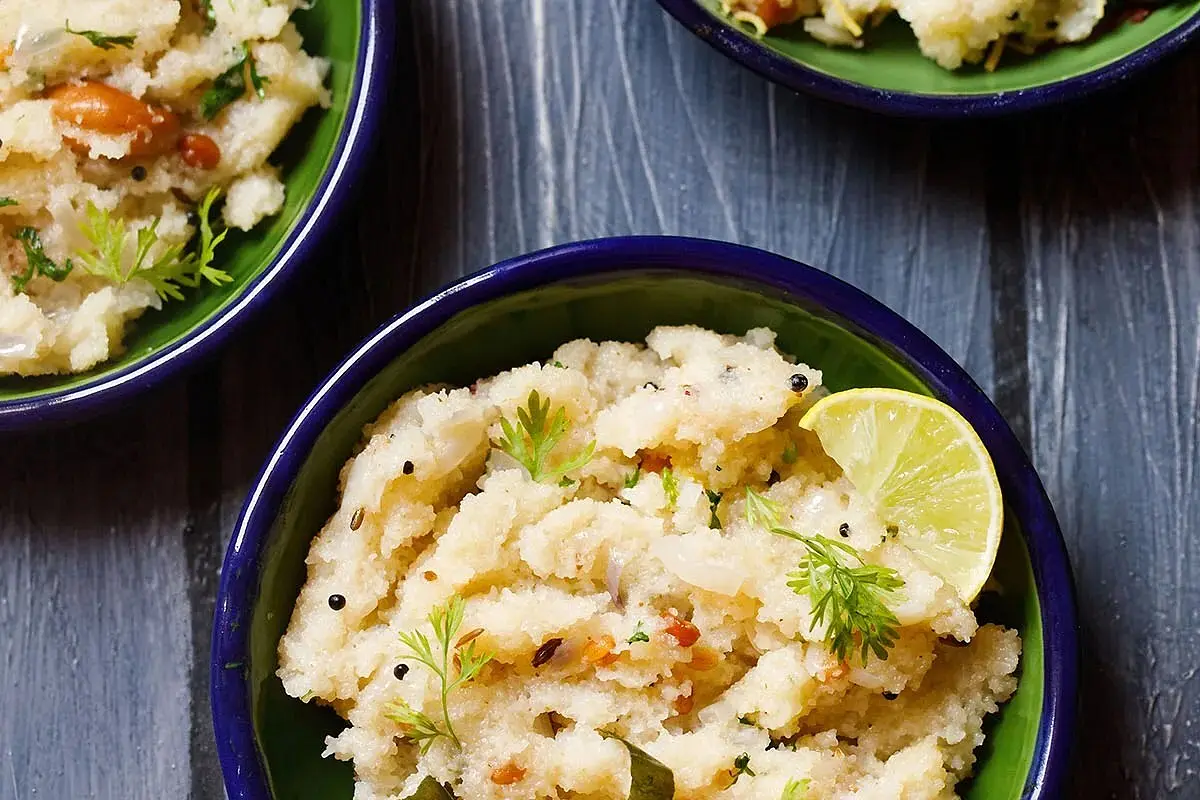
Upma is a traditional South Indian breakfast made with roasted rava (semolina), lentils, herbs and spices. Every South Indian home has its own version, with some recipes including vegetables and others keeping it simple with onions, curry leaves and green chilies. This recipe is the classic home-style version that I learnt from my mother and makes a soft, fluffy and flavorful upma.
Upma is a classic South Indian breakfast made with rava (suji or semolina), lentils, nuts, herbs and spices. In this recipe, the rava is first roasted and set aside.
A tempering is made with mustard seeds, urad dal, chana dal and cashews, followed by onions, ginger and curry leaves. Water is then added and brought to a boil, after which the roasted rava is stirred in and cooked until soft and fluffy.
I often add cashews for a light crunch. You can also use peanuts instead of cashews. I also add a bit of sugar for a mild sweet-savory balance, which you can totally skip
The main ingredient in upma is rava, also called suji or semolina. For this dish you can use fine or medium semolina, commonly sold as Bombay rava or upma rava in Indian stores.
Very fine chiroti rava can also be used and gives a softer texture, though it is more commonly used in sweets like Rava Kesari or Suji Halwa. Broken wheat rava (bansi rava) is used to make a different dish called wheat rava upma
Upma is widely served in South Indian homes and restaurants. It is also common in Maharashtra and many other parts of India as a quick breakfast or evening snack.
Growing up, upma was made often in our home for breakfast or tiffin. When the rava is roasted beforehand and stored, this dish comes together in about 15 to 20 minutes.
Ingredients At A Glance
This upma is made with rava, onions, spices, herbs and a simple tempering of mustard seeds, cumin, chana dal and urad dal. Roasted rava gives the upma a soft, fluffy texture, while cashews add a light crunch. Sugar is optional,
Dosa
Rava Dhokla
Rava Idli
Suji Chilla
Rava Laddu
How To Make Upma (Stepwise)
This breakfast dish is easy to make at home with a few simple steps. Roast the rava first, then prepare the tempering before adding water and cooking the rava until soft. For the complete original step-by-step method with photos, you can also refer to the original Upma Recipe on Veg Recipes of India
Serving Suggestions
Serve upma hot or warm with slices of lemon or a side of lemon pickle or Coconut Chutney.
You can opt to drizzle half to one teaspoon of Ghee while serving. If you like you can garnish with some coriander leaves.
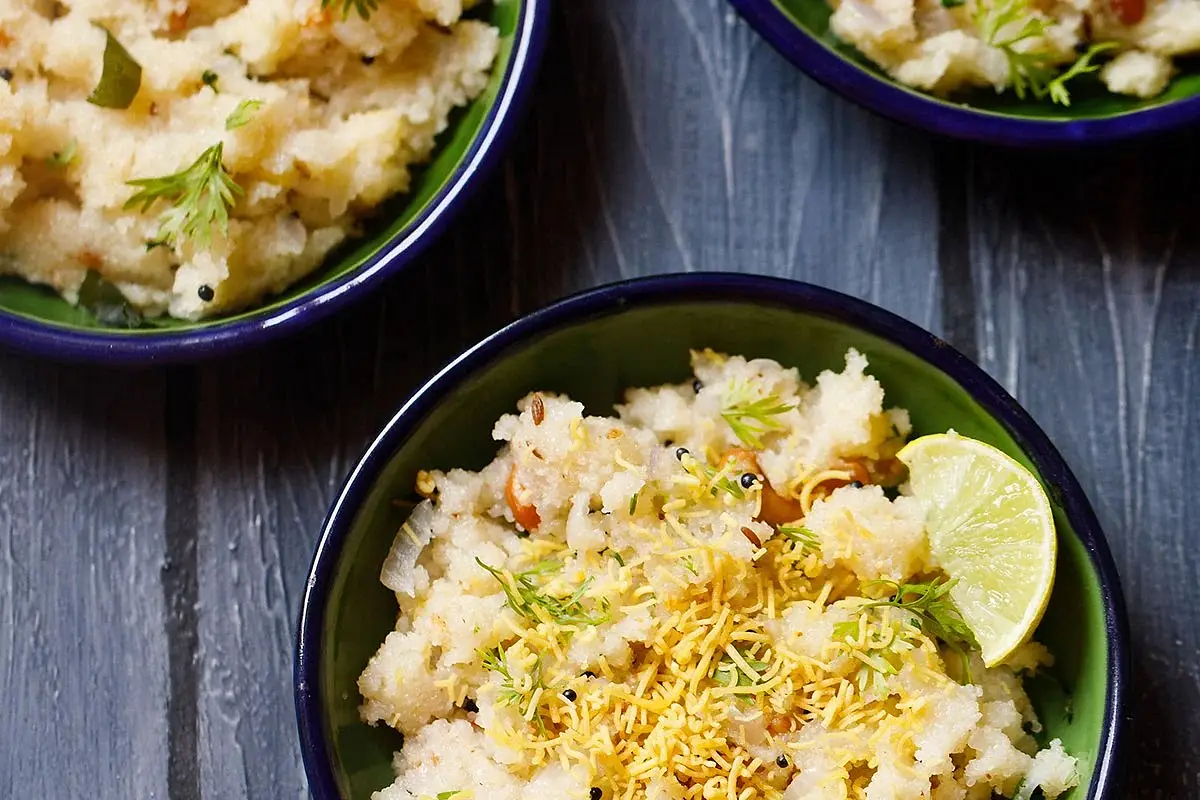
I also sprinkle some Sev (fried gram flour vermicelli) on it while serving. Though this is not the way this dish is traditionally served, the folks at home prefer this Mumbai style. You can also serve it with Idli Podi.
If you like, pair suji upma with classic Indian hot beverages like Masala Chai or Filter Coffee.
Scaling & Storing
You can easily halve or double the recipe. Upma is best enjoyed fresh, but leftovers can be refrigerated for a day. Reheat with a few tablespoons of water in a pan on low heat until soft.
Dassana's Recipe Tips
Roasting rava: Roast the rava until it smells nutty and the grains feel light and separate. Properly roasted rava absorbs water evenly and gives a fluffy upma instead of a sticky one.
Adding rava in batches: Add the rava to hot boiling water in batches, mixing well after each addition. This helps avoid lumps and ensures a smooth texture.
Fats: This breakfast dish can be made with either ghee or oil. Ghee gives better flavor, but oils like sunflower, peanut or coconut oil work well too.
Rava and water proportion: For soft texture use about 1 cup rava to 2½ to 3 cups water.
The exact amount depends on the quality and texture of the rava.
Heat level: Once all the rava has been added, avoid cooking over high heat. Gentle cooking gives the grains time to absorb the water evenly without sticking to the pan.
Variations
Upma is a versatile dish with many regional and ingredient-based variations.The classic version is made with rava (semolina), but you can easily add vegetables like carrots, green peas, beans, capsicum or potatoes to make a more wholesome Vegetable Upma. Tomatoes can also be added to make a spiced and tangy Tomato Upma.
Instead of rava, different grains and staples are also used to make upma. Semiya Upma is prepared with wheat vermicelli, Rice Upma (Arisi Upma) uses rice rava, and Shavige Uppittu is made with rice vermicelli. Aval Upma is a another version made with flattened rice (poha).Leftover ingredients can also be turned into delicious breakfasts. Bread Upma uses bread slices, while Idli Upma is a great way to use leftover idlis.
For a healthier twist, try Ragi Upma, Oats Upma, or Quinoa Upma. These versions are more nutrient-dense while retaining the comforting flavors of traditional upma.
In Karnataka, upma is commonly known as Uppittu. A popular restaurant-style variation called Khara Bath is often served with Kesari Bath as the classic breakfast combination known as Chow Chow Bath.
Ingredients
- 1 cup rava – finer variety (sooji or cream of wheat or semolina)
- 2 tablespoons ghee (clarified butter) or oil
- 1 teaspoon mustard seeds
- ½ teaspoon cumin seeds
- 1 teaspoon chana dal (split and husked bengal gram)
- 1 teaspoon urad dal (split and husked black gram)
- 10 to 12 cashews – optional
- ⅓ cup or 1 medium-sized onion – finely chopped
- 1 teaspoon or 1 green chilli – chopped
- 1 teaspoon or 1 inch ginger – finely chopped
- 1 sprig curry leaves or 10 to 12 curry leaves
- 2½ cups water
- salt as required
- ½ to 1 teaspoon sugar or add as required, optional
- 2 to 3 tablespoons coriander leaves – chopped (cilantro)
Nutritional Information
- Calories: 360kcal
- Carbohydrates: 52g
- Protein: 9g
- Fat: 13g
- Saturated fat: 1g
- Sodium: 523mg
- Potassium: 175mg
- Fibre: 5g
- Sugar: 4g
- Vitamin A: 431u
- Vitamin B1 ( Thiamine): 1mg
- Vitamin B2 ( Riboflavin ): 1mg
- Vitamin B3 ( Naicine): 16mg
- Vitamin B6: 1mg
- Vitamin C: 18mg
- Vitamin E: 4mg
- Vitamin K: 3µg
- Calcium: 425mg
- Vitamin B9 ( Folate): 157µg
- Iron: 20mg
- Magnesium: 50mg
- Phosphorus: 194mg
- Zinc: 1mg
Directions
How To Make Upma (Stepwise)
Step 1: Preparation & Roasting Rava
Prep the ingredients first to make the recipe. Take 1 cup rava (fine variety) and set it aside. Next gather the aromatics, lentils, nuts, spices and herbs ready. You will need:
⅓ cup finely chopped onions
1 teaspoon chopped green chillies
1 teaspoon finely chopped ginger
2 tablespoons coriander leaves (cilantro)
8 to 10 curry leaves
10 to 12 cashews
1 teaspoon chana dal (hulled and split bengal gram)
1 teaspoon urad dal (hulled and split black gram)
Heat a pan or kadai first. Add 1 cup rava or cream of wheat (fine variety).
Begin to roast the rava. Stir often while roasting the rava.
The rava or sooji grains should become fragrant and start to look dry, separate and crisp. Don't brown the rava.
Once the rava becomes fragrant and starts to look dry and crisp, switch off the flame and put the roasted rava on a plate and set aside.
Step 2: Fry and Sauté Spices, Nuts & Aromatics
In a pan, heat 2 tablespoons ghee (clarified butter) or oil. You could use sunflower oil or peanut oil or safflower oil or any neutral tasting oil.
Lower the heat. Add 1 teaspoon mustard seeds. When you hear the crackling sound of mustard seeds, it means they are getting fried.
Now add the following ingredients:
½ teaspoon cumin seeds
1 teaspoon chana dal (husked and split bengal gram)
1 teaspoon urad dal (husked and split black gram)
Stirring often fry until the chana dal and urad dal begin to brown a bit.
Immediately add 10 to 12 cashews and begin to fry on a low to medium-low heat.
By the time the cashews get golden the dals should also be golden.
Now add the ⅓ cup of finely chopped onions.
Sauté the onions until they soften and become translucent on a low to medium-low heat.
Then add 1 teaspoon chopped green chillies, 1 teaspoon chopped ginger and 8 to 10 curry leaves.
You can also add 1 dried red chilli (halved and with seeds removed) and a pinch of asafoetida (hing) at this step.
Mix well and sauté for a few seconds.
Step 3: Boil Water
Then add 2½ cups water to this mixture.
Add salt as required. Mix well and check the taste of water. It should be a bit salty but not too much.
In case if the salt becomes less in the dish, you can always sprinkle some salt from the top when eating.
Then add ½ to 1 teaspoon sugar.
Sugar is optional and you can skip it. We prefer a slight sweet taste in the dish and hence we add it.
Stir again. On a medium to high flame, heat the water and let it come to a rolling boiling.
Step 4: Make Rava Upma
When the water comes to a rolling boil, lower the flame to its lowest. Then add the rava in 4 to 5 batches with a spoon.
Once you add the first batch of rava, stir and mix immediately so that the roasted rava gets mixed evenly with the water.
Then add the next batch of rava. Mix and stir again very well ensuring that the batch of rava is mixed evenly in water.
Continue to add and stir the rava up to the last batch.
Quickly stir and mix very well. The rava grains will absorb water, swell and get cooked.
Cover and allow the rava upma to steam for 2 to 3 minutes on a low heat.
Then turn off the heat. In the below photo, the rava is cooked well and the suji upma is ready.
Lastly add about 2 to 3 tablespoons of chopped coriander leaves (cilantro). You can add more coriander leaves if you like.
Mix again and serve hot.
Rate this Recipe
User Reviews
No reviews yet. Be the first to share your thoughts!